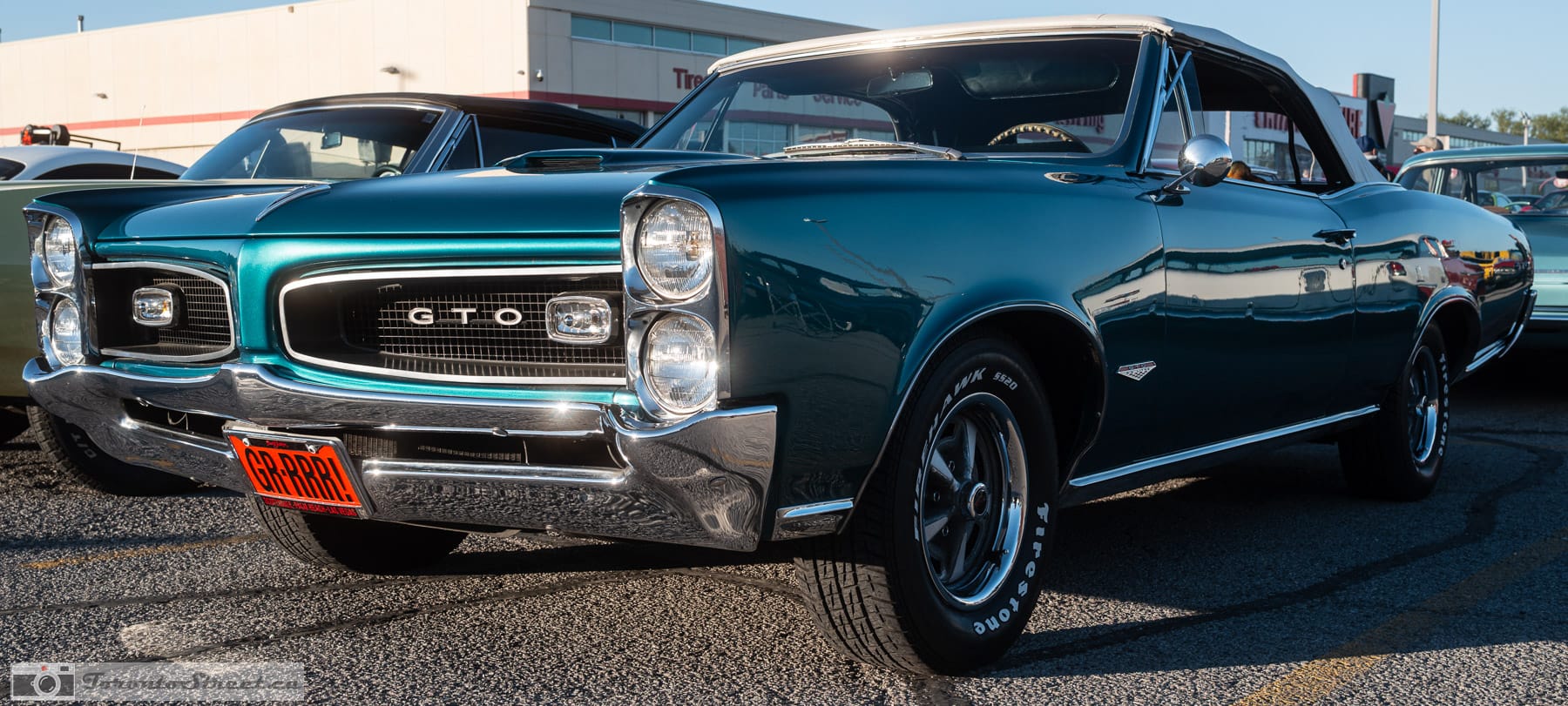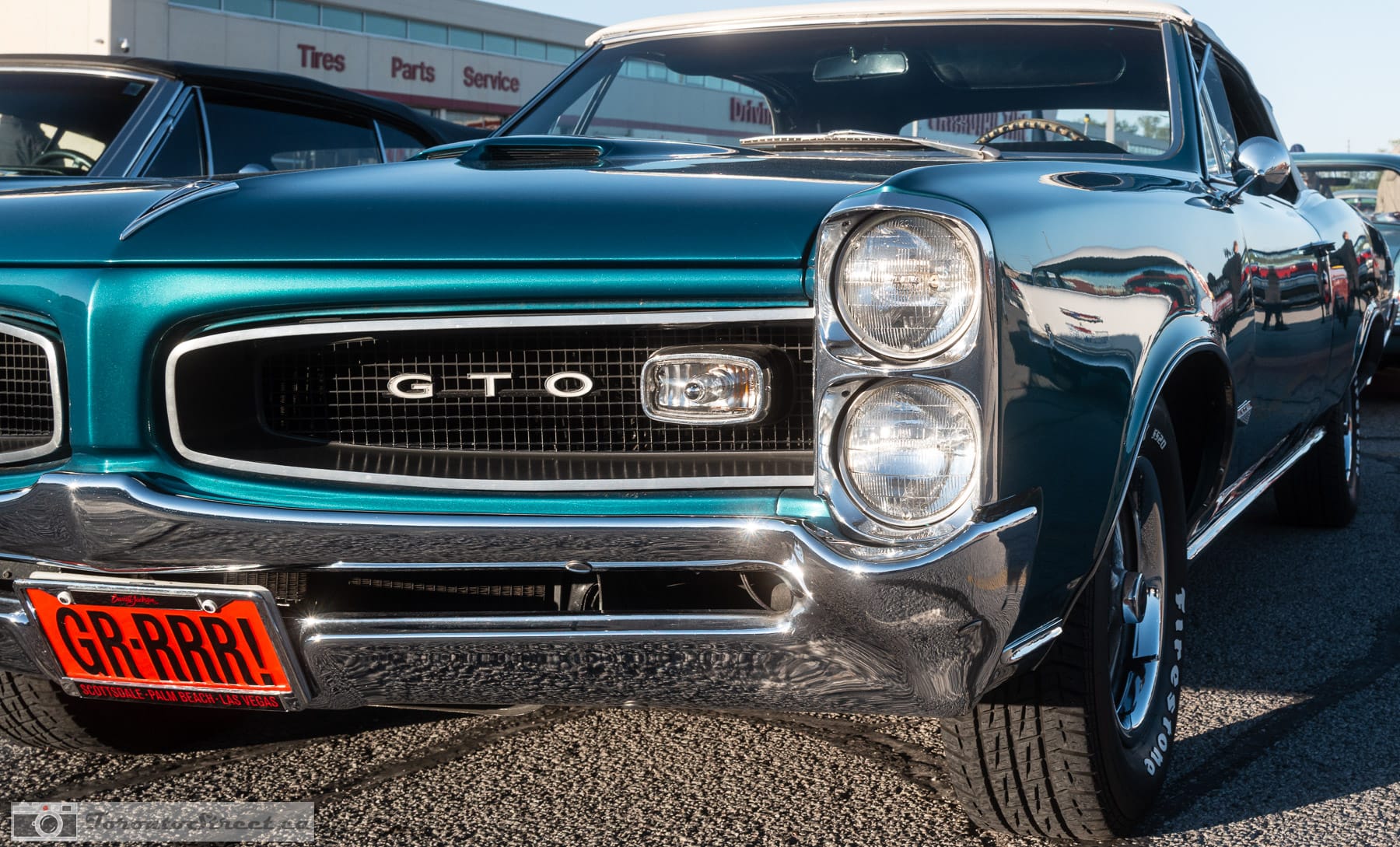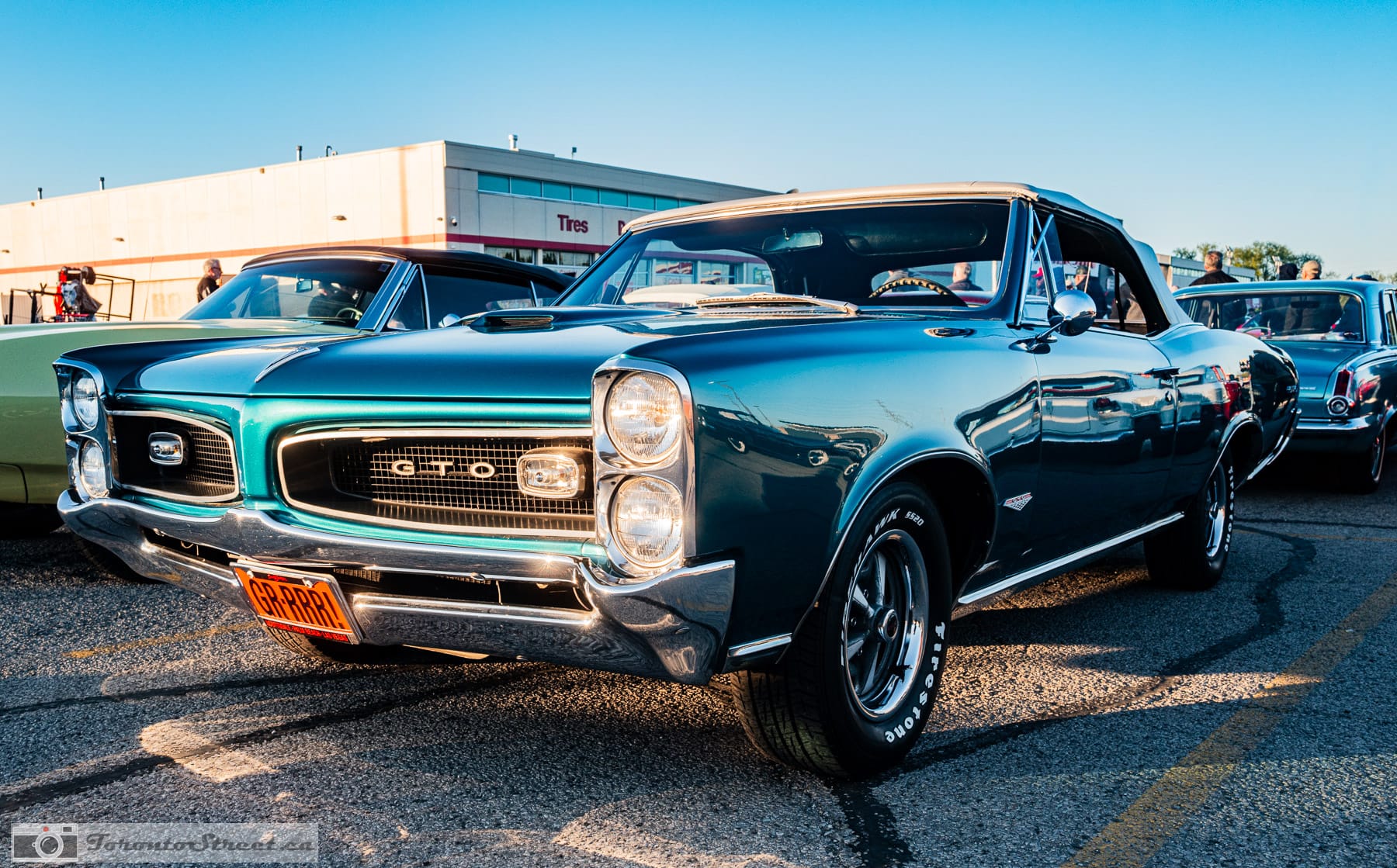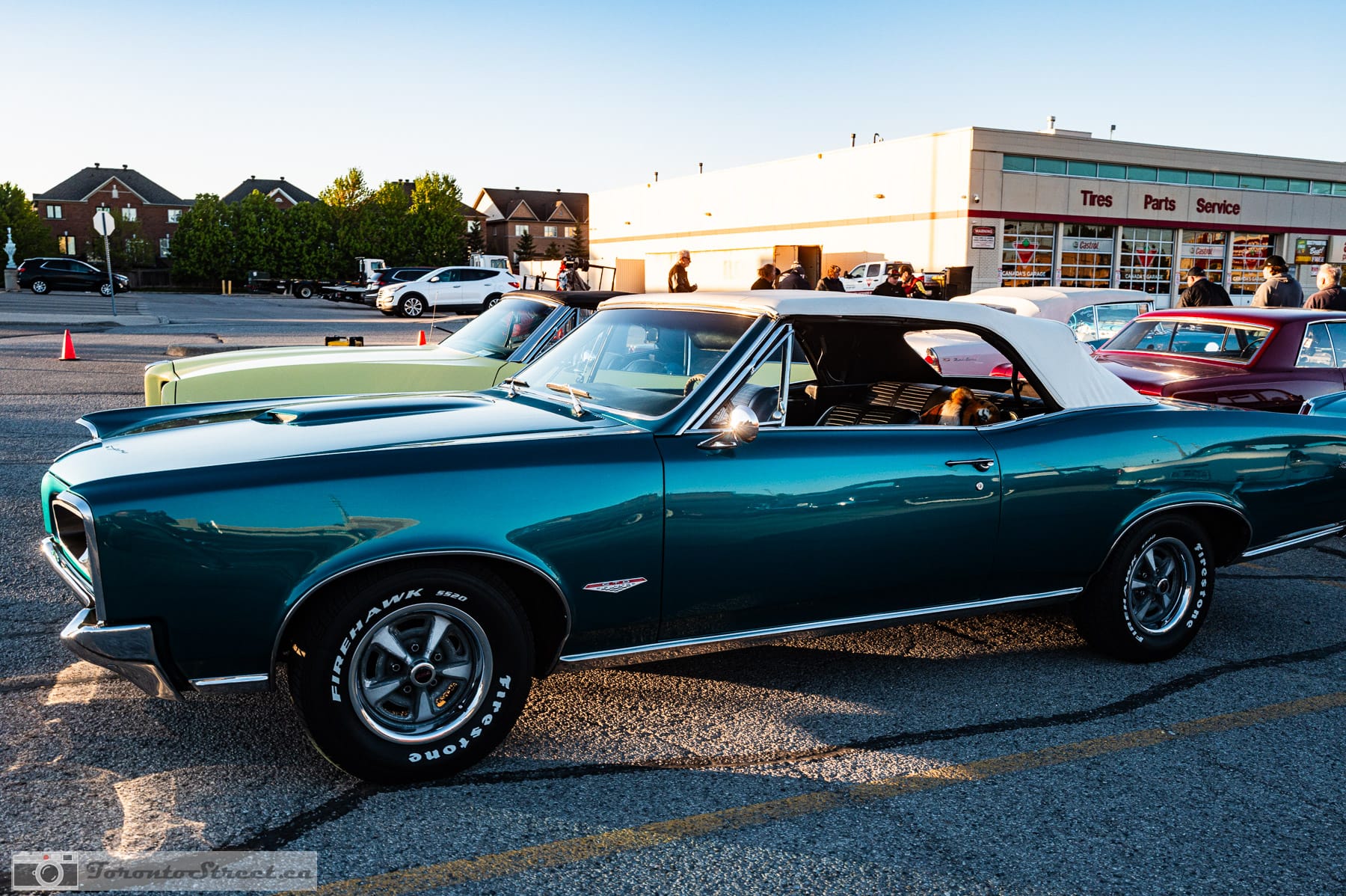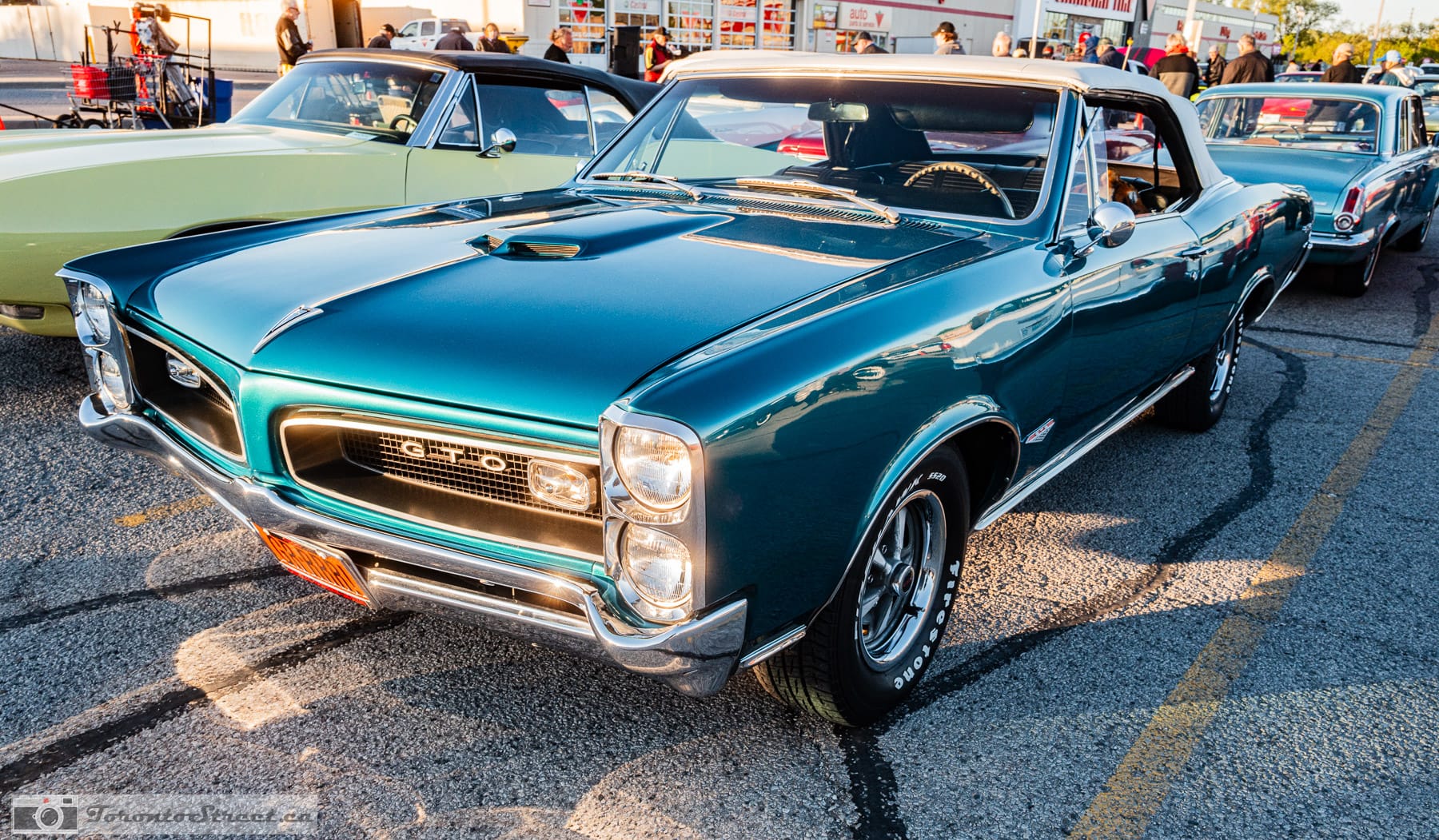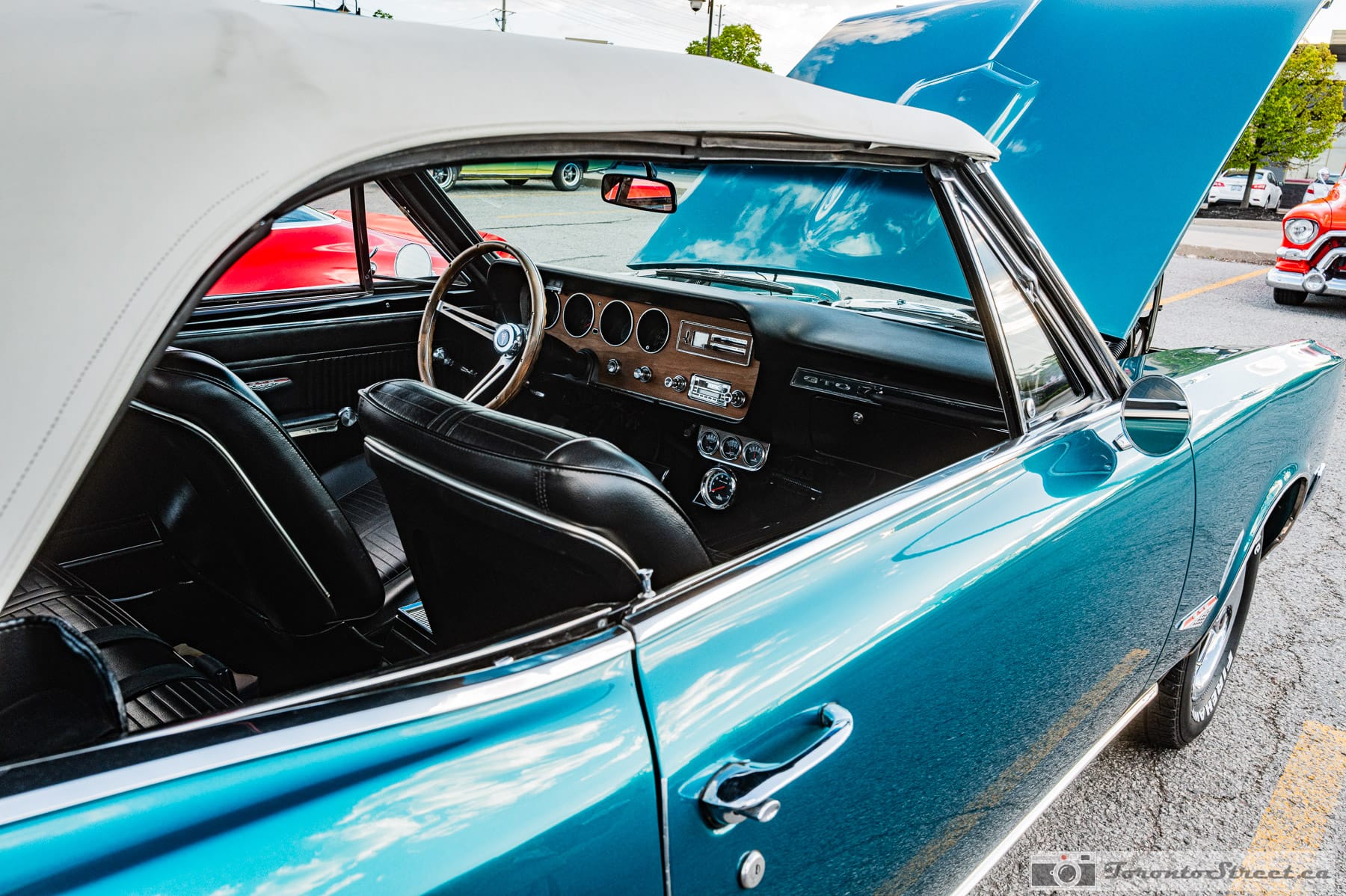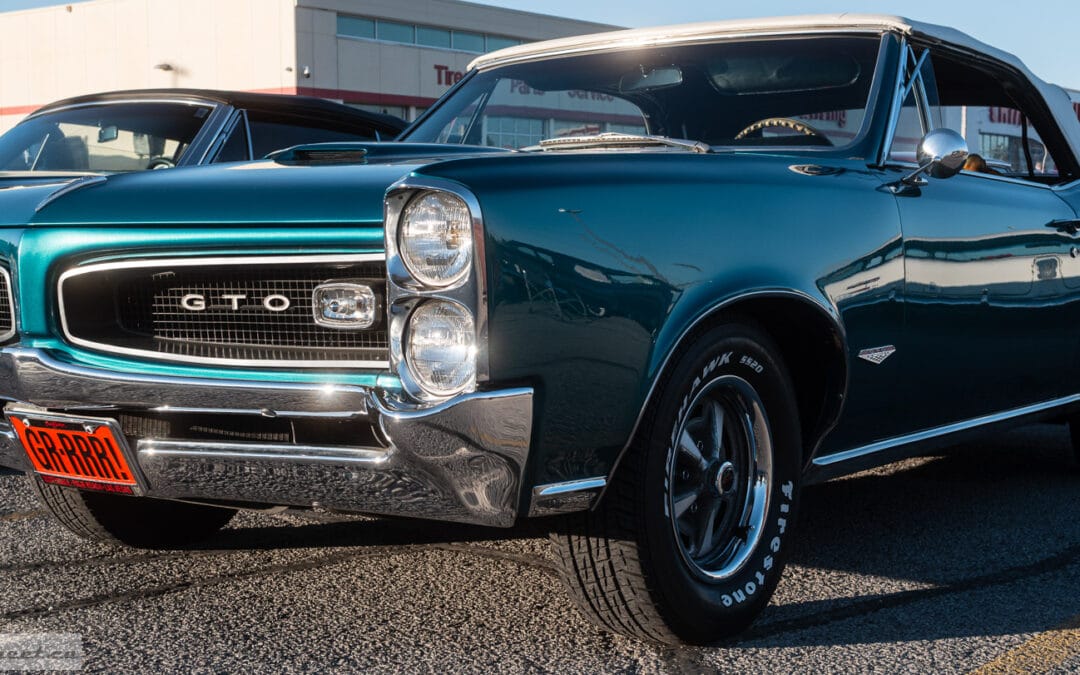
It sat low and turquoise in the corner of the Canadian Tire lot, and I changed direction before I had decided to. A 1966 Pontiac GTO convertible does that to you. The colour alone, a deep Marina Turquoise that goes almost black in shadow and lights up like water where the sun catches it, pulls you across a parking lot full of other cars. Then you get close and start reading the small stuff. The stacked headlights. The mesh grille. The little red front plate that says GR-RRR. The Tiger.
Monday Night at the Canadian Tire Lot
Through the warm months, the Canadian Tire parking lot in Richmond Hill fills up on Monday nights with old iron. It is not a show. Nobody is judging anything. People bring whatever they have been working on, park it, and stand around talking until the light goes. That is exactly why I like shooting there.
A car at a meet like this is still part of the street. It is sitting on cracked asphalt next to a tire-and-service sign, with houses behind it and other people’s projects crowding in on both sides. I would rather photograph a car there than on a manicured show field, because the ordinary setting is honest. It tells you the thing gets driven.
I got there with maybe twenty minutes of good sun left. That is the part I plan for. Low side light is what makes a curved body like this one read.
What the 1966 Pontiac GTO Does in Low Sun
The 1966 Pontiac GTO is all hips. That was the year Pontiac redrew the body with the Coke-bottle shape, and you can see it from the side, the way the rear quarter swells out and the roofline drops toward the deck. In flat midday light none of that shows. In low side sun it turns into a run of bright edges and dark hollows, and that is the photograph.
I worked the front three-quarter first, down low to the ground, so the chrome bumper and the grille caught the sun and the rest of the body fell away into that deep turquoise. Then I moved in tight on the grille itself, just the stacked lights and the badge and the GR-RRR plate, because at that distance the car stops being a car and becomes a face.
A machine like this rewards patience the same way a person does. You wait for the light to come around, you wait for the gap in the crowd, and you take the frame when the car is finally standing alone.
Shooting Into the Glass
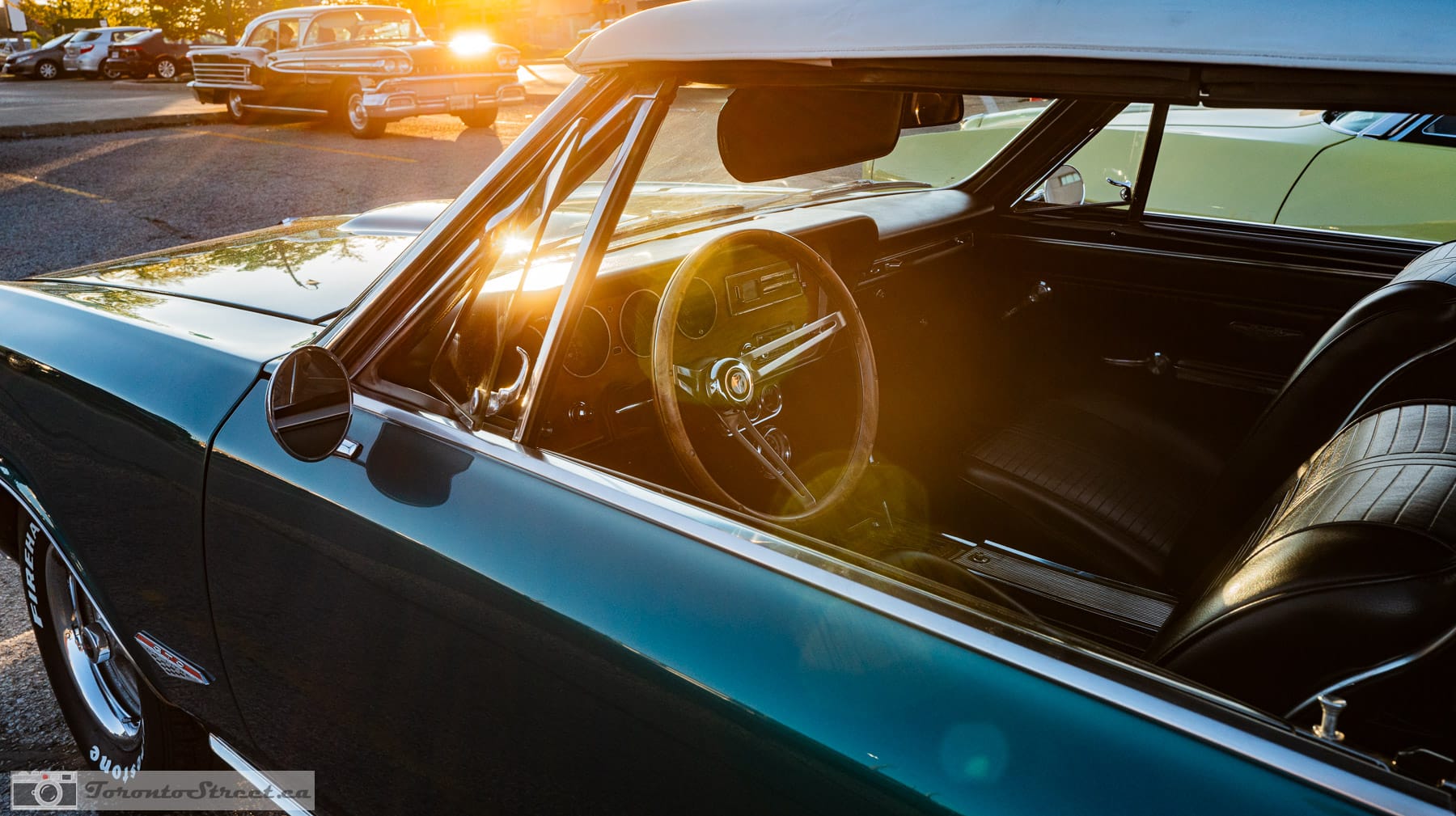
The two frames I am happiest with are the ones I shot into the interior. The sun was almost down and sitting right behind the car, so I moved until it broke across the side glass and flared into a hard sunburst over the steering wheel. To get that you have to expose for the brightest part of the frame and let everything else go dark, which is the opposite of what most people do at a car meet. The black bucket seats and the round gauges sink into shadow, and the light does the talking.
I shoot all of this on the Leica Q3, available light only, no flash, nothing on the car touched or moved. The fixed 28mm lens makes me commit to a distance and walk to my framing instead of zooming, which for cars is a gift. It keeps me close enough to find the details and far enough to keep the whole shape honest.
This is the first set of classic-car work I am adding alongside the street photography projects, and there is more of it coming. The GTO was the right car to start with.
Fewer than thirteen thousand of these left the factory as convertibles in 1966, and most are long gone. The ones that survive tend to get trailered to shows and kept under covers. It was good to find one sitting out on a Monday night, plate reading GR-RRR, still acting like a tiger.
Thanks for looking!