The GTA does not end where most people think it ends. It runs about seventy five kilometres east of downtown before it finally runs out, and the towns sitting out at that edge were real towns with real main streets long before Toronto got anywhere near them. GTA suburban street photography is what I have been doing out there, off and on, for ten years now. I did not plan that. I only noticed it when I put these frames in one folder and saw the dates.
Seventy Five Kilometres Out and Still Toronto
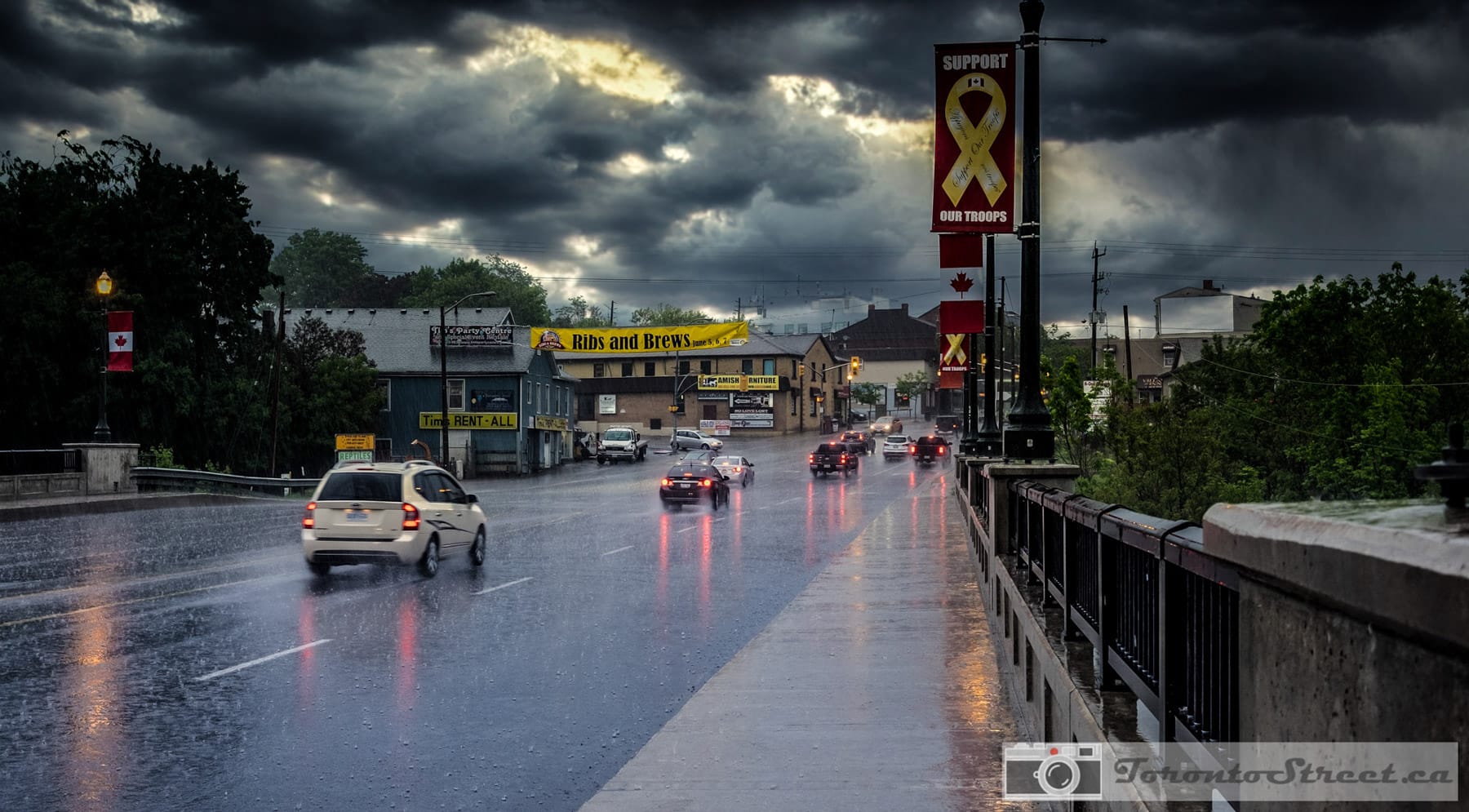
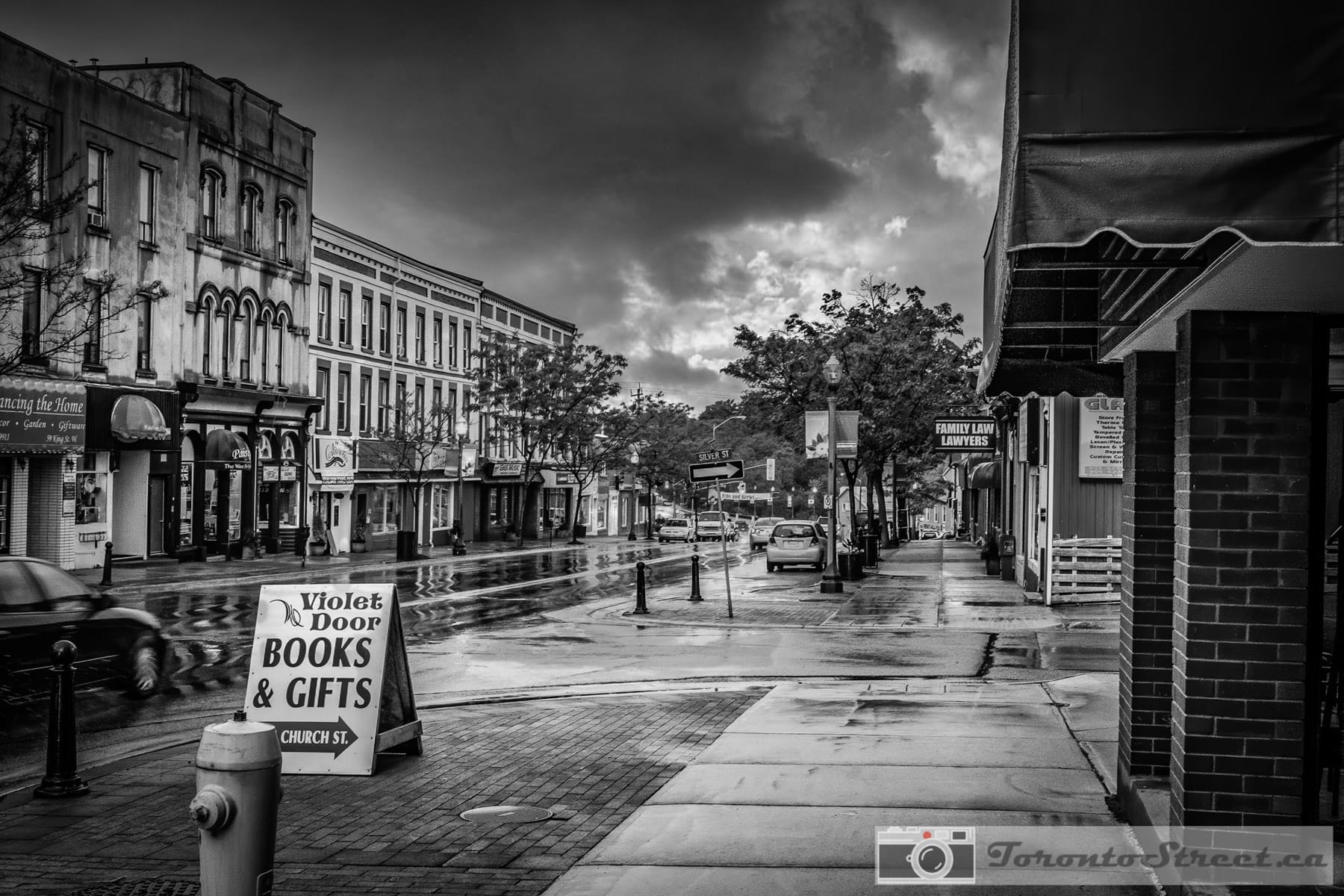
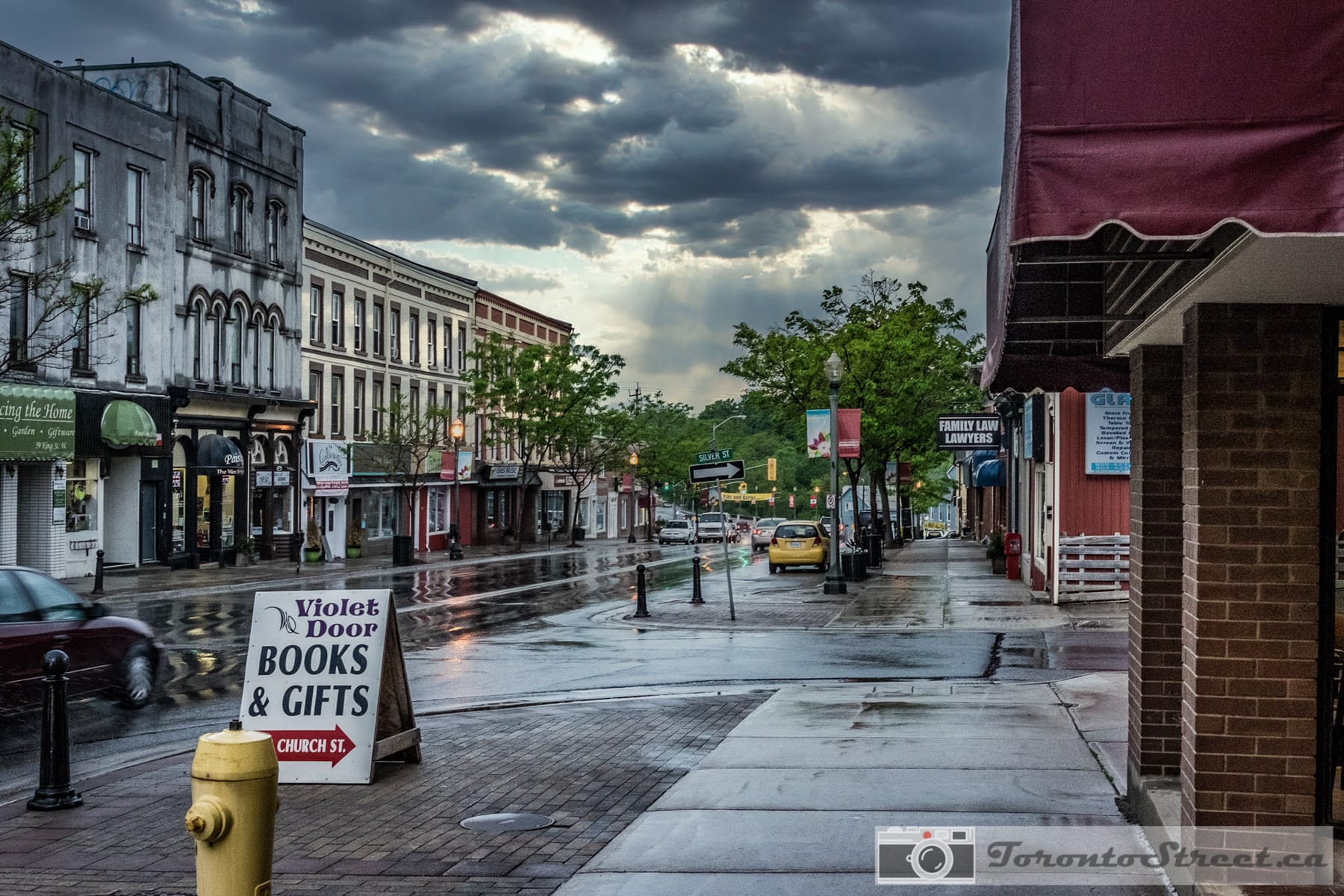
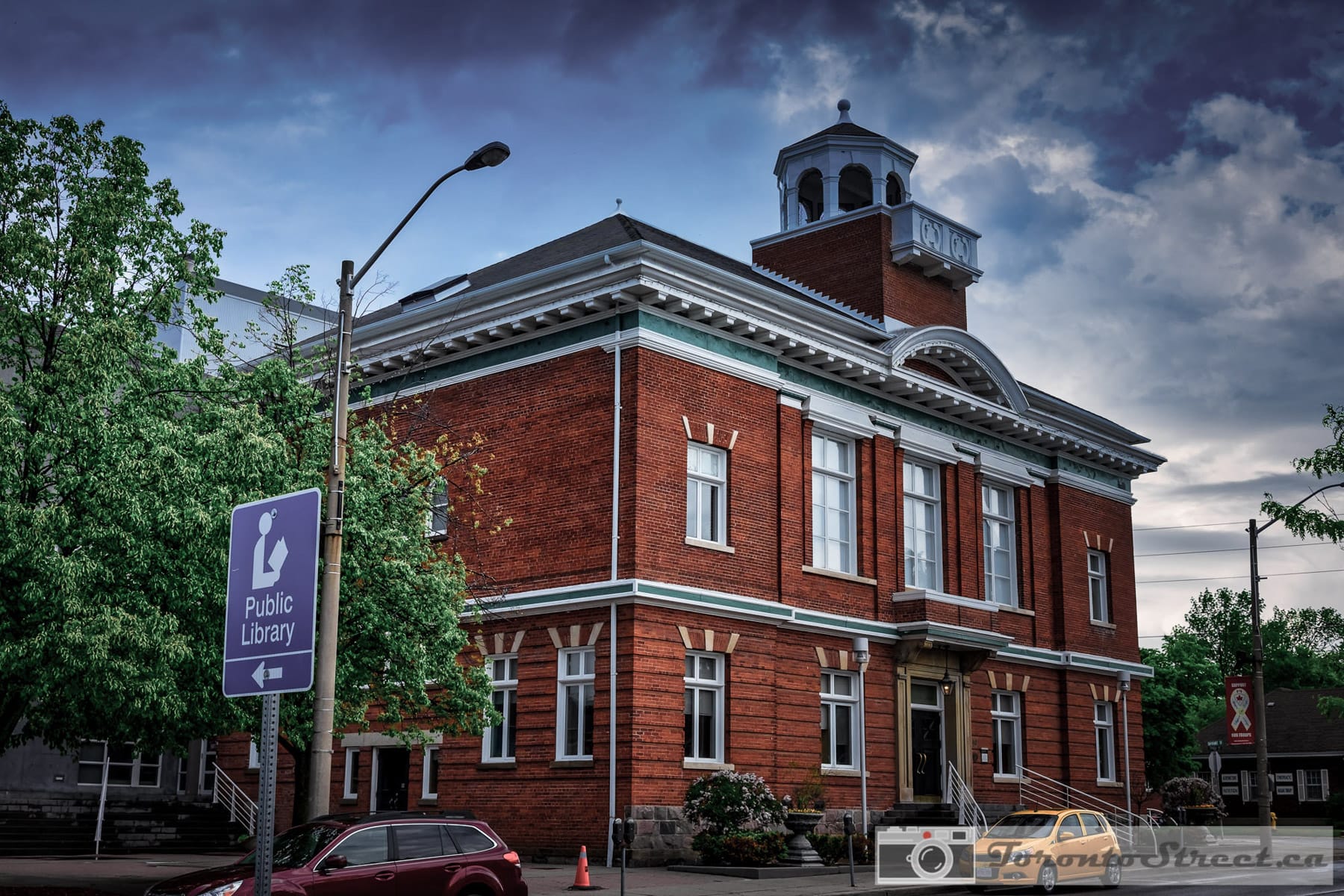
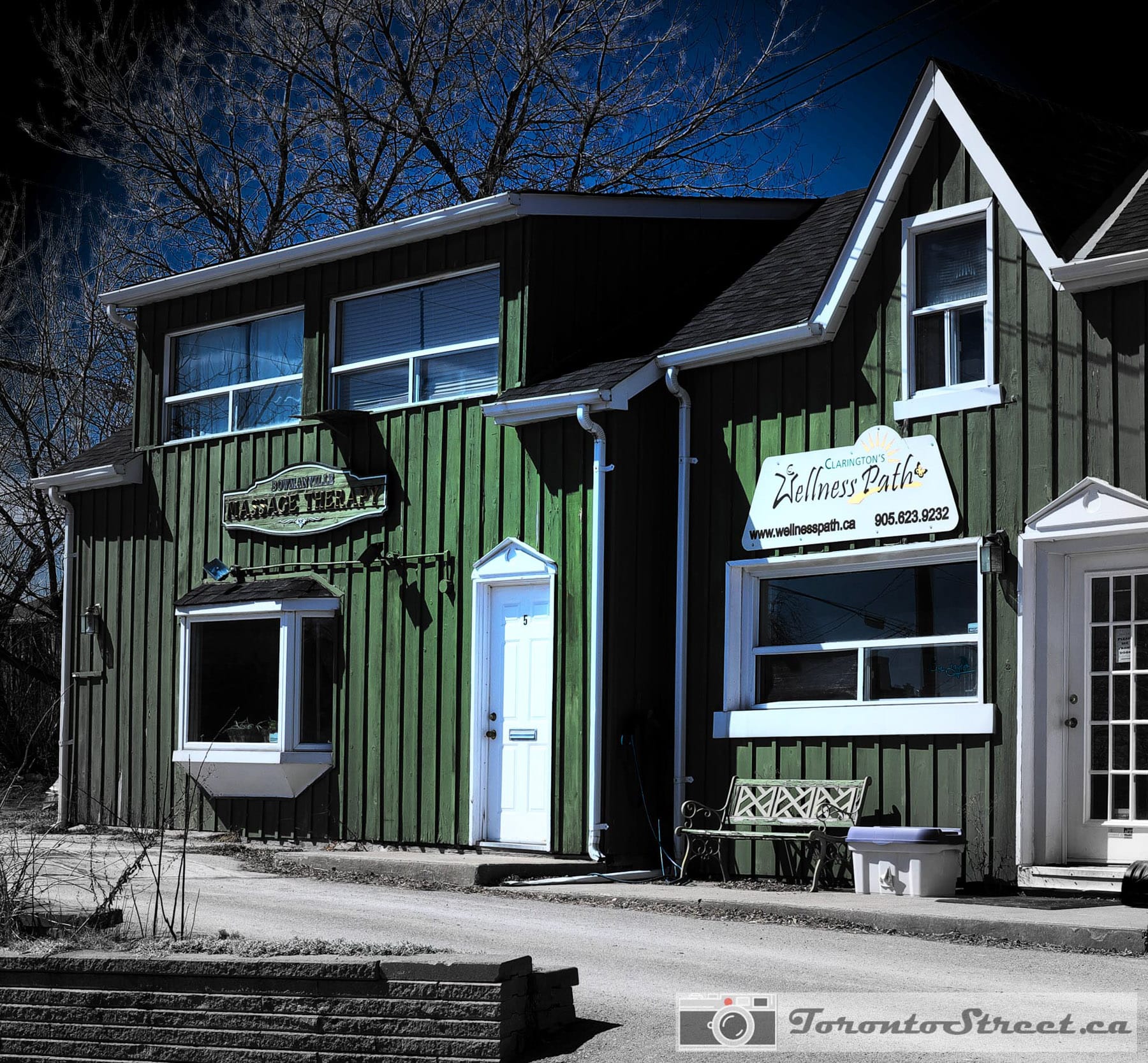
Most of what is here is Bowmanville, which sits in Clarington, in Durham Region, which is the biggest piece of the Greater Toronto Area by land. People who live downtown would call it out of town. It is not. It is the far east end of the same city region I have been photographing for years, and the main street proves it, three storey Victorian brick with the cornices still on, a bookshop pointing you around the corner to Church Street, a family law office, a glass shop.
What a town like that still has, and what Toronto proper mostly gave up, is a single street that everything happens on. Downtown you have a grid and the action spreads out across all of it. Out there it is one road, and if you stand on it long enough you will see the whole town go past you.
Why GTA Suburban Street Photography Is Worth the Drive
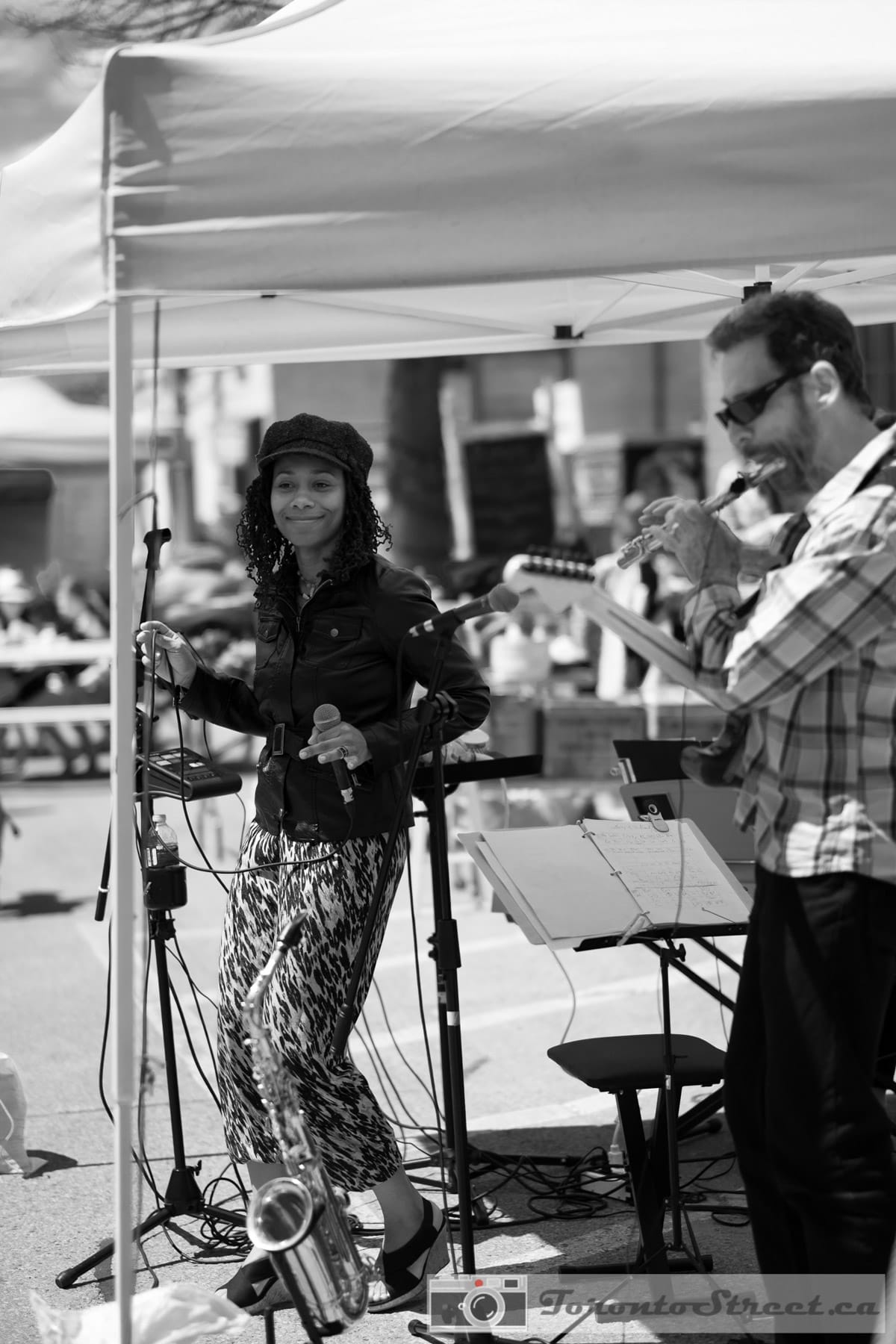
Nobody out there is performing. That is the honest answer. Downtown there is always somebody aware of a camera, or aware of being looked at, and that changes what you get. At the edge of the region people are just doing the thing they came to do.
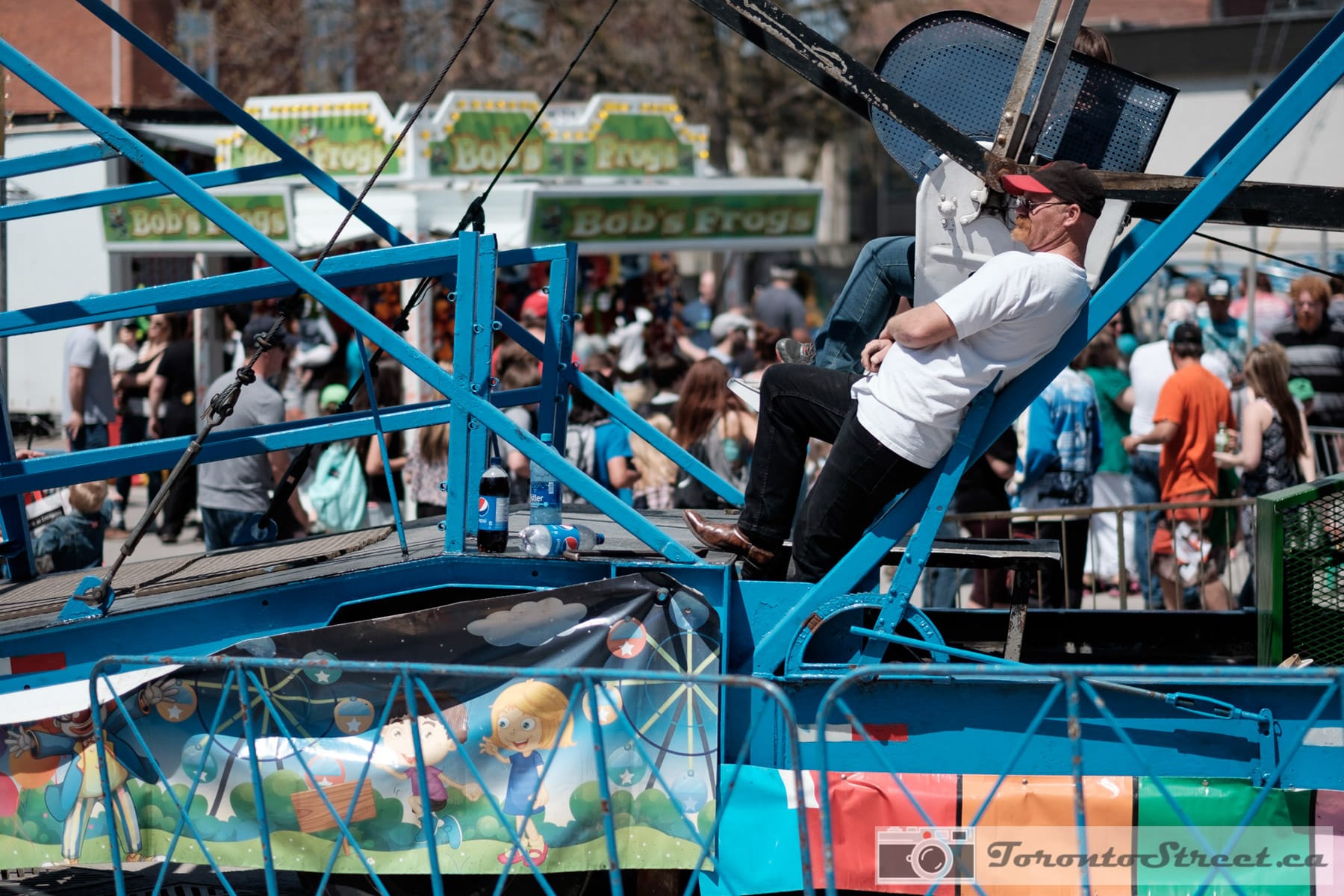
The frame I like best from the fair is the ride operator. He is sitting up inside the blue steel of his own machine, arms folded, cap on, boots crossed, two pop bottles beside him, a whole crowd moving past below and not one of them looking up. He runs that ride all day. For about a minute he was just a man sitting down. I shot it from further back with a longer lens than I normally use, because walking up would have ended it.
The other thing the edge gives you is room. You can stand far enough back to get a whole building in the frame, which downtown you almost never can.
One Storm, Two Frames, Ten Years Ago
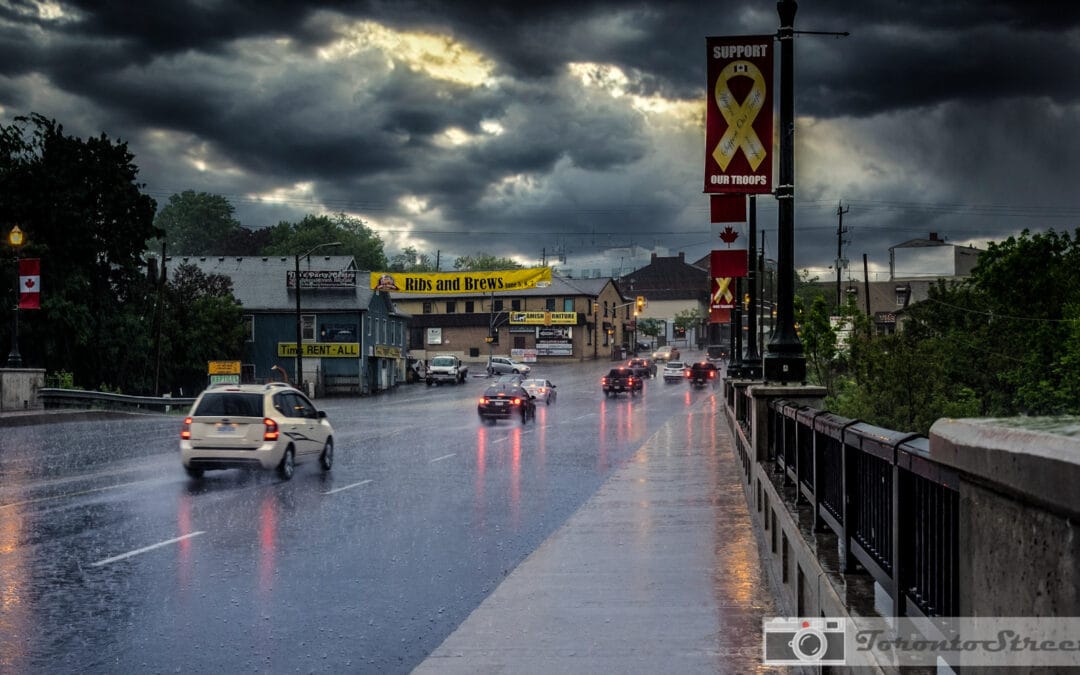
The end of May in 2015 I got caught in a serious rain out there. The main street went to mirror, the sky went almost black, and I shot the same corner twice a few minutes apart. In one the storm is still sitting on the town and I took the colour out, because there was none worth saving and the wet brick does more in monochrome. In the other the sun has broken through underneath the cloud and the whole street has gone warm, and that one had to stay in colour. Same corner, same afternoon, two different pictures.
I still do not know which of the two is better. I kept both, which is usually a sign that they are doing different jobs.
Three Cameras and the Same Habit
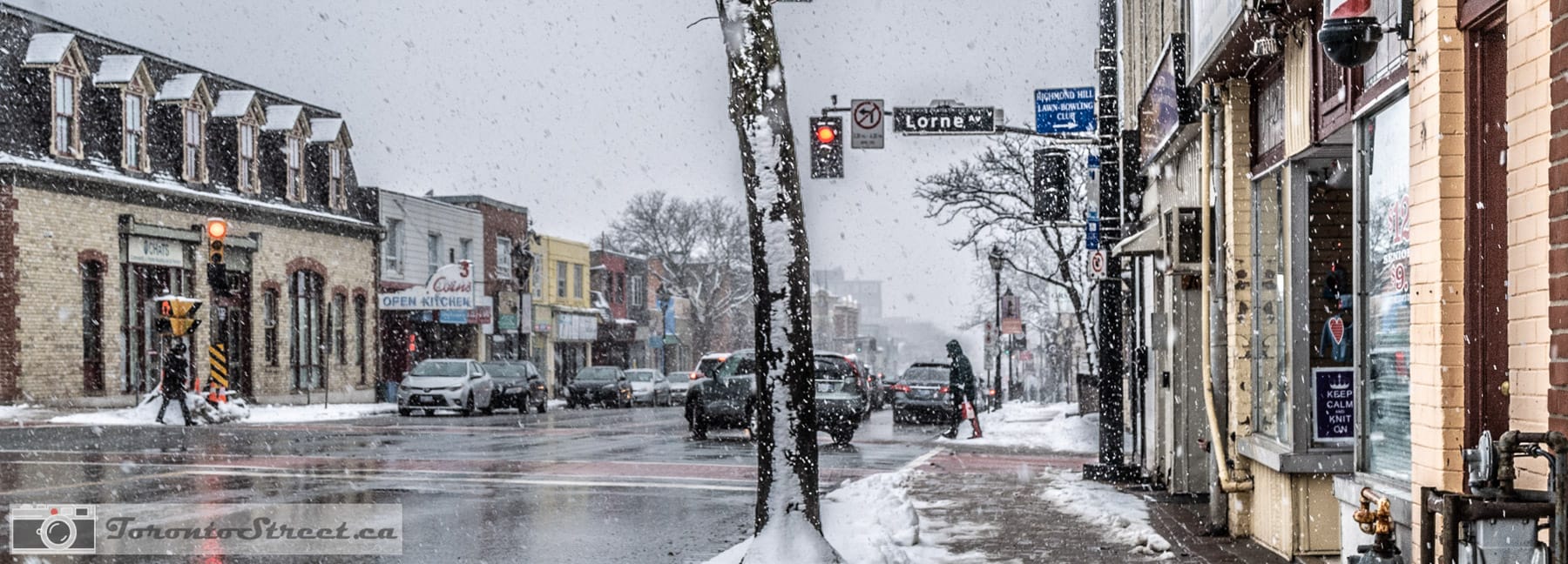
The Bowmanville frames are from 2015 and they were shot on a Fuji X-E2, which is a long way back now and a camera I have not talked about on here before. The snow on the main road through Richmond Hill is February 2020, on the Leica Q2, a few months after I got it. The two houses are May 2025 on the Q3, ten years almost to the week after the rainstorm.
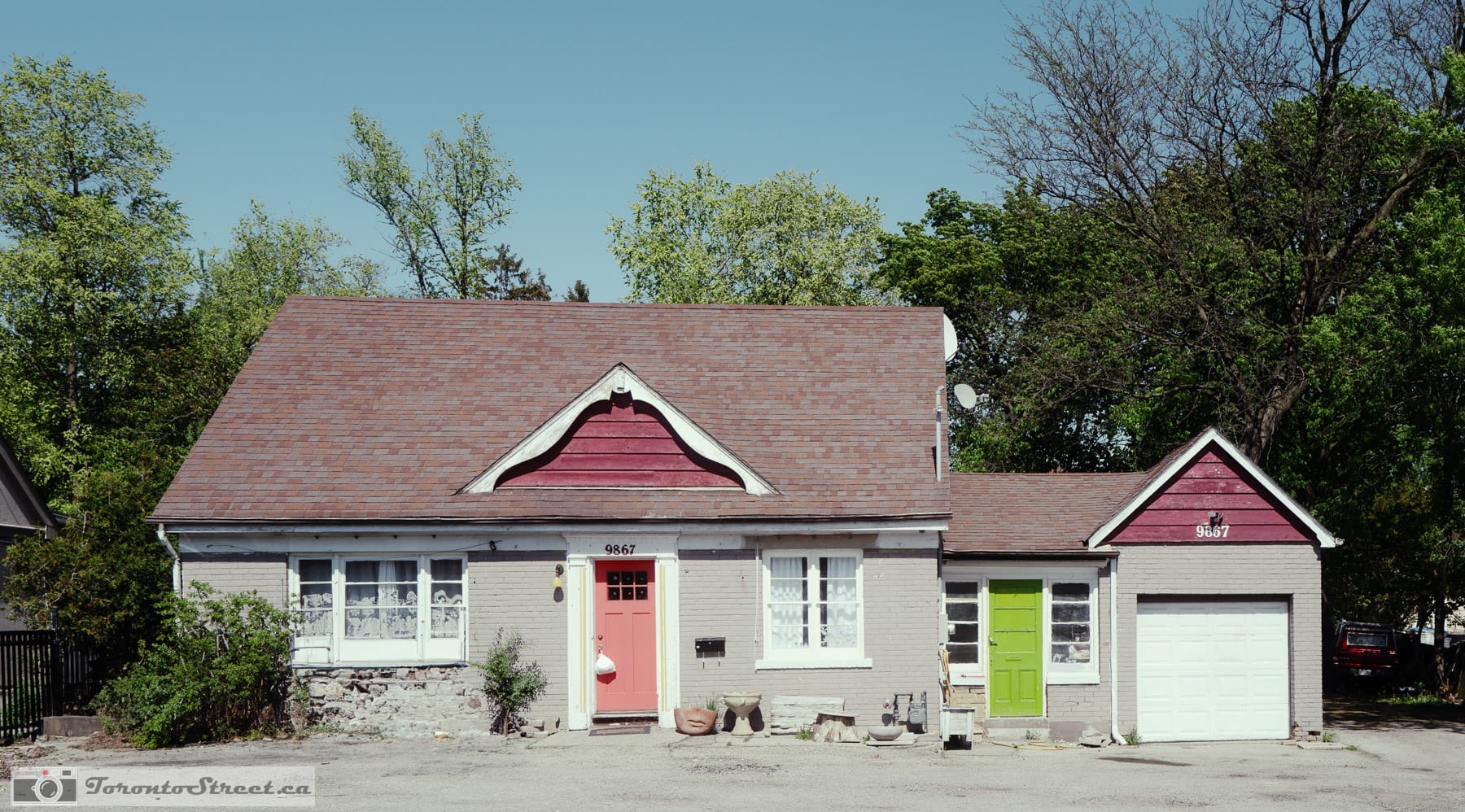
The houses are the ones I did not expect to like. One is grey brick with a coral front door and a lime green side door that has no business being lime green. Somebody chose that green. Somebody looks at it every day.
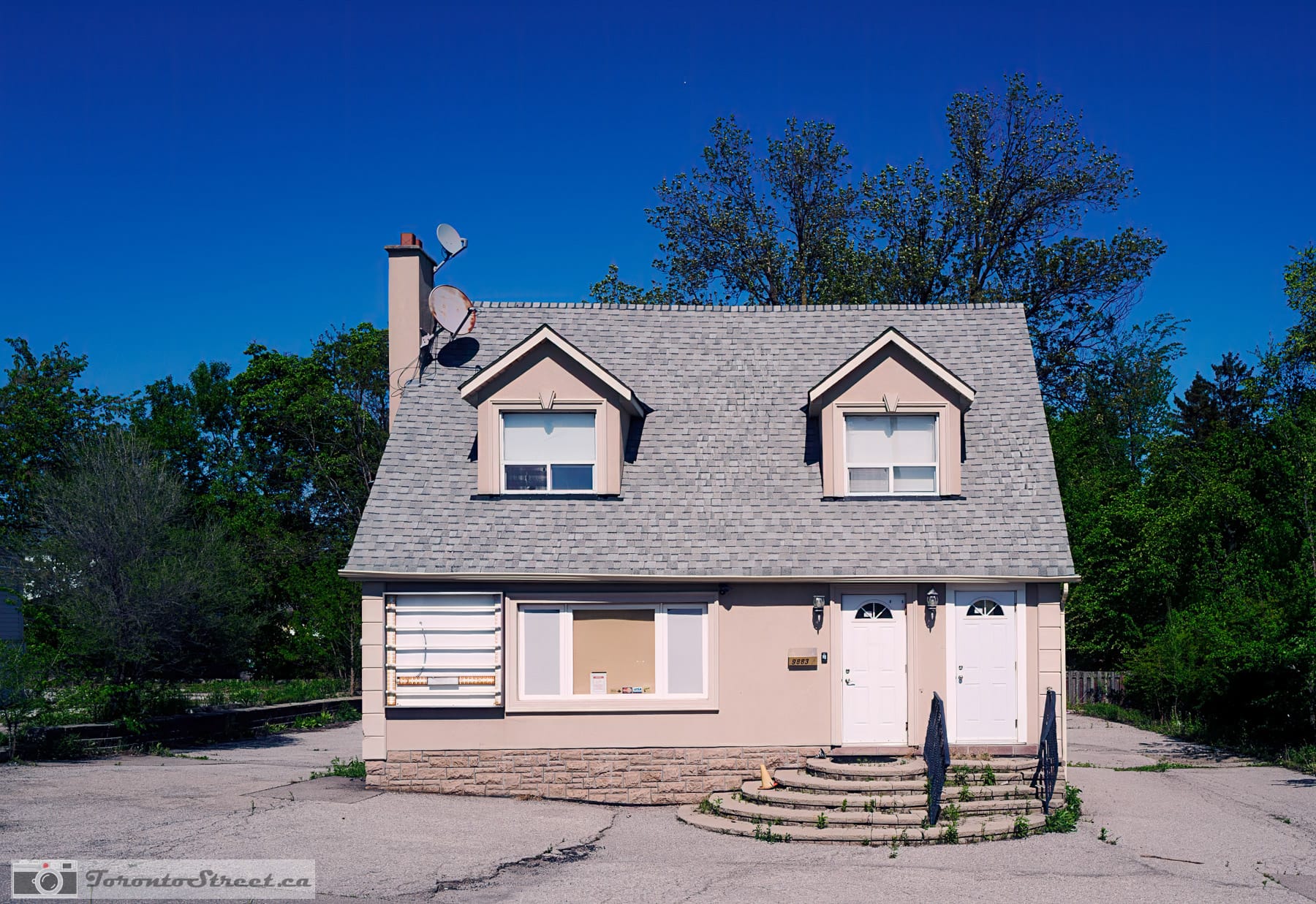
The other one I stood in front of a while trying to work out what had happened to it. Pink stucco, two dormers, and two white front doors side by side about four feet apart, with one set of curved steps coming up and landing dead centre between them, so you climb up and then you have to pick. There is a shop window punched into the front of it with a Visa sticker in the glass, three satellite dishes stacked up the chimney, and the whole thing sits by itself in an acre of cracked asphalt with not one blade of grass near it.
It has to be split in two inside, one unit each side, and the front was simply left to live with the arithmetic. That is the part I like. From the road it looks like nobody was thinking at all, and inside it is probably the most sensible building in town. I shot it straight on and dead centre and did nothing clever, because the house is doing all the work.
The gear changed three times across those ten years and the habit did not change at all. GTA suburban street photography is not some separate discipline from what I do downtown, it is the same thing with more room in it and fewer people watching. I still drive out, I still walk the one road, I still shoot what is in front of me in whatever light is there. Available light, no flash, nothing arranged, same as the rest of my street photography projects. If you go out to the edge of this region and give it an afternoon, it will give you something back. If you stop to look, that is.
Thanks for looking!