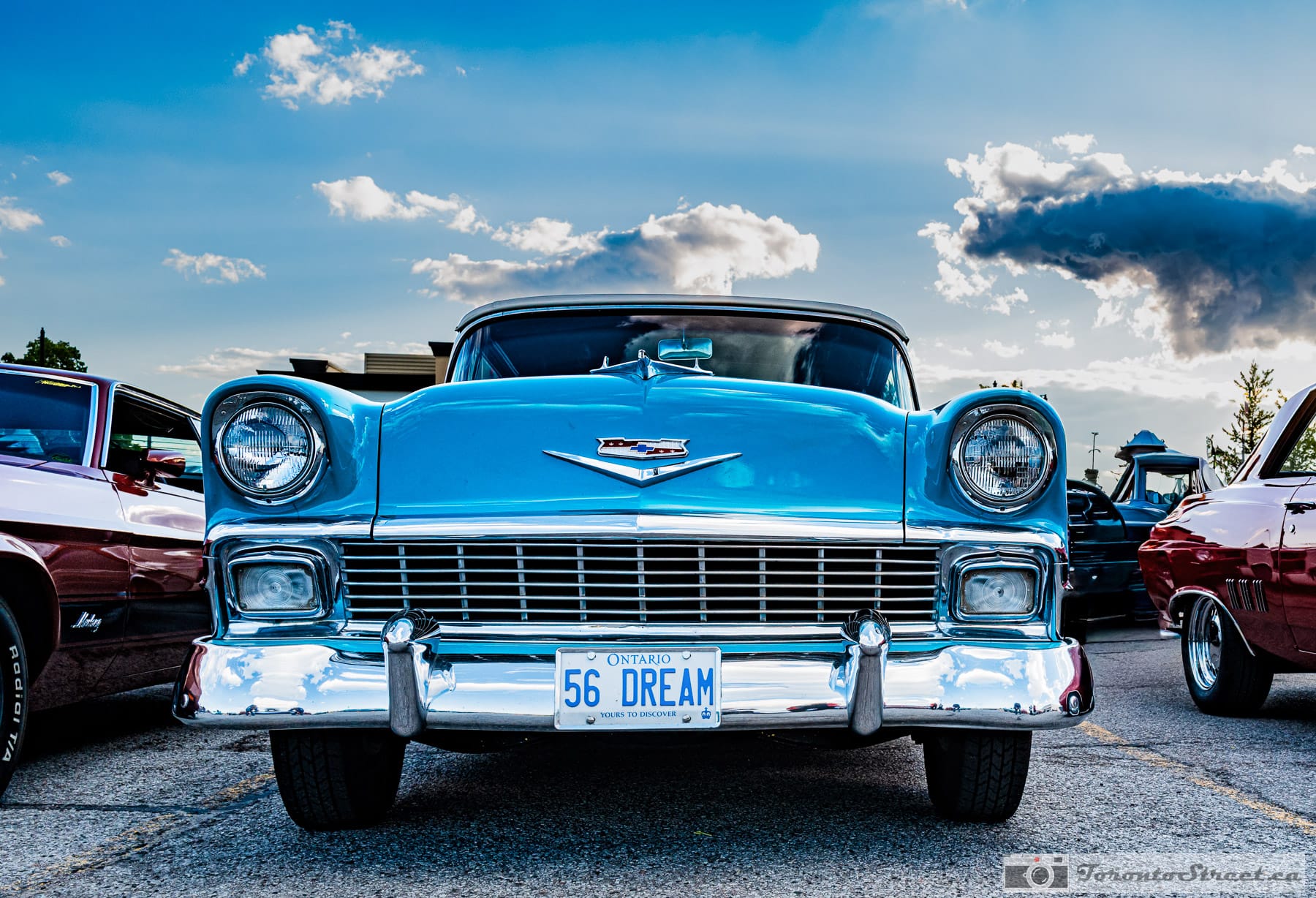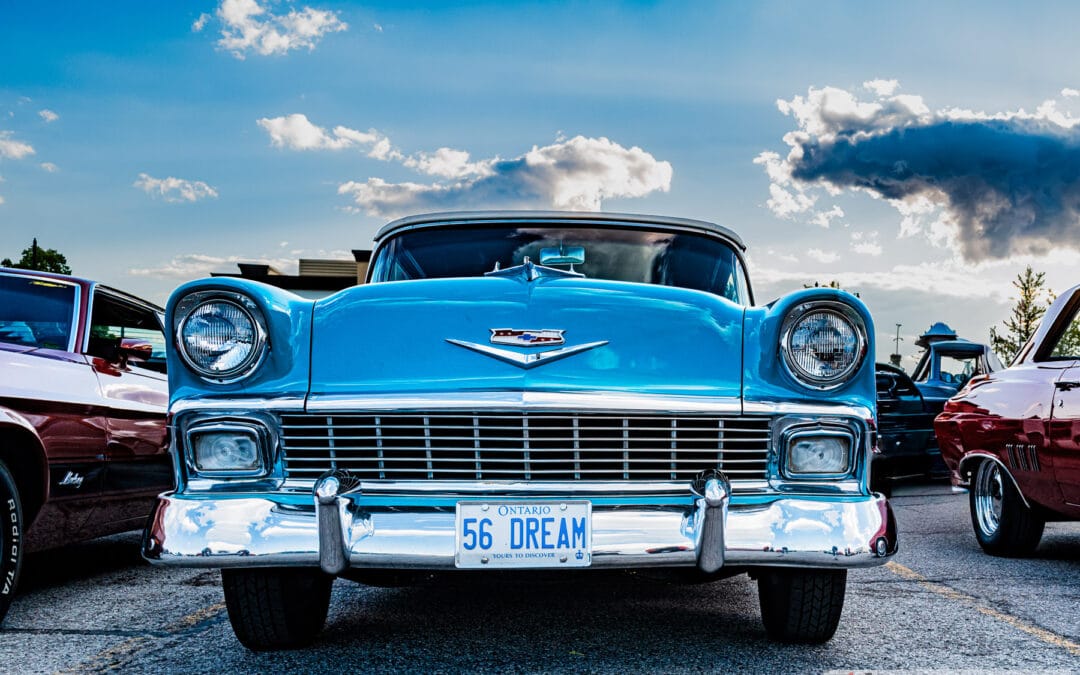
I photographed this car four times last summer without ever deciding to. Same turquoise Chevrolet, same 56 DREAM plate, same parking lot, four different Monday nights between the middle of May and the first of September. Somewhere in the middle of all that I went looking for the 1956 Bel Air gas cap, because a fellow standing beside me at the meet told me where it was and I did not believe him.
Four Mondays, One Car, One Summer
The nineteenth of May, the twenty sixth of May, the twenty first of July, the first of September. I did not notice the pattern until I put the files together and read the dates off them. Top up in May, when it was still cold enough at seven o’clock to want one. Top down in July and September.
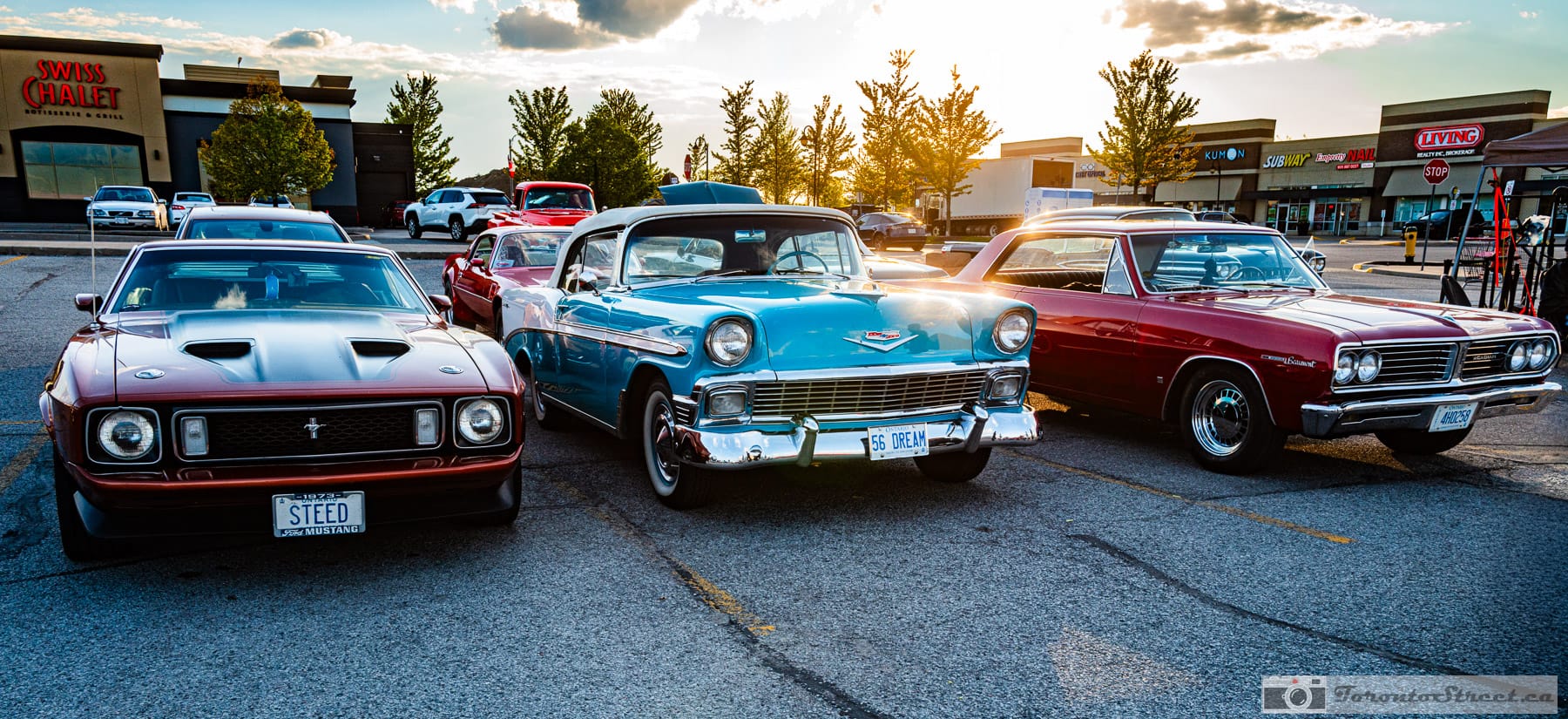
That is what a weekly meet actually is, and it is the part nobody photographs. This one runs all summer in a Canadian Tire plaza in Richmond Hill, up in the north end of the Toronto area, and the same forty or fifty cars come back week after week, all season. After a while you are not photographing a car any more, you are photographing something that turns up. You start to recognise the plate from across the lot before you can see the car it is bolted to.
Where the 1956 Bel Air Gas Cap Actually Lives
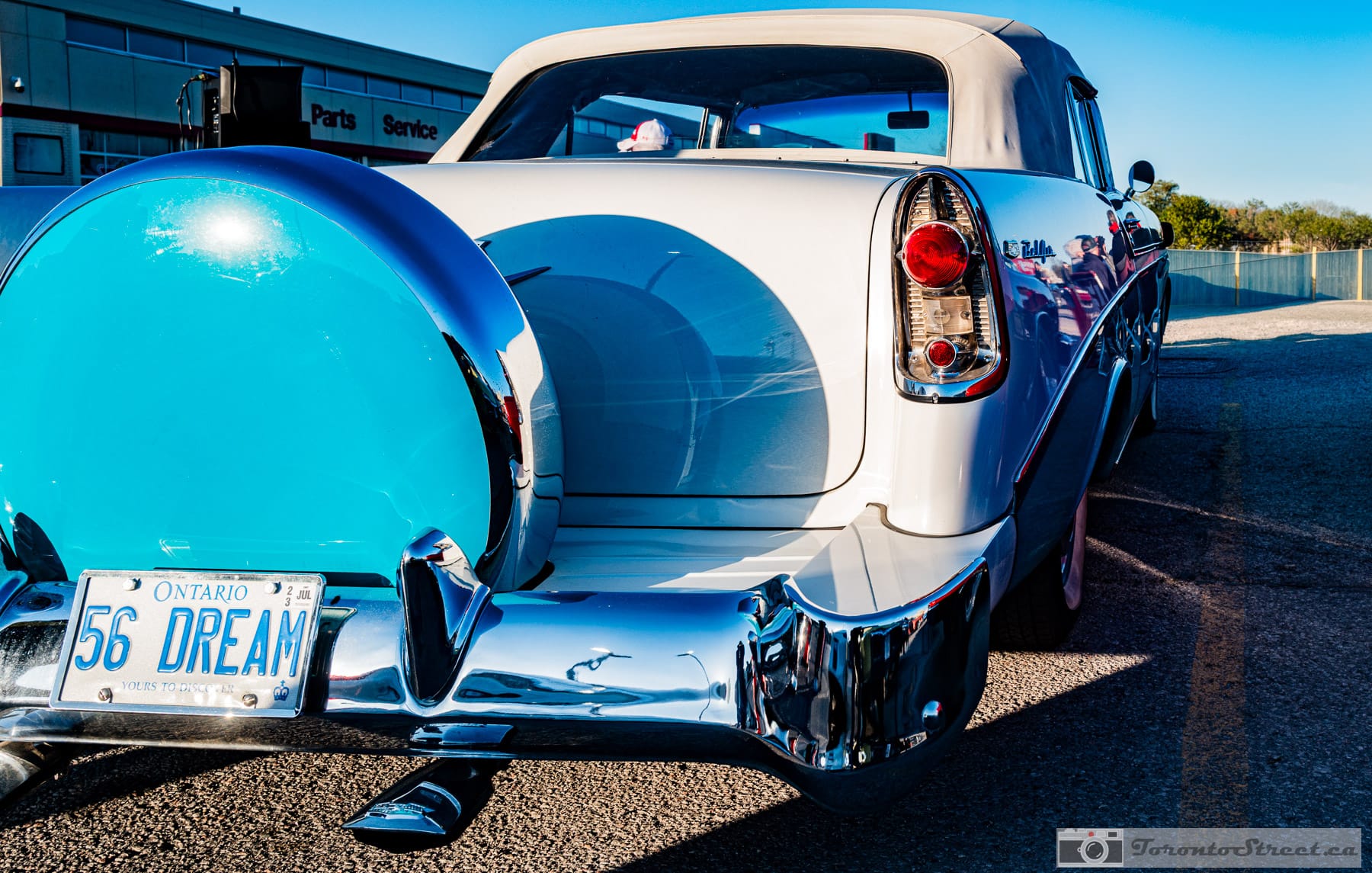
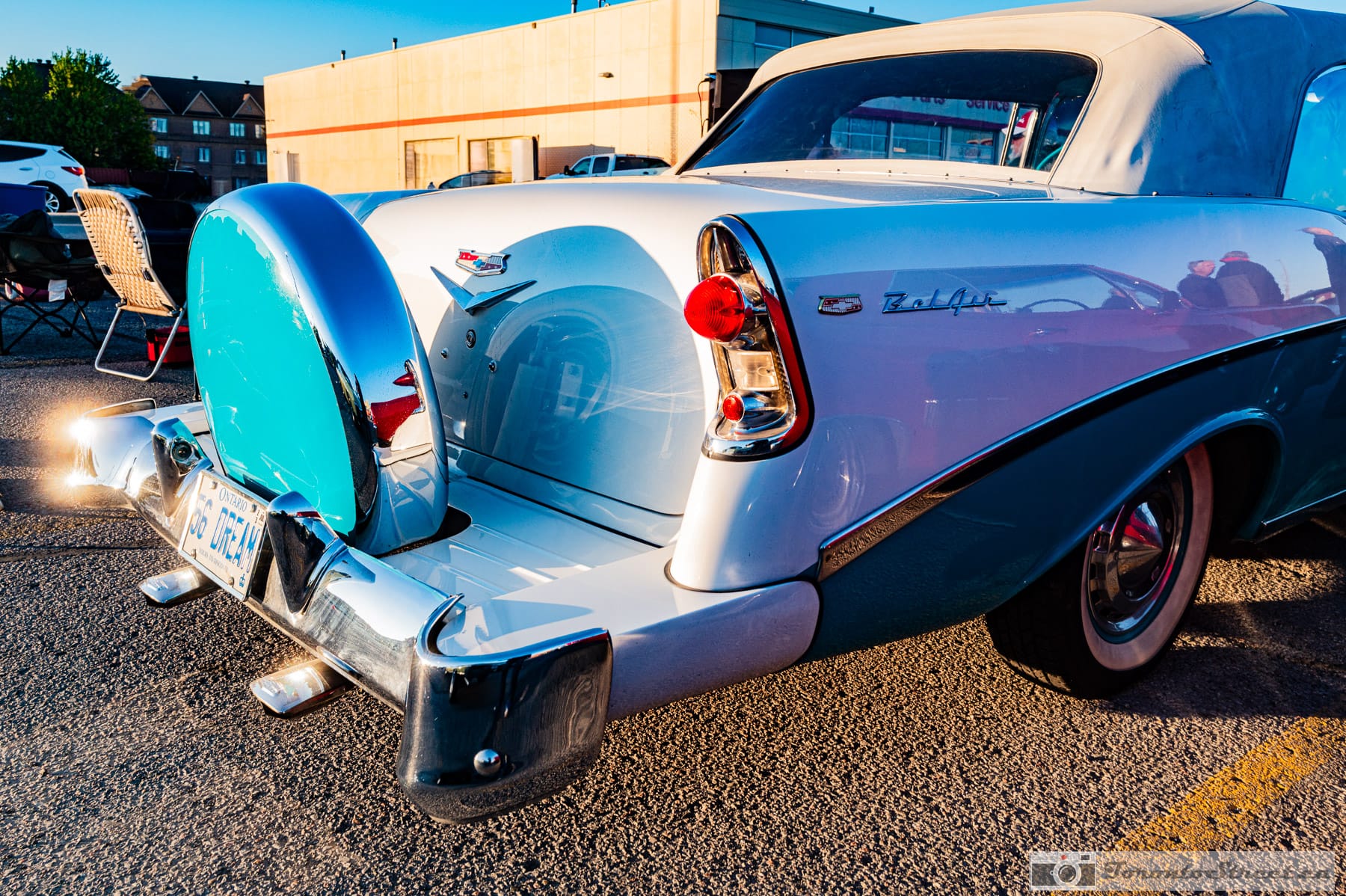
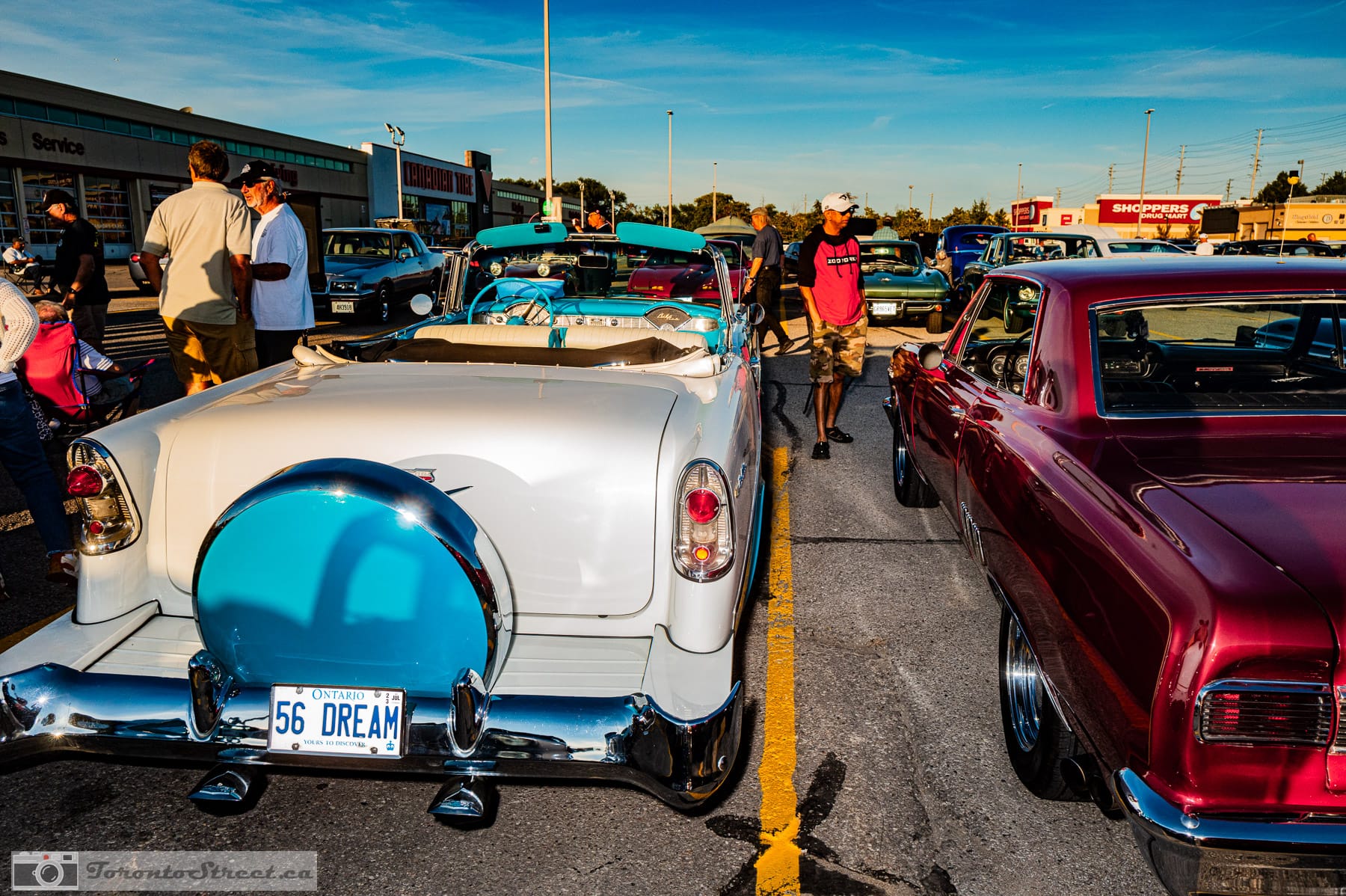
On the driver’s side, behind the taillight. The whole chrome taillight housing swings down and the filler neck is sitting in there. That is the 1956 Bel Air gas cap, and I have walked past a hundred of these cars without knowing it.
Chevrolet did it so the quarter panel could stay clean, no cap, no little door, nothing breaking up the side of the car. It is a lovely idea and it did not last, and the reason is obvious the moment you say it out loud. You have put the fuel filler in the part of the car that gets hit from behind. It went away, and the tidy body line went with it.
Once you know, you cannot stop looking at it. Three of my frames from these nights are of the back of this car and I did not plan a single one of them that way.
The Year Chevrolet Threw Out the Egg Crate
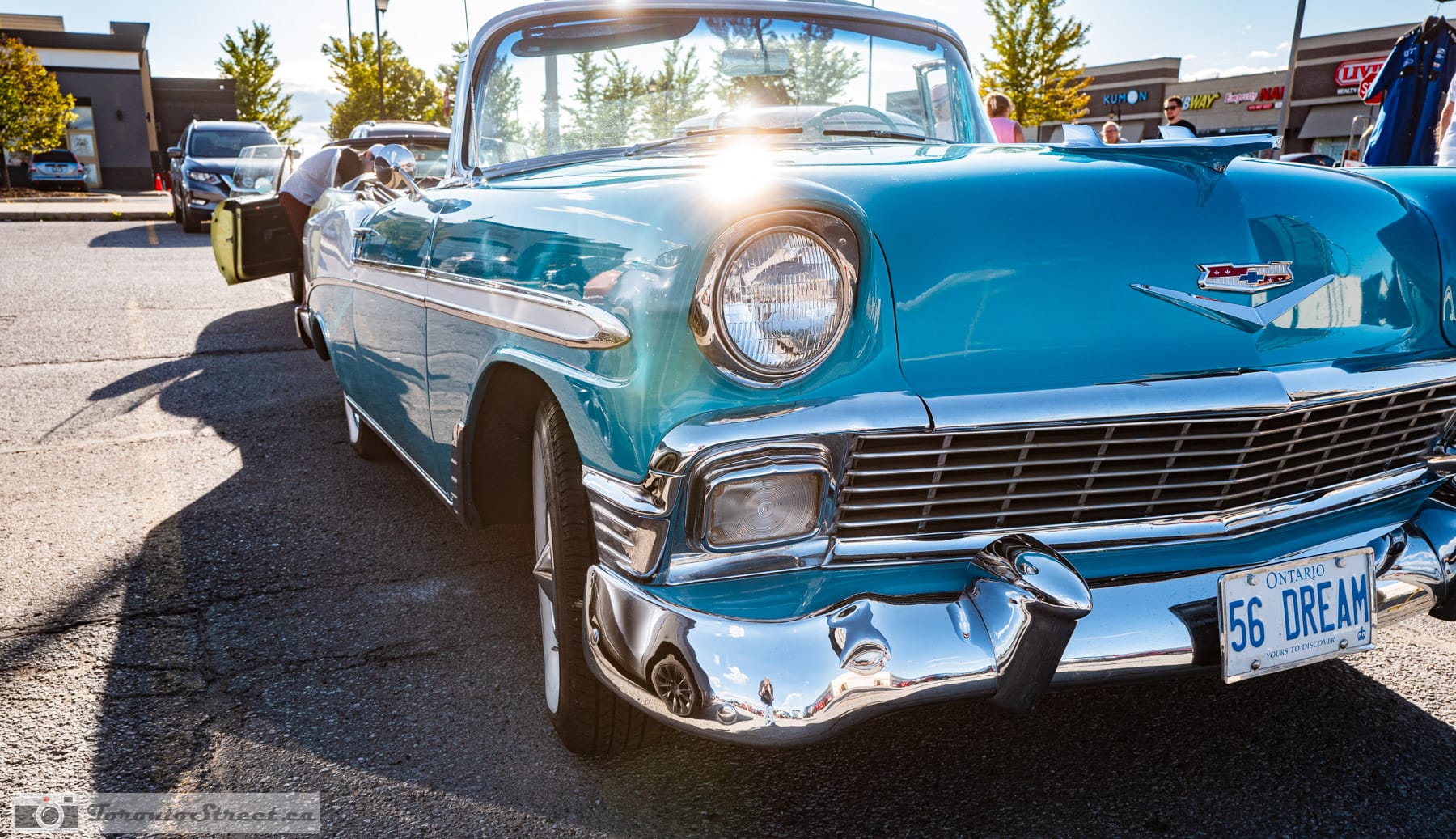
The front is the other tell. A 1956 wears one wide grille straight across the whole nose, a long bar of chrome teeth from headlight to headlight. The year before it was a small egg crate sitting in the middle with a lot of body colour around it, which is the car I shot at this same lot and wrote up as the 1955. Park the two side by side and you would never mix them up again.
People lump all three Tri-Five years together and they are not the same car at all. Fifty feet away, in bad light, the grille tells you the year.
Turquoise All the Way Through
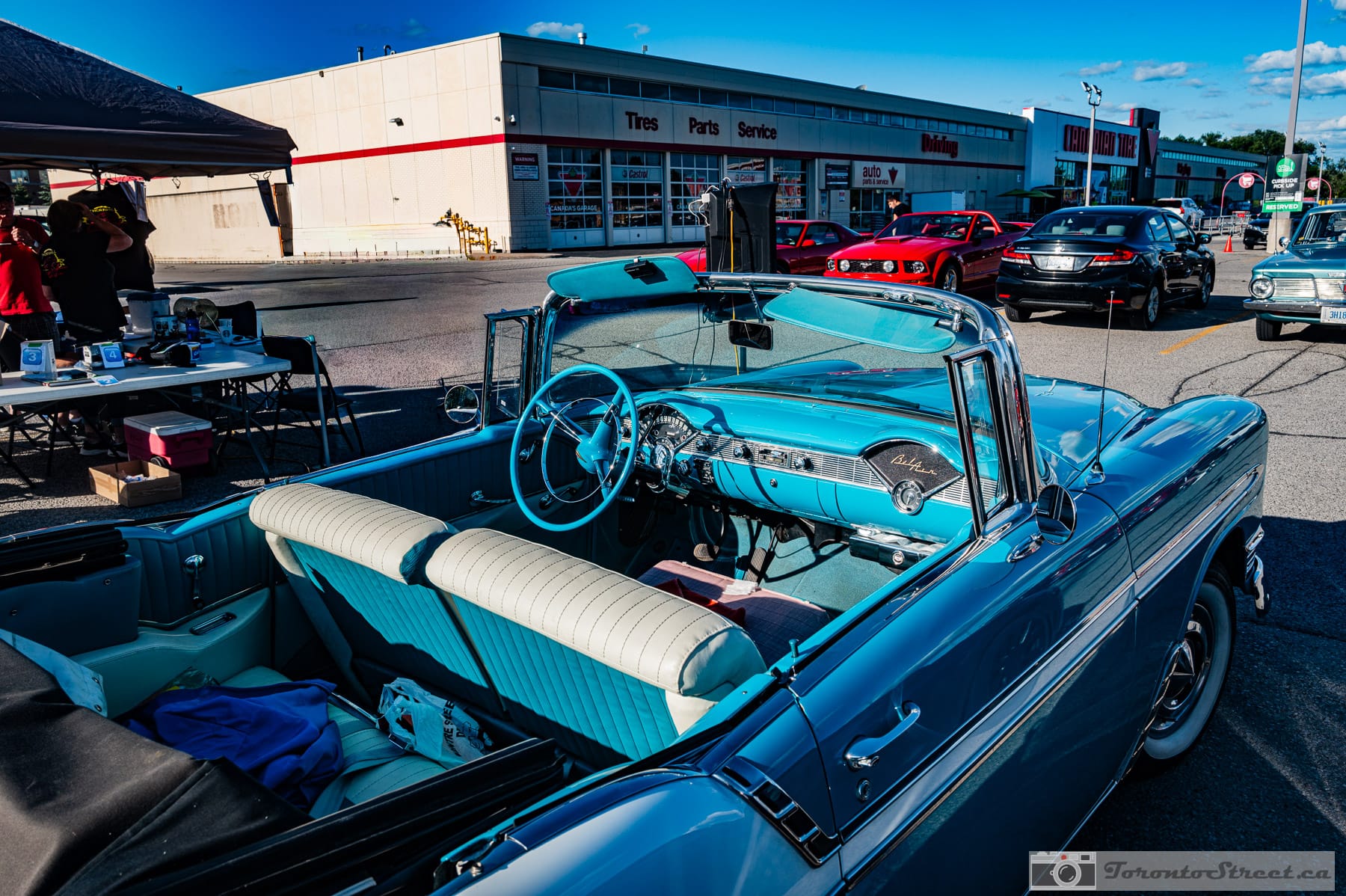
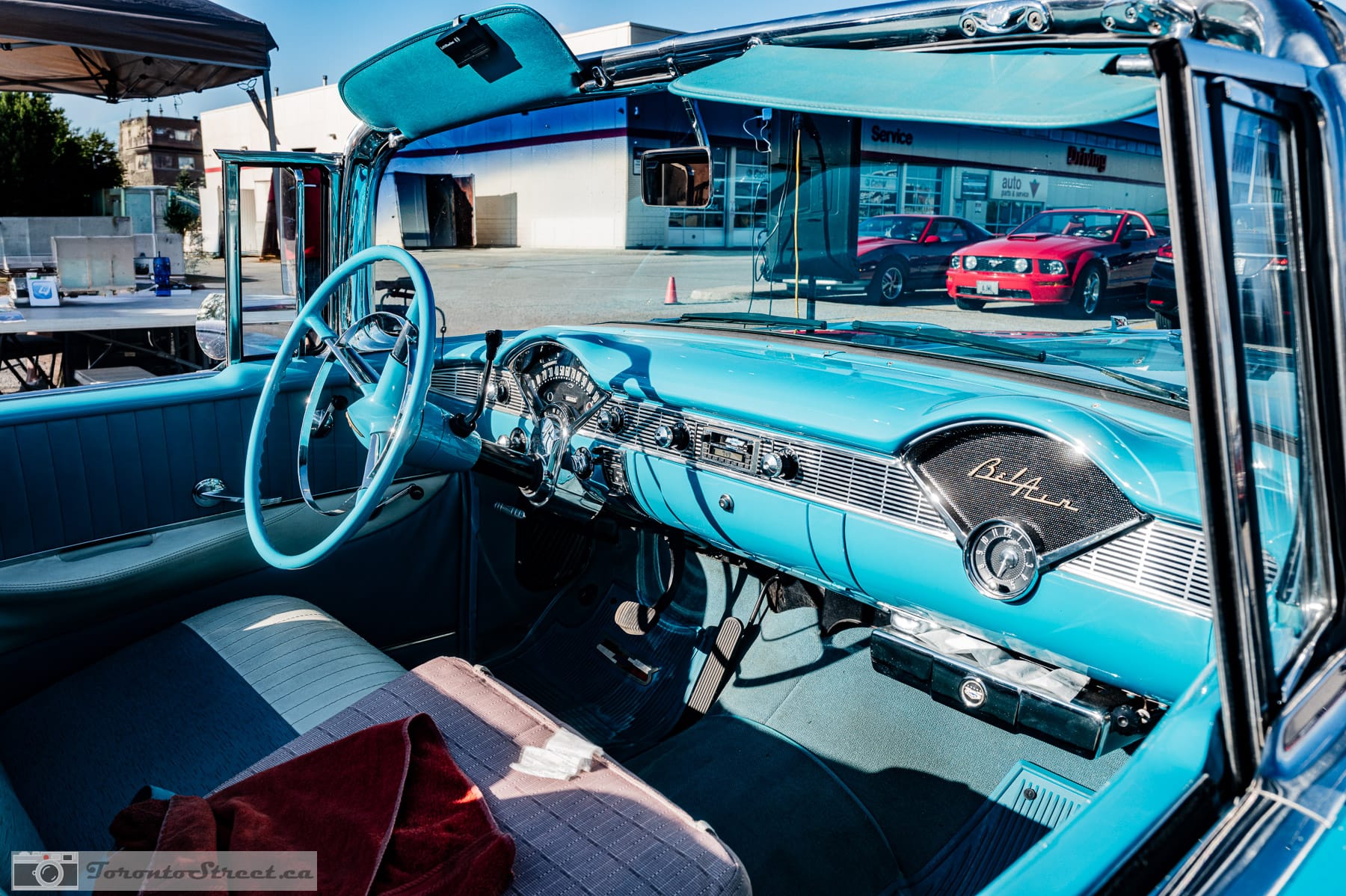
In July the top was down and I could finally see what I had been missing. The dash is turquoise. The steering wheel is turquoise. The seats are turquoise and white in wide vertical pleats, and the door panels carry it too. It is one colour decision carried right through the whole car, inside and out, and nobody builds anything like that now. You get black, or you get grey.
I shot down into it from above the door, with the Canadian Tire sign across the lot and a red Mustang sitting in the reflection on the glass. I like that the ordinary plaza keeps getting into these pictures. It is where the car actually is.
All of this is the Leica Q3, available light, nothing on the car touched or moved. The fixed 28mm means the only way to fill the frame with a taillight is to go and put my face next to it, which is also how the conversation about the gas cap started in the first place. The first set of this car, the one with the top down in the golden light, is here, and there are more of these Monday nights north of Toronto in my street photography projects.
Thanks for looking!