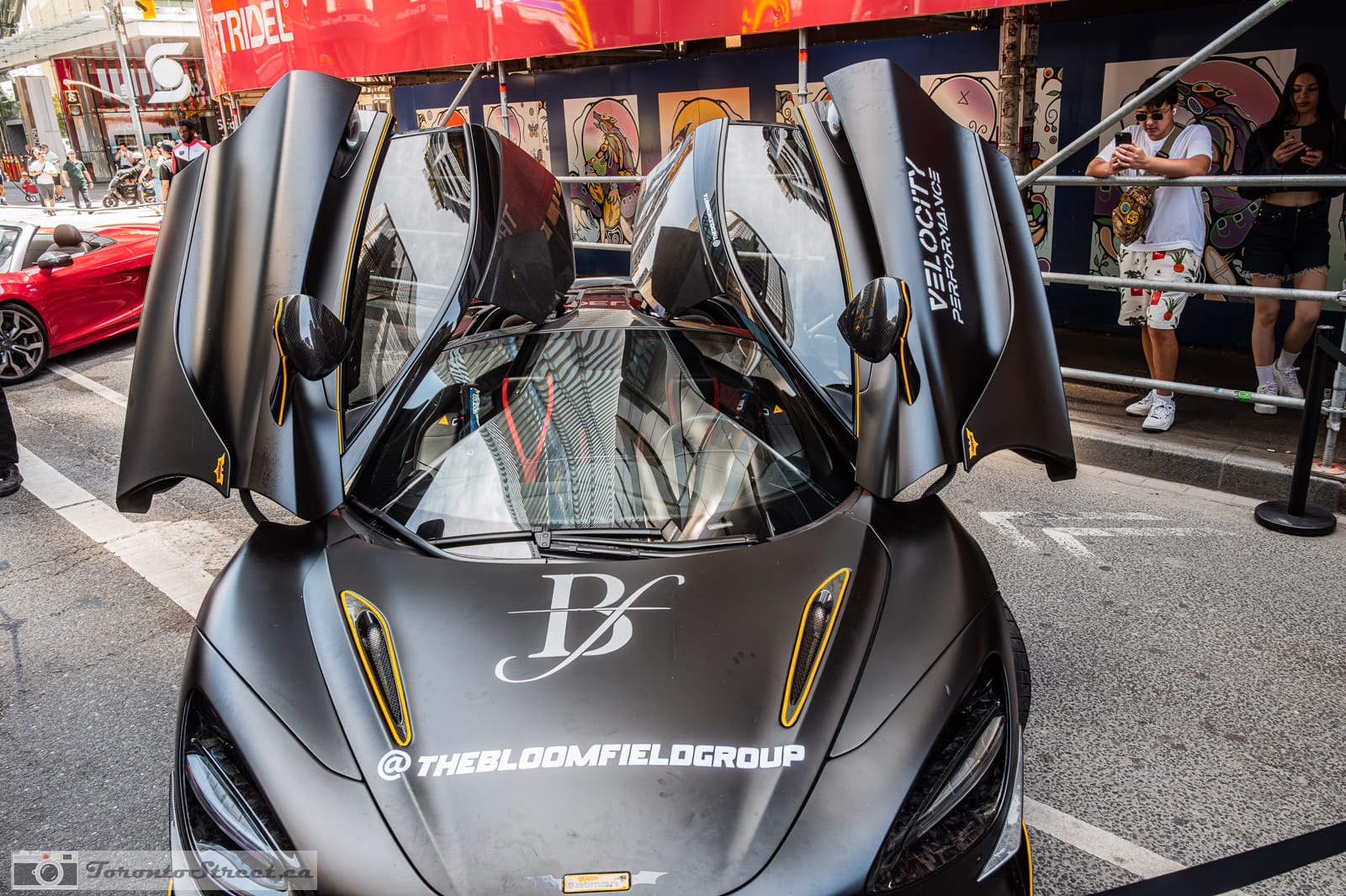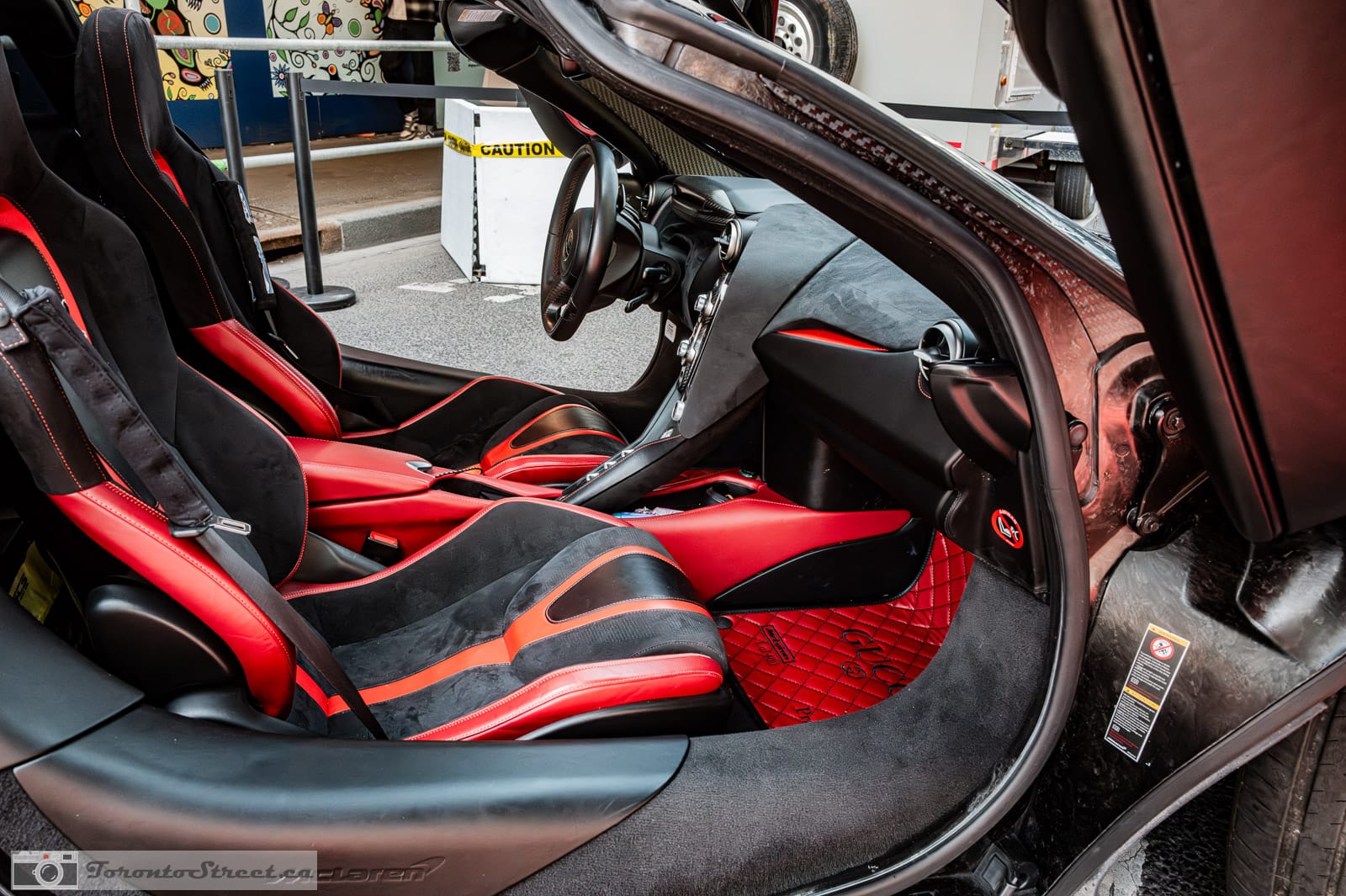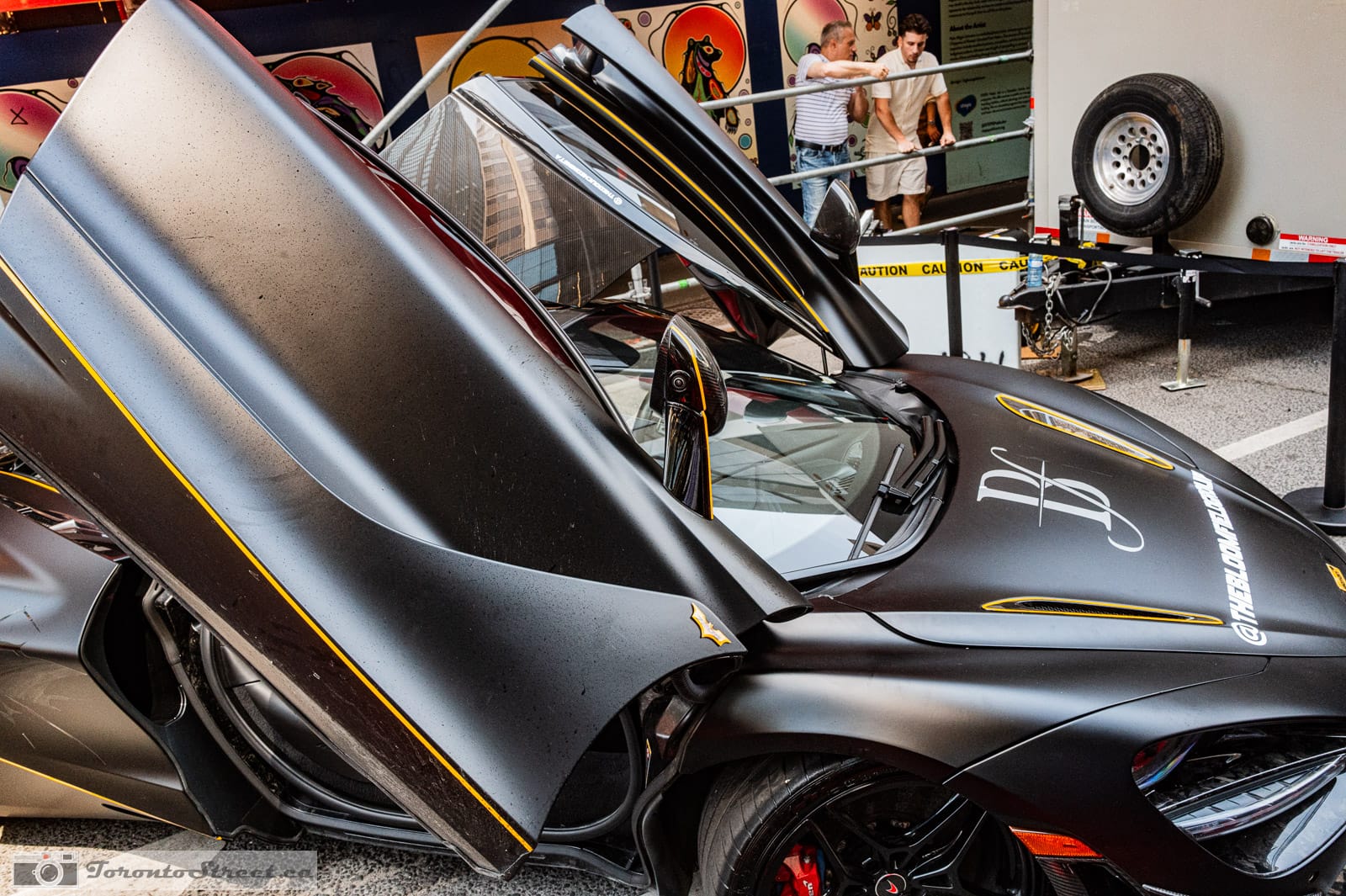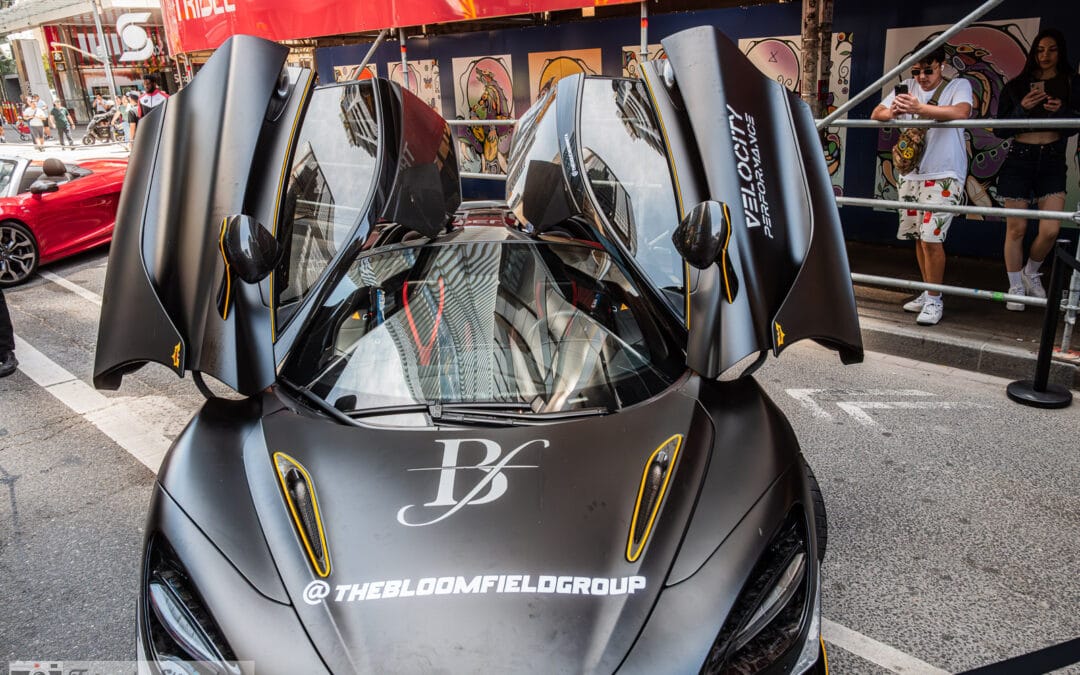
Father’s Day on Bloor Street, and the quietest thing at the whole show had both doors pointing at the sky. It sat low against the curb in a satin finish so flat it seemed to drink the noon sun instead of reflecting it, a matte black McLaren 720S with a thin gold pinstripe running the length of every panel. People were three deep around it. I waited for a gap, got low, and started working the angles. Then a door swung up and showed me what the outside of the car was hiding.
The colour.
Spotting a Matte Black McLaren 720S on the Mink Mile
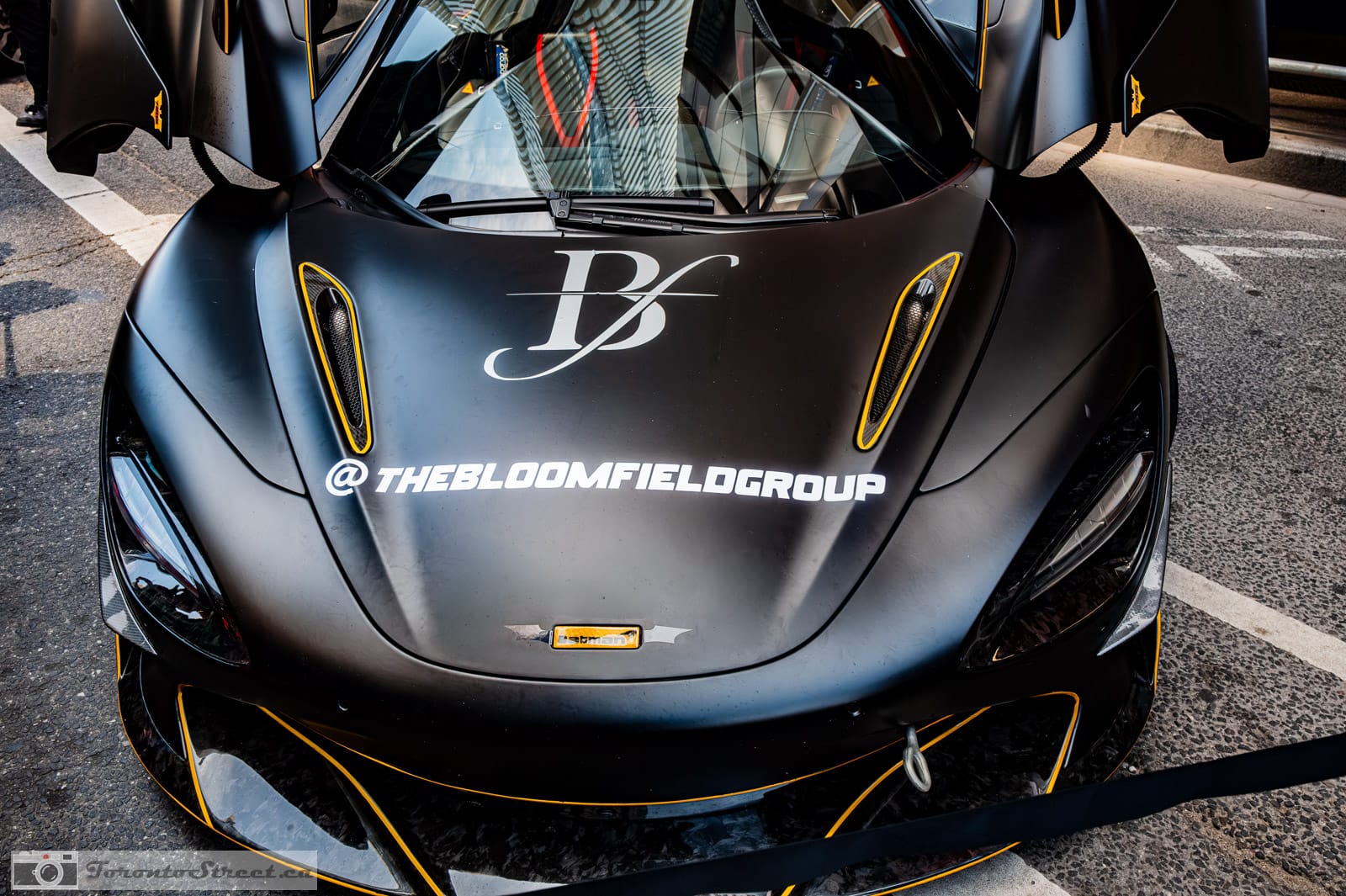
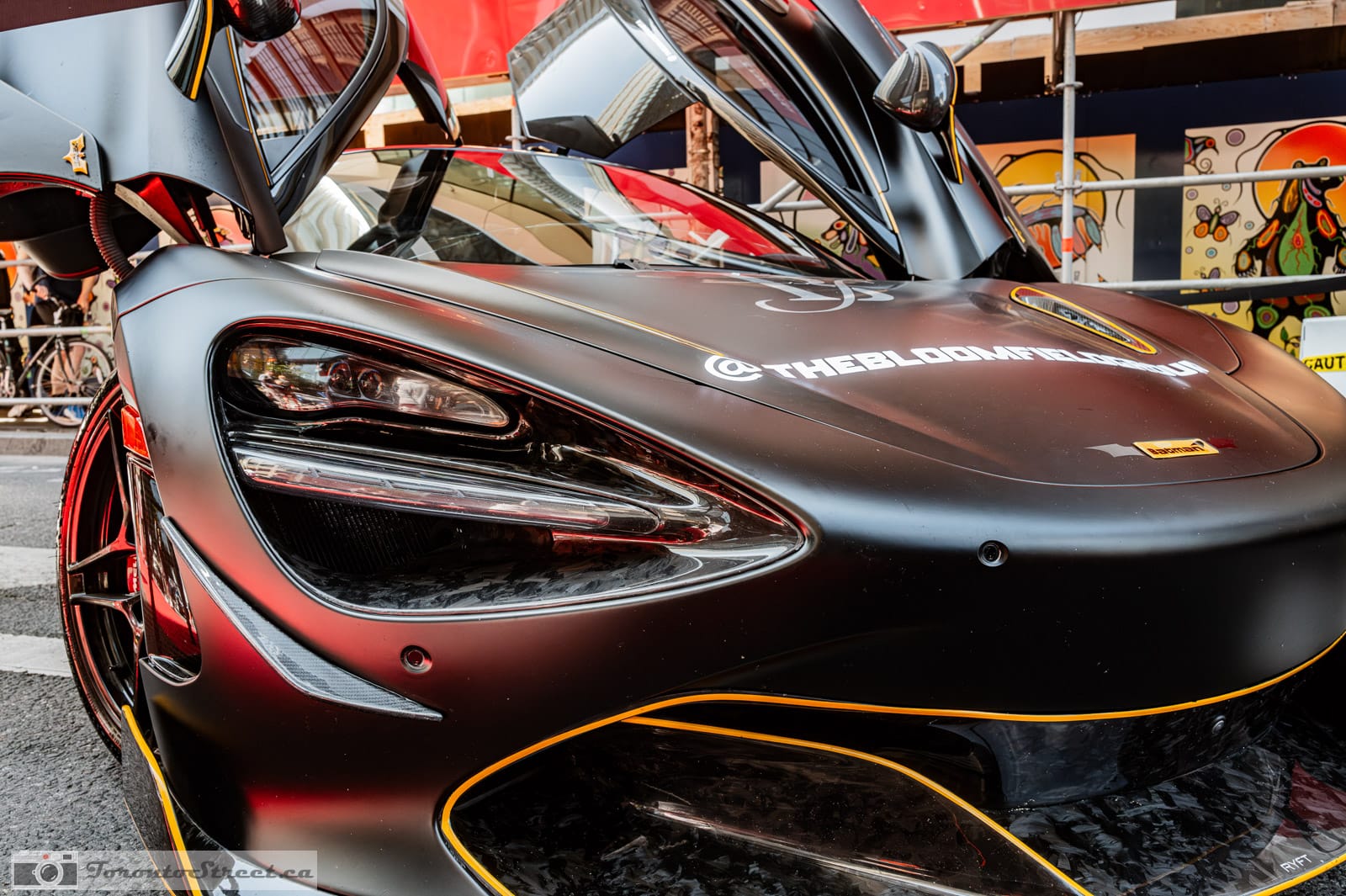
A 720S is not a subtle car to begin with. There is a 4.0 litre twin turbo V8 sitting behind the cabin, somewhere near 710 horsepower, and a face McLaren built around two deep “eye socket” headlights that double as air intakes. This one wore a satin wrap with fine gold lines tracing the edges, the kind of finish that looks like nothing in a parking garage and like a panther on a sunny street. A matte black McLaren 720S hides in the shade and detonates in direct sun, and this one had found its sun.
What actually stopped me was not the power or the name. It was how that flat paint behaved in the light, or rather how it refused to.
Butterfly Doors and a Red Cockpit
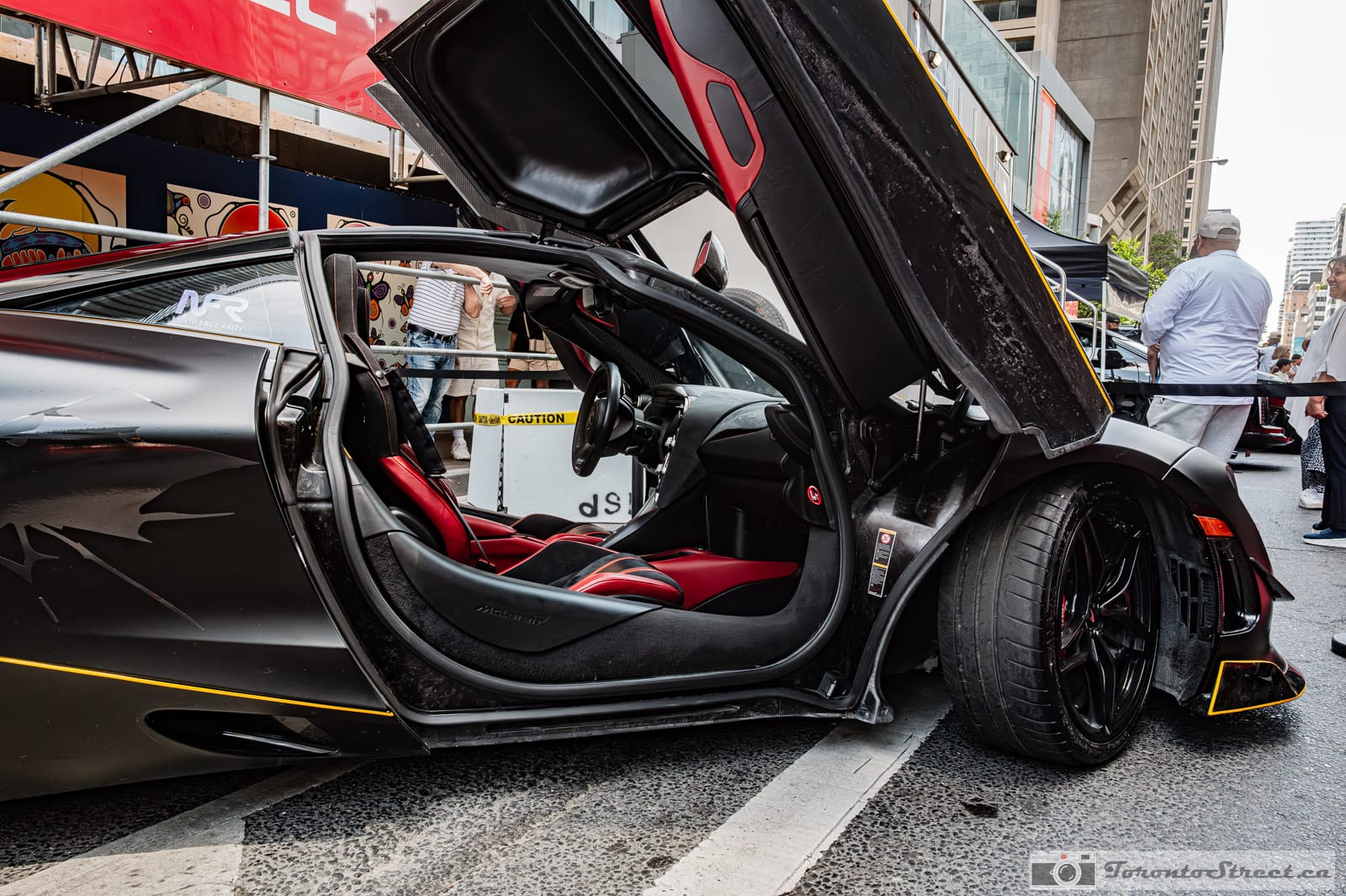
The doors are the McLaren signature. They are called dihedral, hinged to swing up and forward, and when both are open the car looks like it is about to leave the pavement. With an exterior that absorbs almost everything, the open doors do something useful for a photographer. They break the black. They throw a hard diagonal across the frame, and they reveal the one thing the body is keeping to itself, a cockpit trimmed in red and charcoal with a diamond stitched floor and two sculpted seats. Flat black on the outside, all heat on the inside. That contrast is the whole picture.
Shooting Satin Black in Hard Noon Light
Matte black is the most difficult paint there is to photograph. Gloss gives you reflections and highlights that describe the shape of a panel. Satin gives you almost nothing. It eats the light and flattens every curve into one dark mass. With the Leica Q3 I exposed for the few highlights the car did give me, the gold pinstripe, the chrome inside the headlights, the thin red line where the sun wrapped a fender, and I let the rest fall to black on purpose. The 28mm held the whole car, the storefronts, and the crowd behind it in one frame, because a supercar on Bloor is never only a car. It is the street that stopped to look at it.
And the people are still the reason I am out there. A young woman lifted her phone over the wing of an open door to take the same shot a hundred others had taken that day. A man bent down at the nose, hands on his knees, reading the badge like it owed him an answer. At a car show the metal is the magnet, but the faces are the photograph, the second someone forgets the crowd and just stares. You can see more of these Yorkville frames in my projects.
The car will be back next year. So will I.
Thanks for looking!