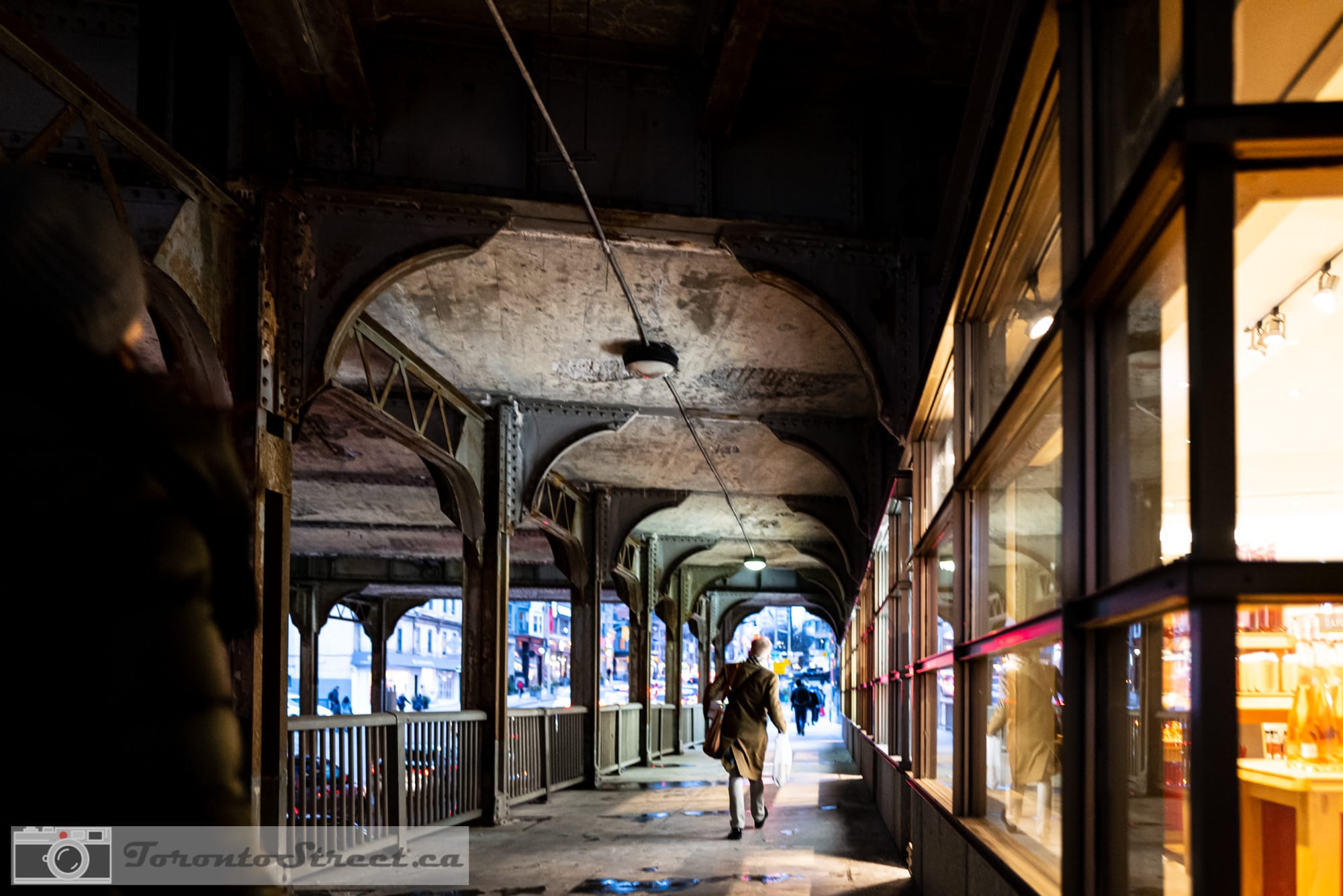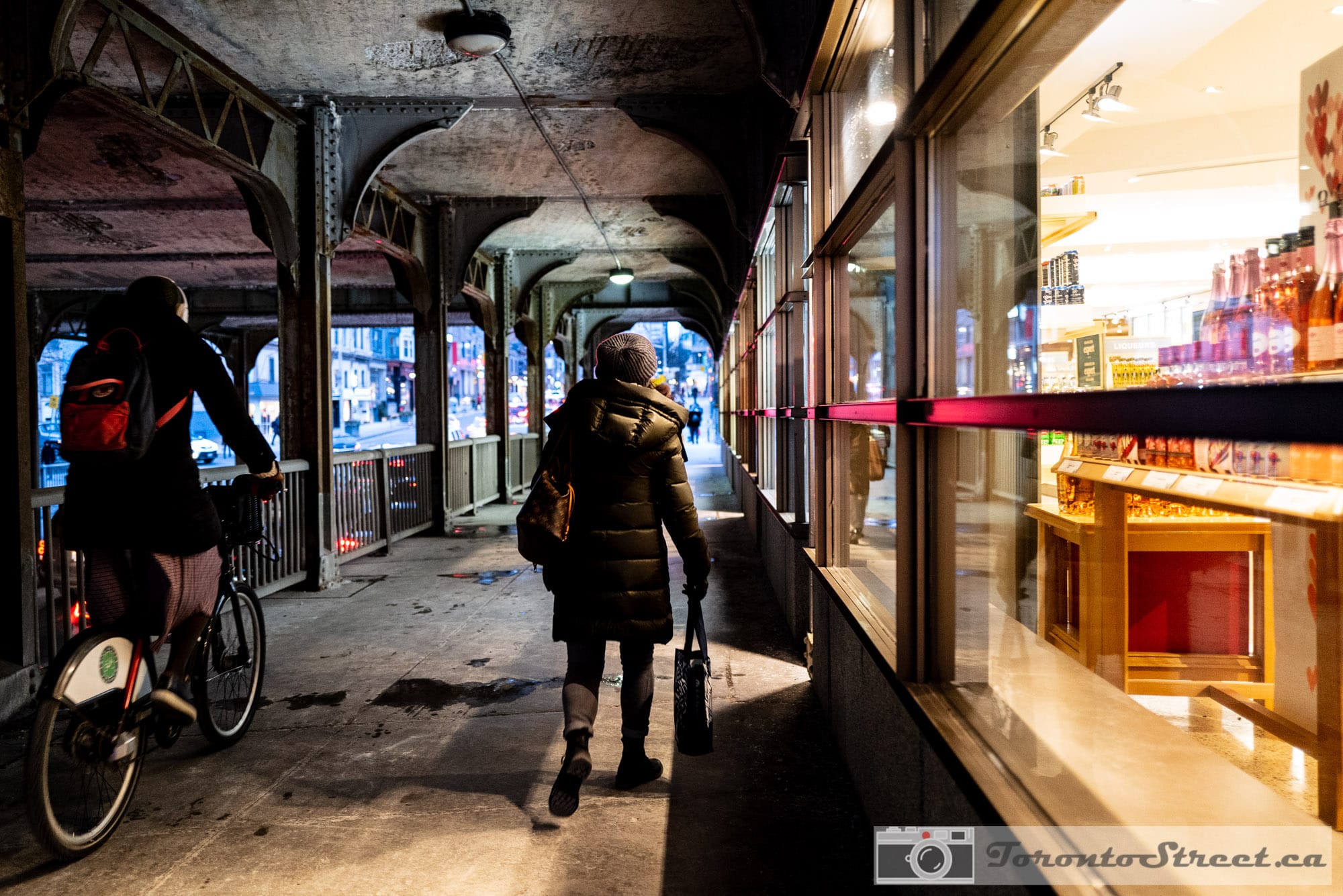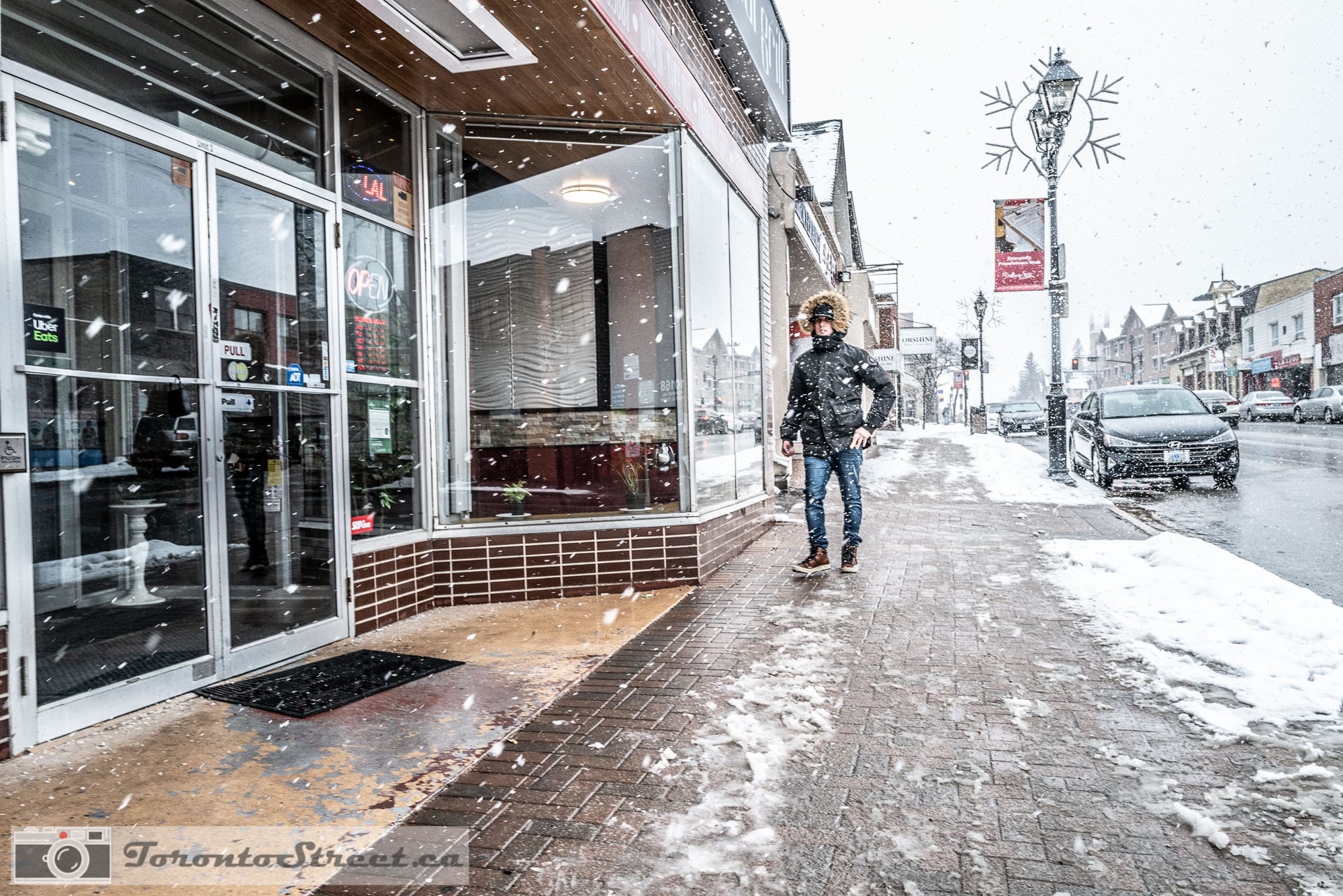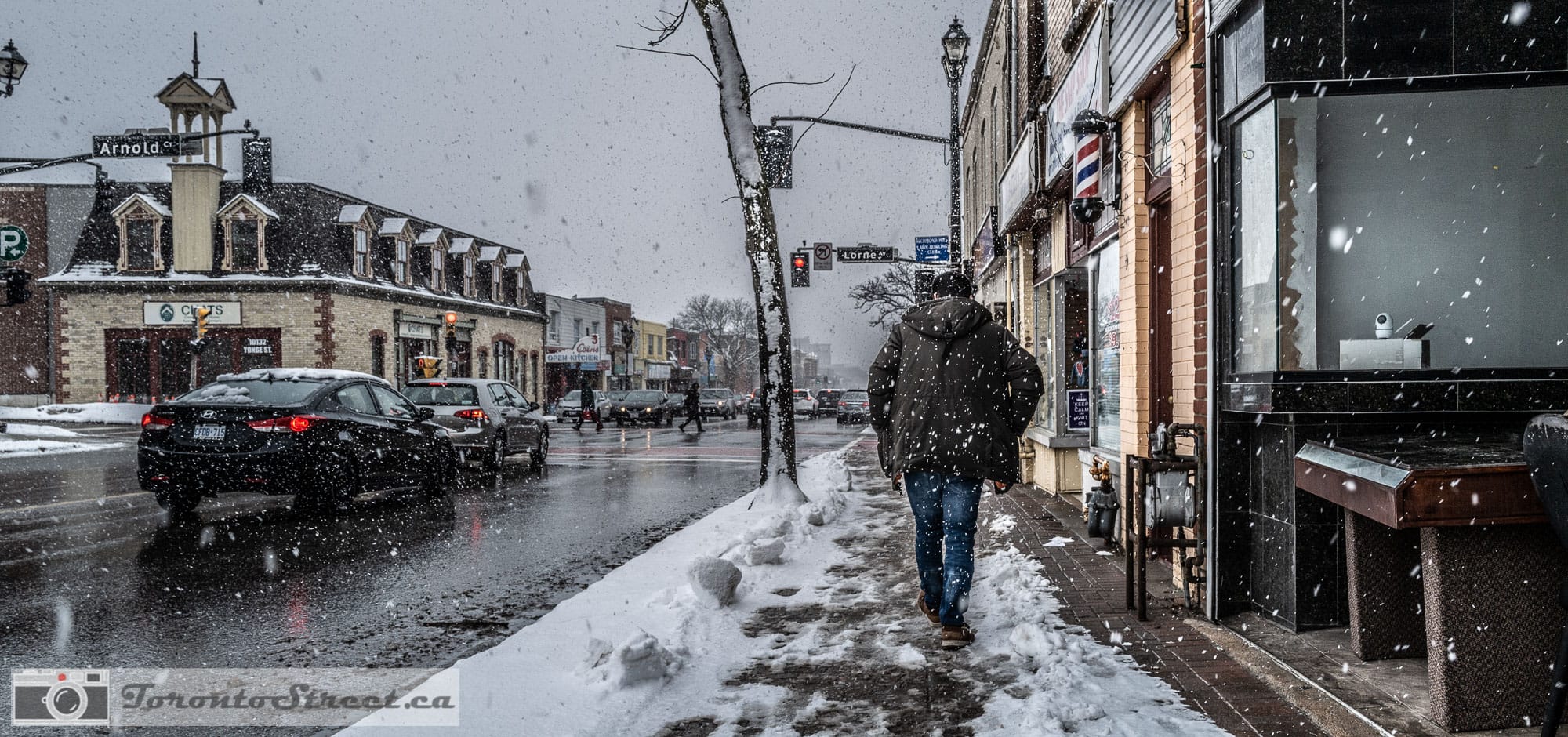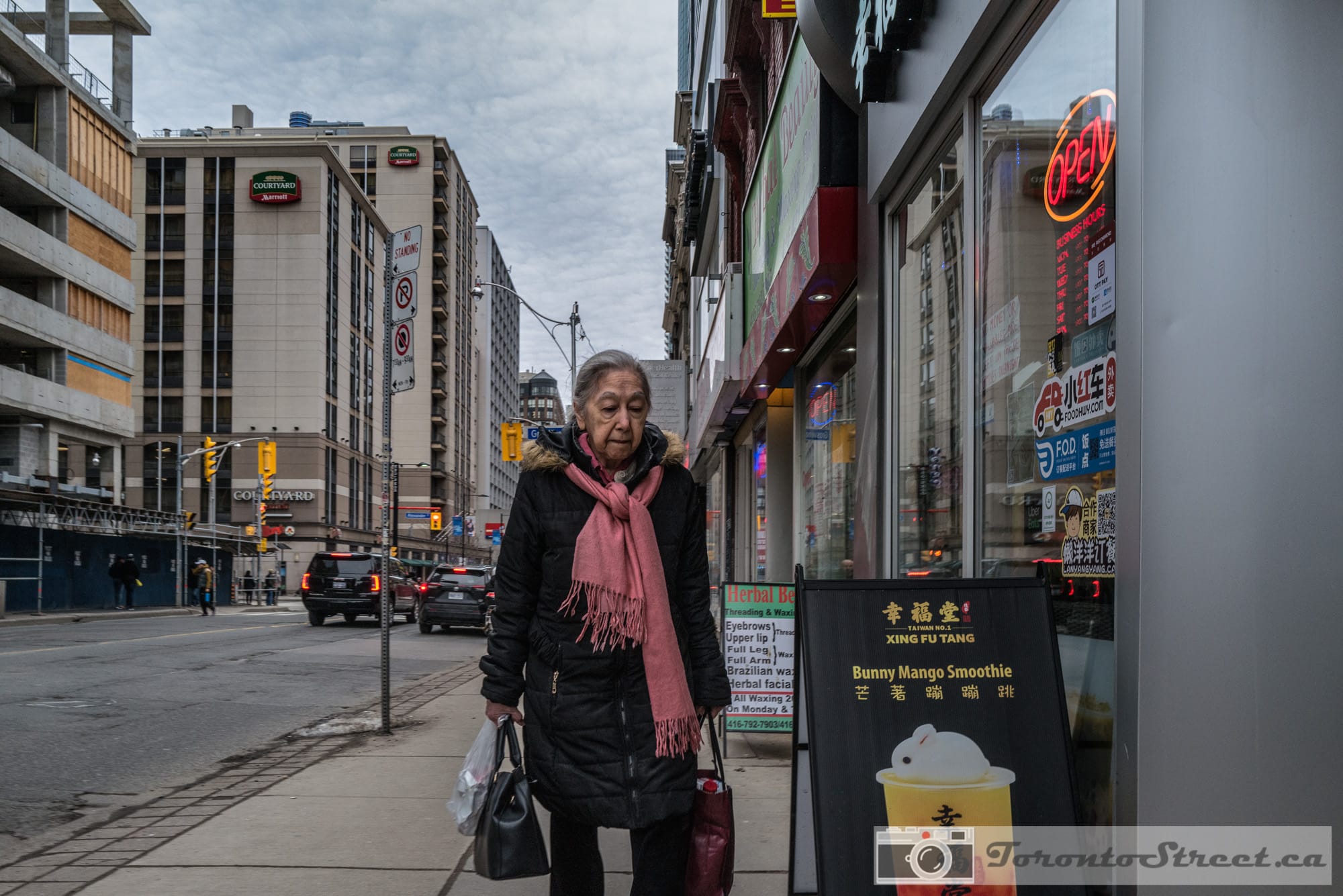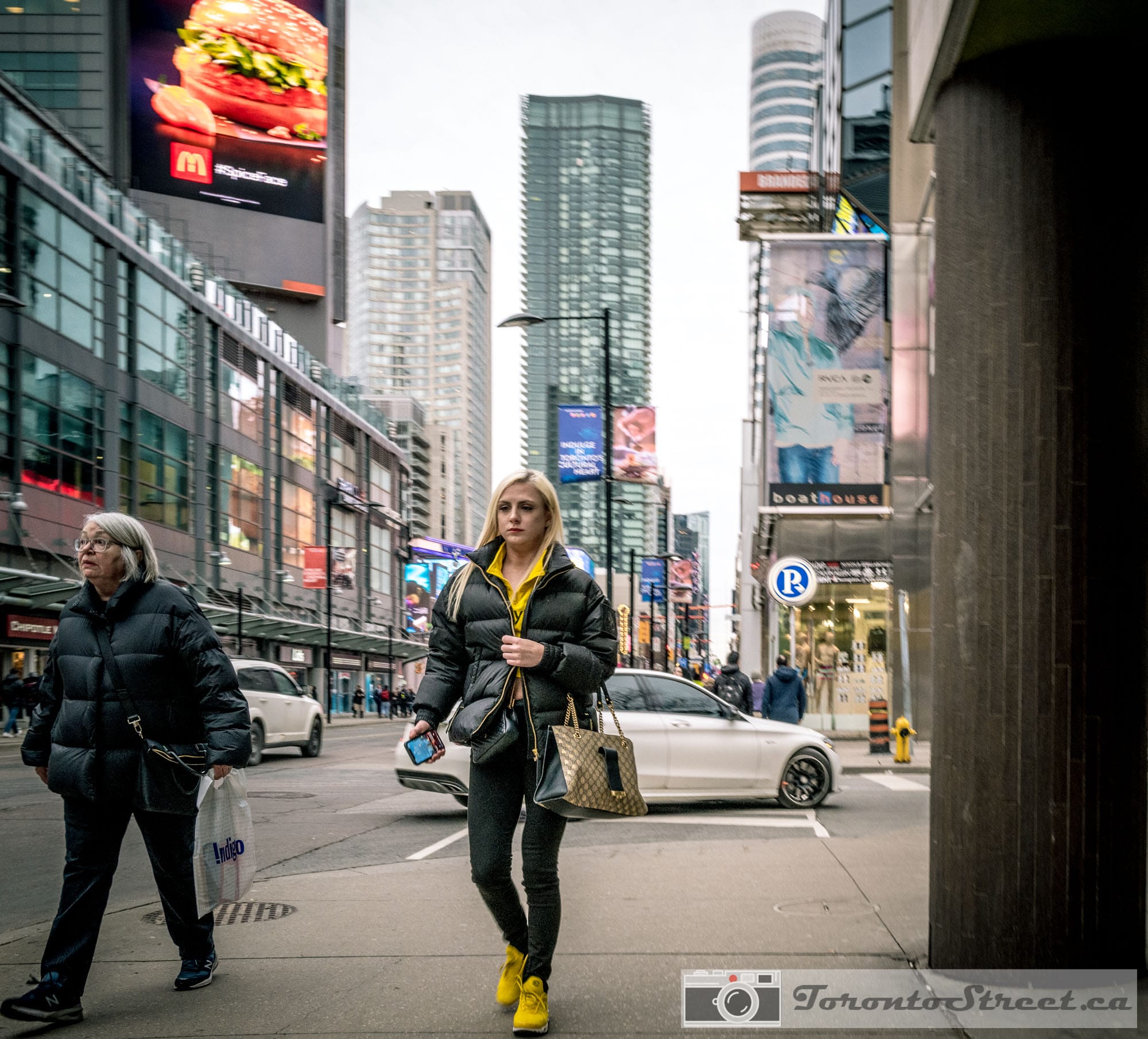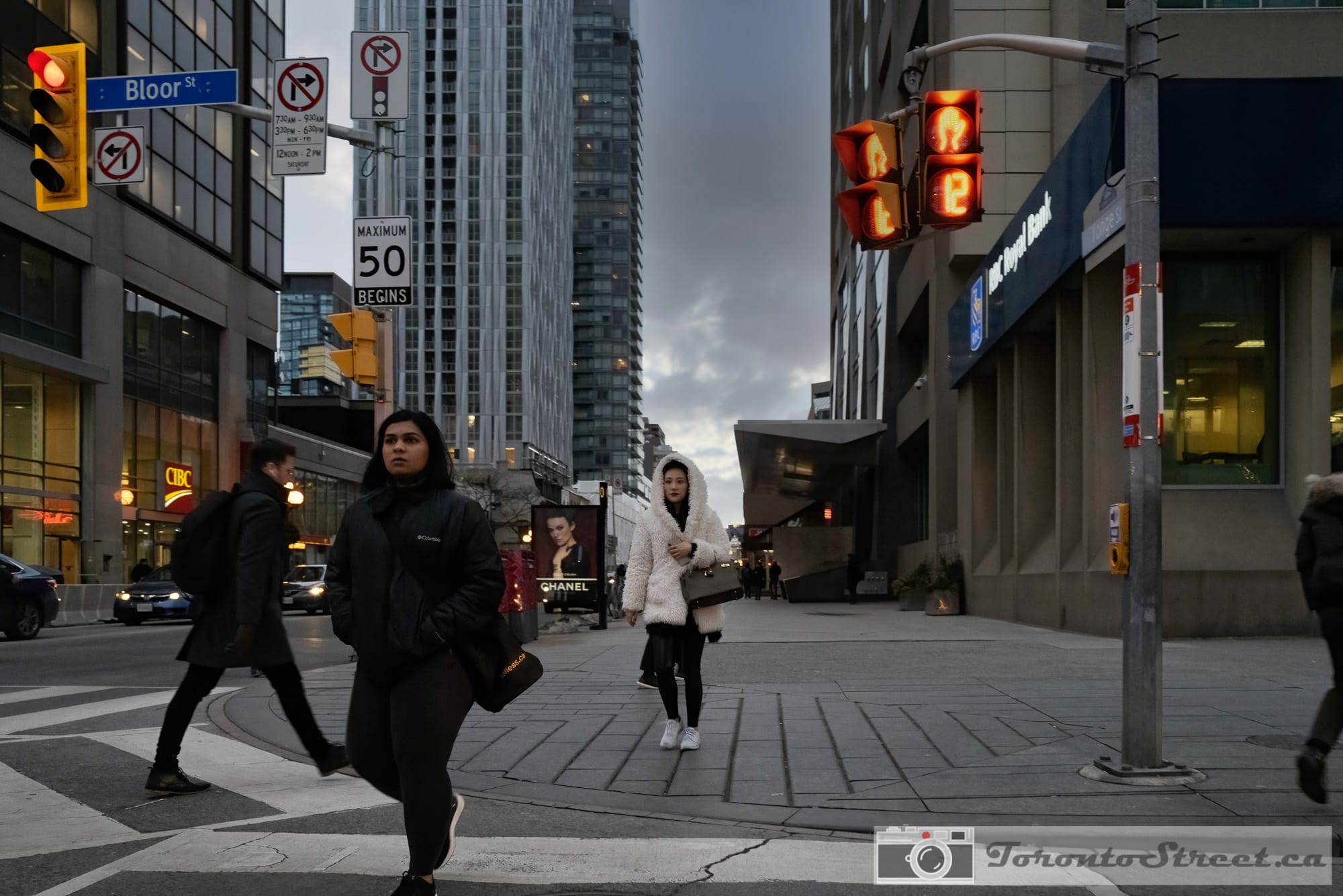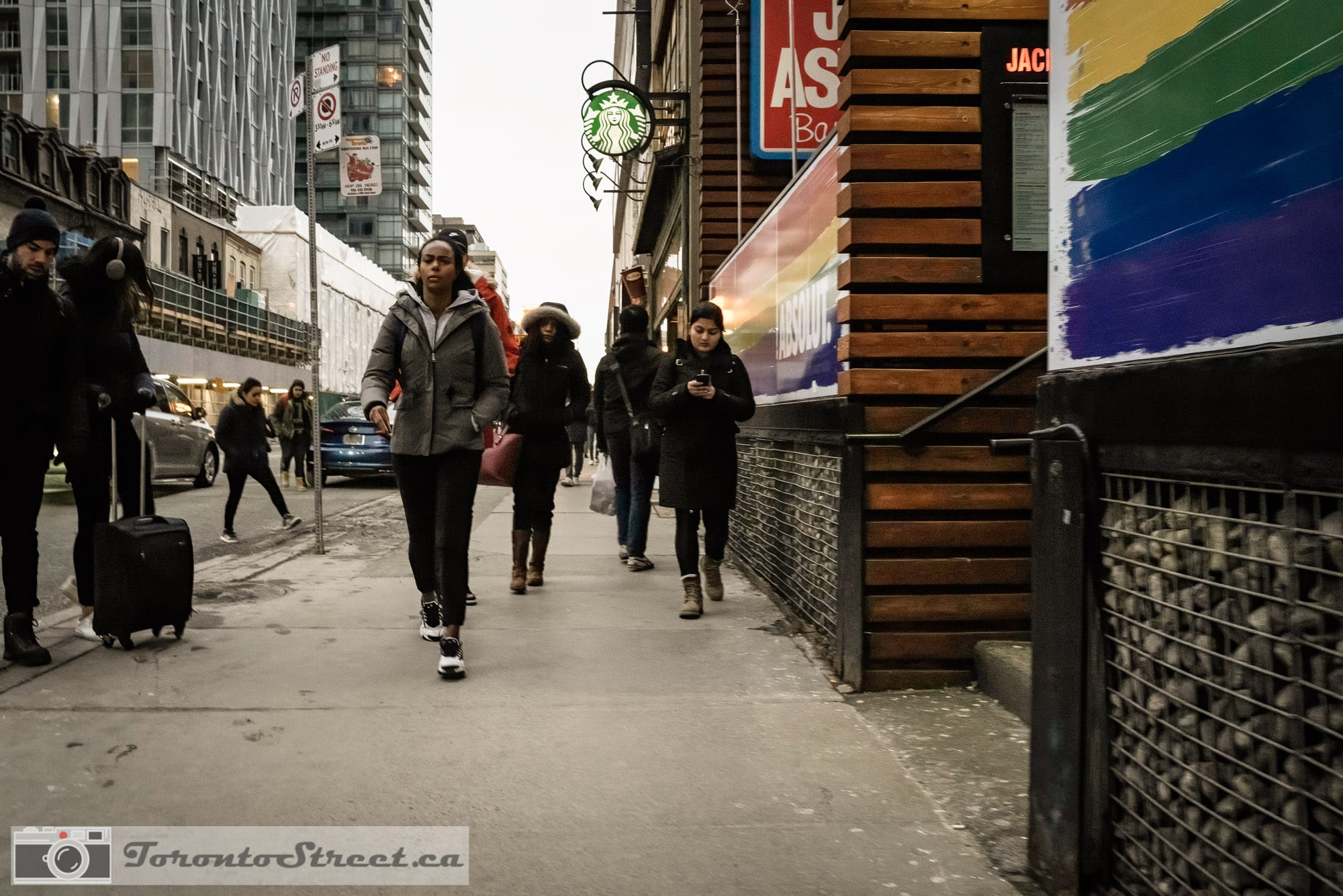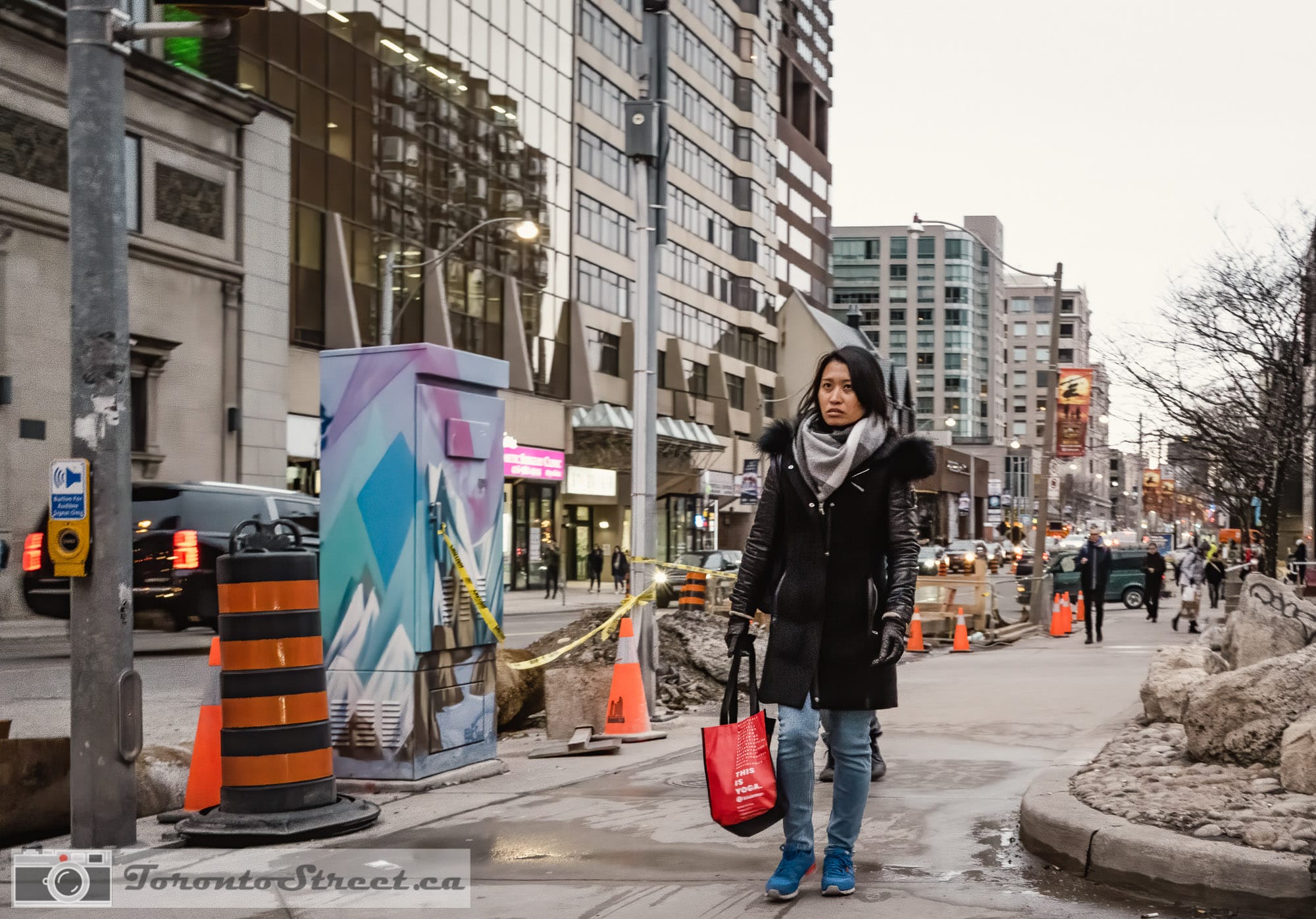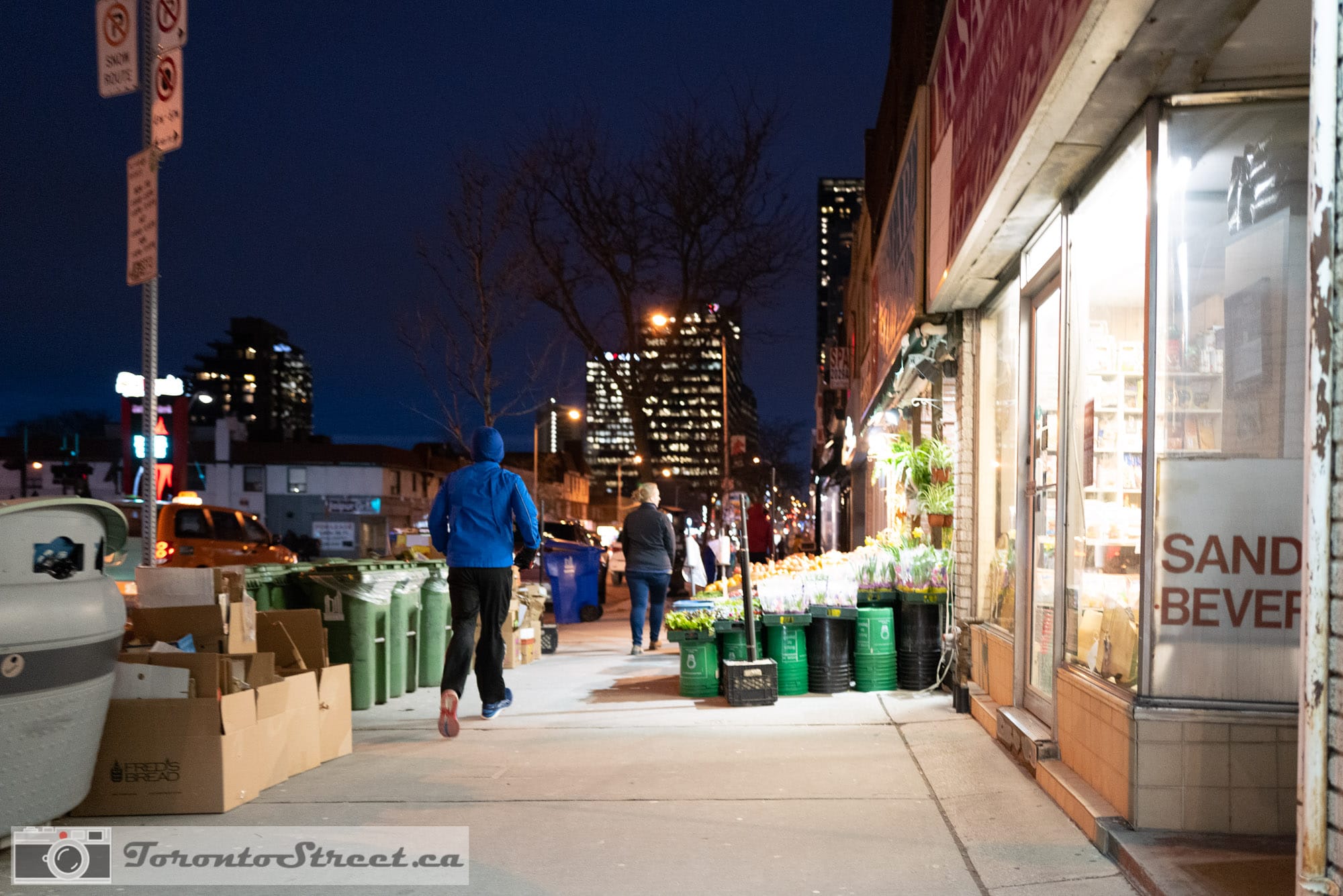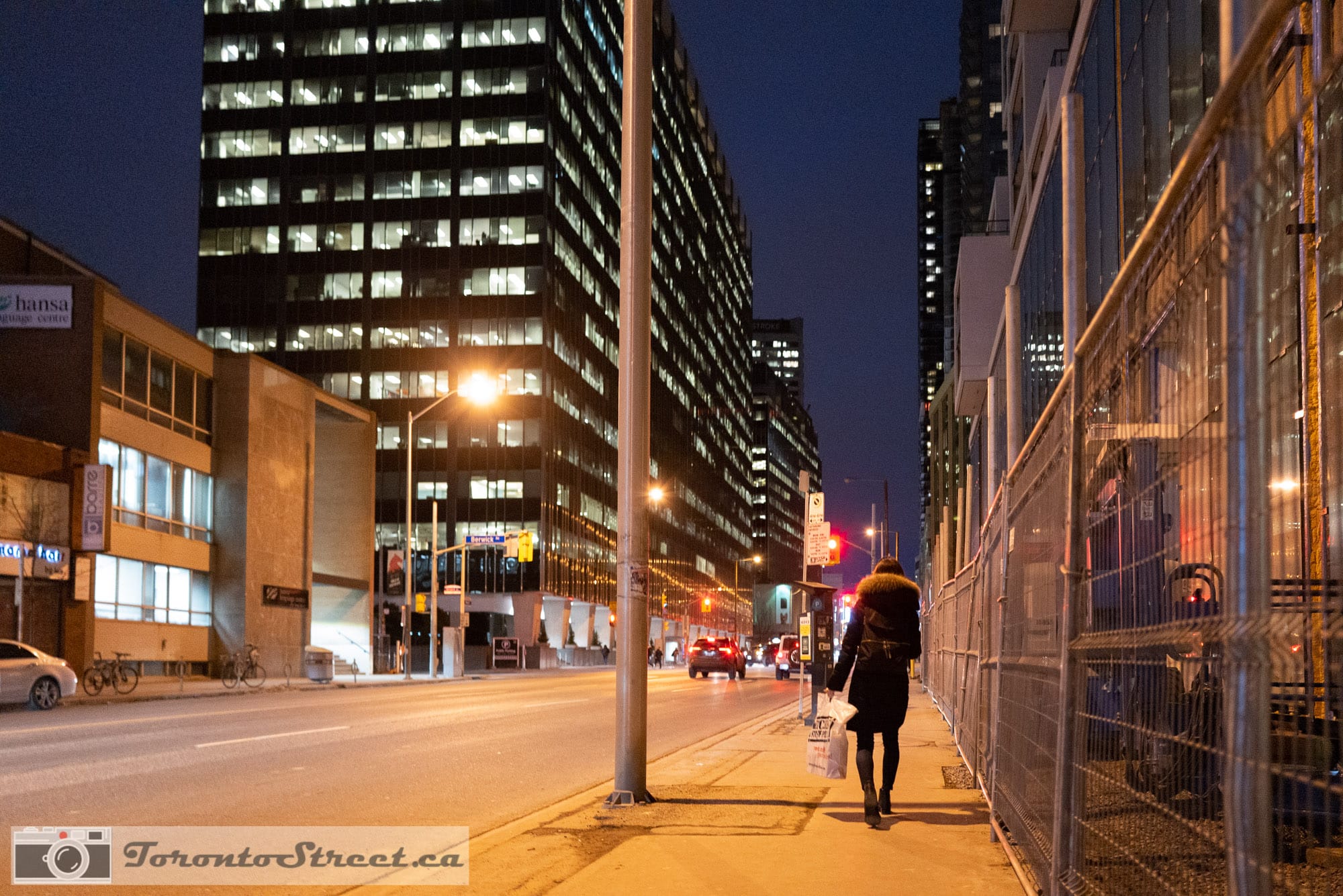
Everyone on Yonge Street has somewhere to be. You can see it in the stride, head forward, arms swinging, the whole body committed to a direction. They’re not performing for anyone. They’re not thinking about a camera. They have somewhere to go. That is what this Yonge Street photography is about. The walk.
Yonge Street: 1,800 Kilometres
Yonge Street runs north from the waterfront in downtown Toronto all the way through the city, through the inner suburbs and out into the GTA. At over 1,800 kilometres long, it’s one of the longest streets in the world. Some say the longest. Every photograph in this set was made on Yonge Street.
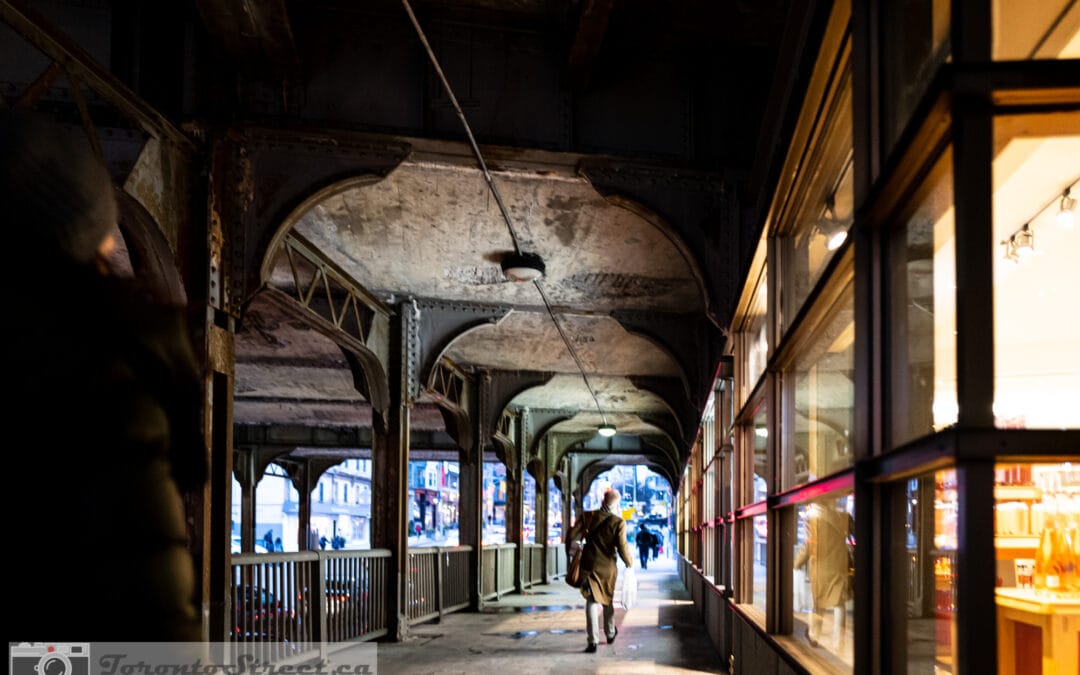
That includes the snowstorm shots. Richmond Hill sits on Yonge Street about 30 kilometres north of downtown, and the main street running through it is Yonge. Same street, completely different world. That contrast is what draws me to Yonge Street photography. The Victorian iron arches of the railway underpass just south of St. Clair. The density of Yonge-Dundas Square. A quiet late-night sidewalk north of the financial district. A January storm in the suburbs where almost no one was out. All of it the same road.
The walker is what connects these frames. Different neighbourhoods, different light, different weather, different times of day. One street running underneath all of it.
Everyone Has Somewhere to Be
The thing about photographing walkers is they almost never know. Even if they suspect there’s a camera nearby, they can’t stop walking without making it obvious. So they keep moving, and you get the unguarded version.
The woman moving through those Victorian iron arches just north of Rosedale had no idea the corridor was composing itself around her. The older woman in Richmond Hill making her way along the main street during a January storm was completely absorbed in the weather and wherever she was headed. You could not set that up in a studio in a thousand tries. The street gives it to you when the conditions are right and you’re patient enough to wait.
What I keep thinking about with these images is direction. Everyone is heading somewhere just out of frame. The bright exit at the end of the Yonge corridor. The open expanse of Yonge-Dundas Square. The blue hour light along a sidewalk past a flower shop. You see the motion but not the arrival. That gap is the whole point.
Yonge Street Photography on the Leica Q2
All of these images were made with the Leica Q2. No flash. Available light only.
The Q2 is small and quiet, and on the street that matters more than most photographers will admit. A larger camera raised to your face announces itself. People adjust. The frame you had thirty seconds earlier is gone. The Q2 lets me stay back far enough to stay out of the picture while still making the shot work.
For walkers, I expose for the primary light in the scene and let everything else follow. In the Richmond Hill snow shots, that meant protecting the highlights so the snow didn’t blow out, while accepting that the figures would sit darker. At night with one strong light source, I let the shadows go deep. The available light is the truth of the place. Correcting it means telling a different story.
I shoot at f/2.8 most of the time. Enough depth of field to keep a moving subject sharp if the focus is right, but not so much that the background competes for attention. The walker should belong to a world, not float in front of one.
You can read more about my gear here.
What this project keeps reminding me is how much one street can hold. Over 1,800 kilometres from end to end. Railway arches and snowstorms and intersections at dusk and late-night sidewalks with the towers lit up and one person walking alone. You don’t need to find a decisive moment. You just need to be out on Yonge Street photography when people are moving.
Thanks for looking!