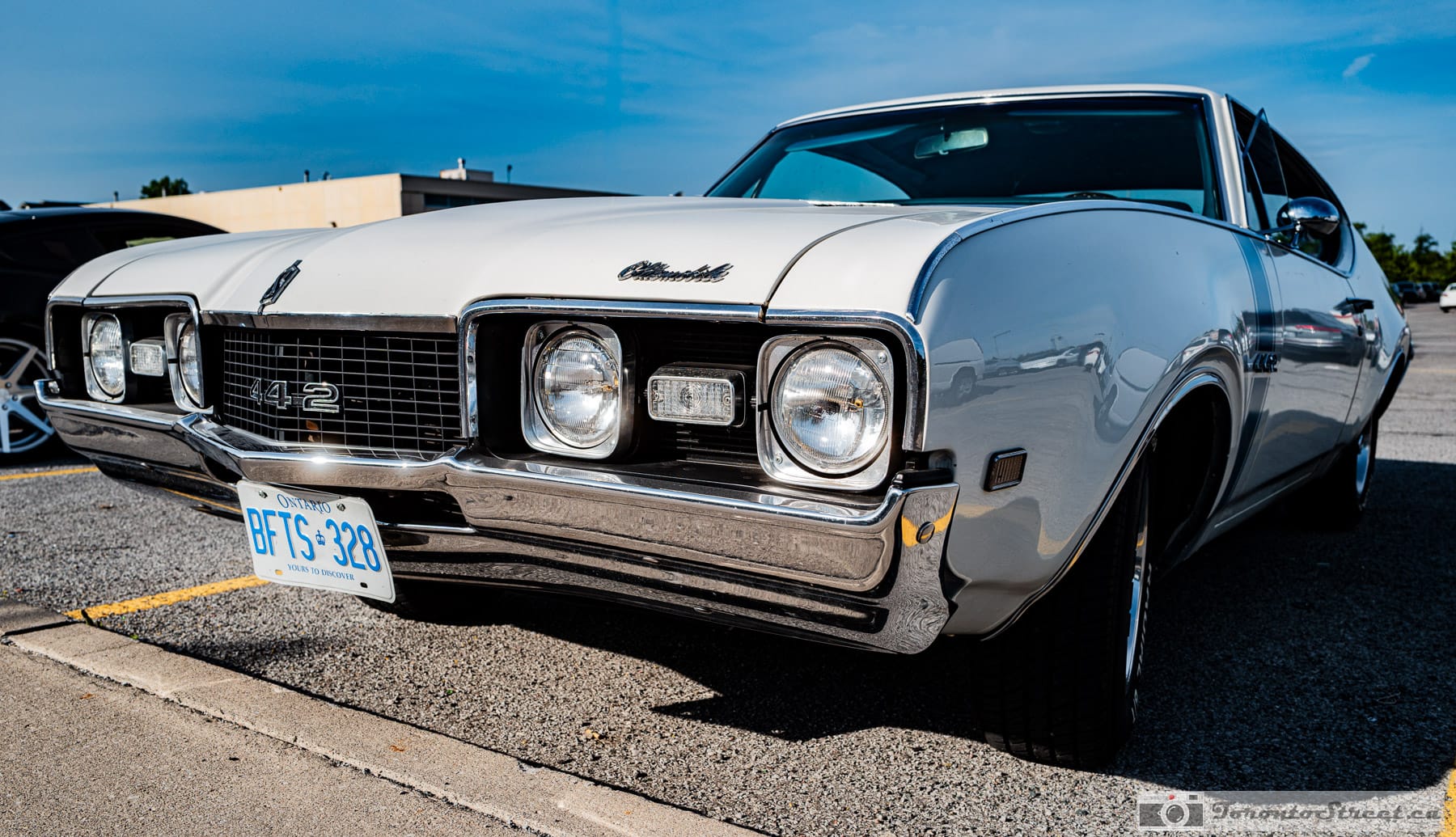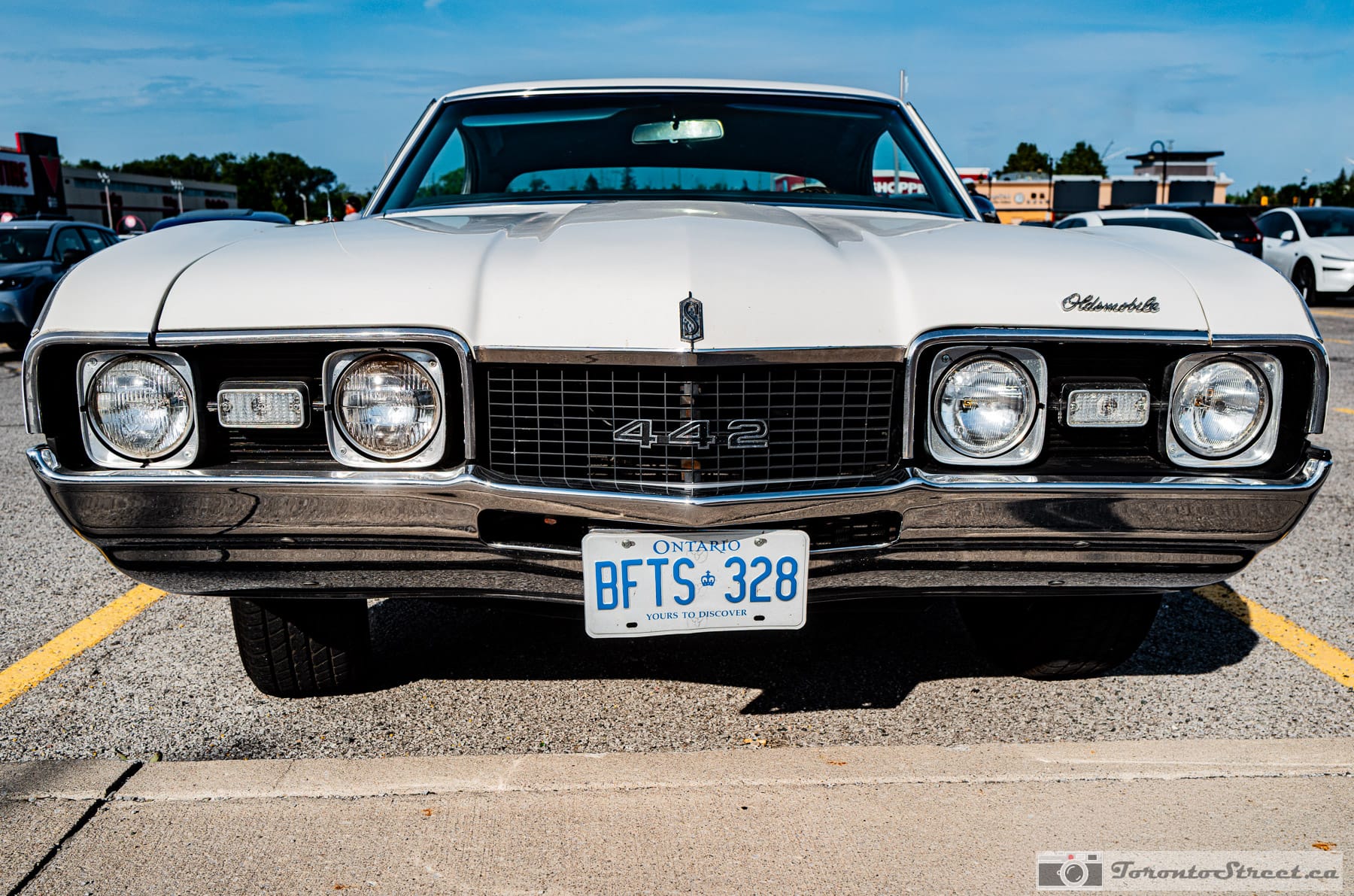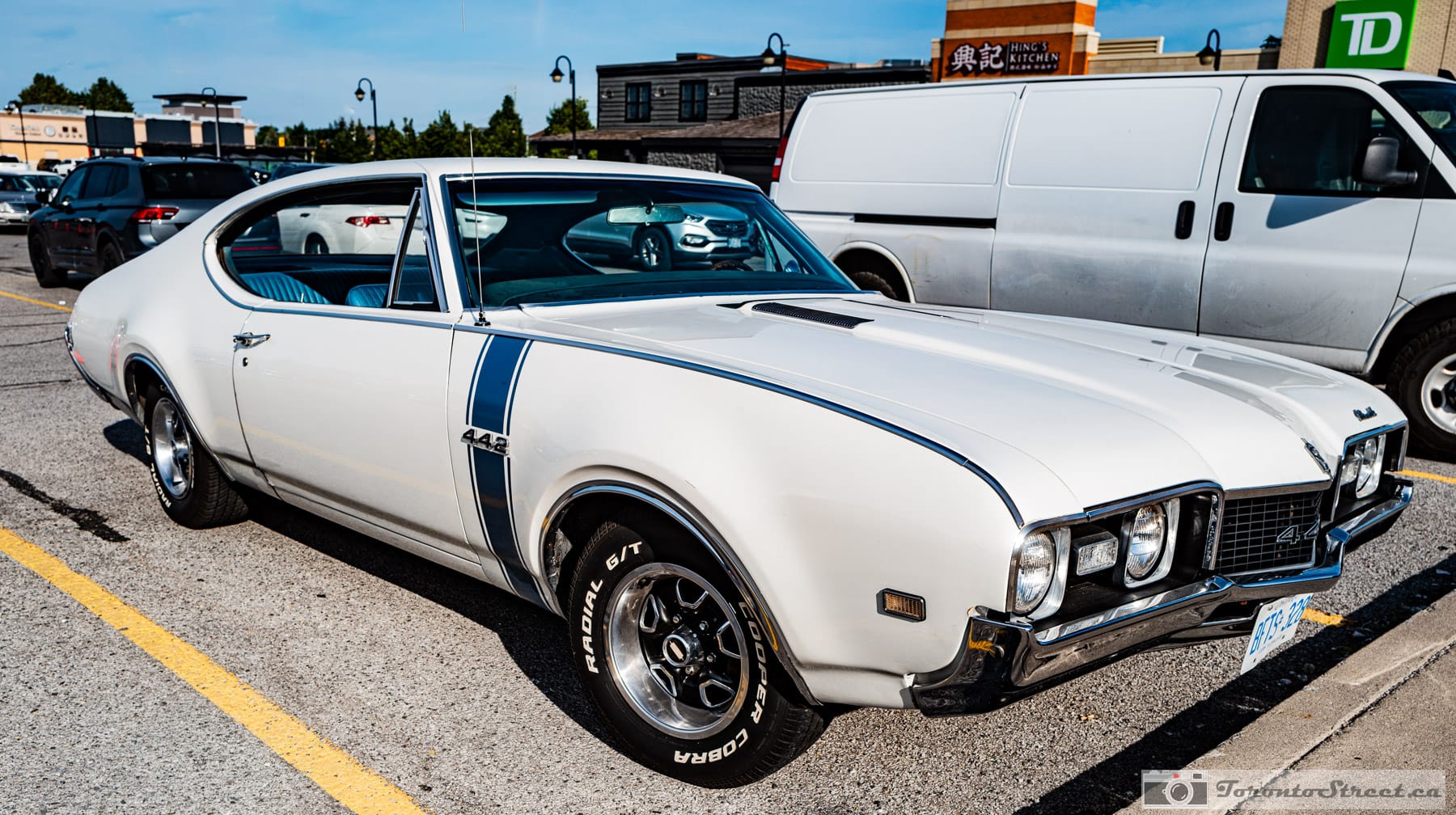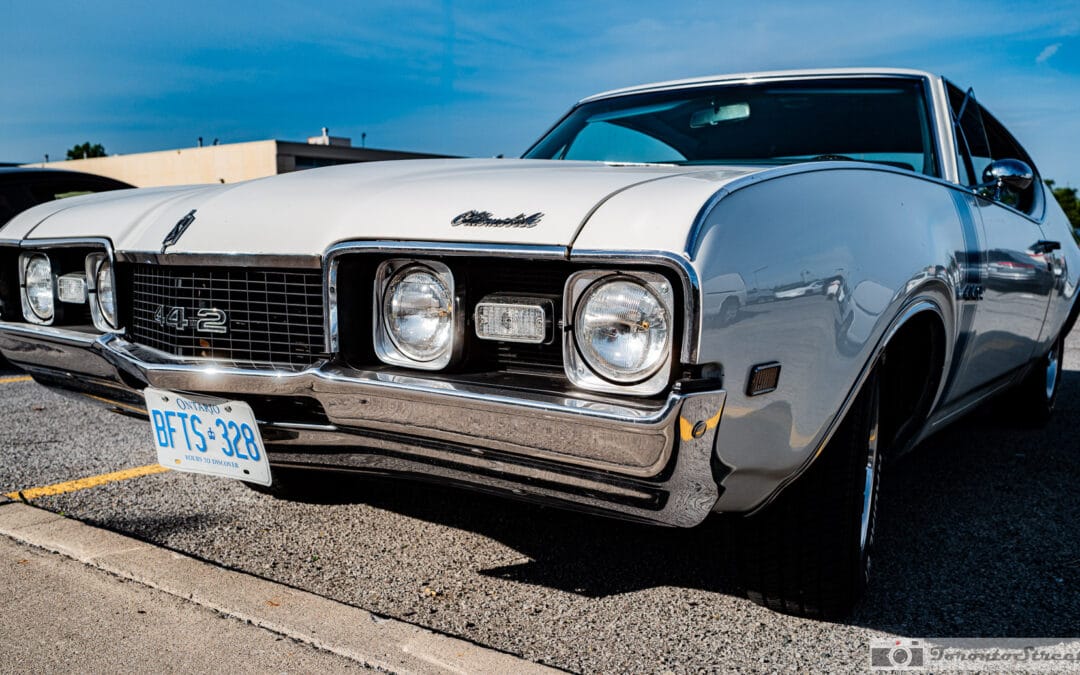
There were a couple of hundred cars in that plaza lot on the Monday night, and most of them were red, or black, or some shade of candy that took a man three weekends to spray. This one was white. Plain white, a blue stripe down the flank, chrome Rally wheels and a badge on the grille that tells you everything if you know what you are reading. A 1968 Oldsmobile 442.
The 1968 Oldsmobile 442 Was Finally Its Own Car
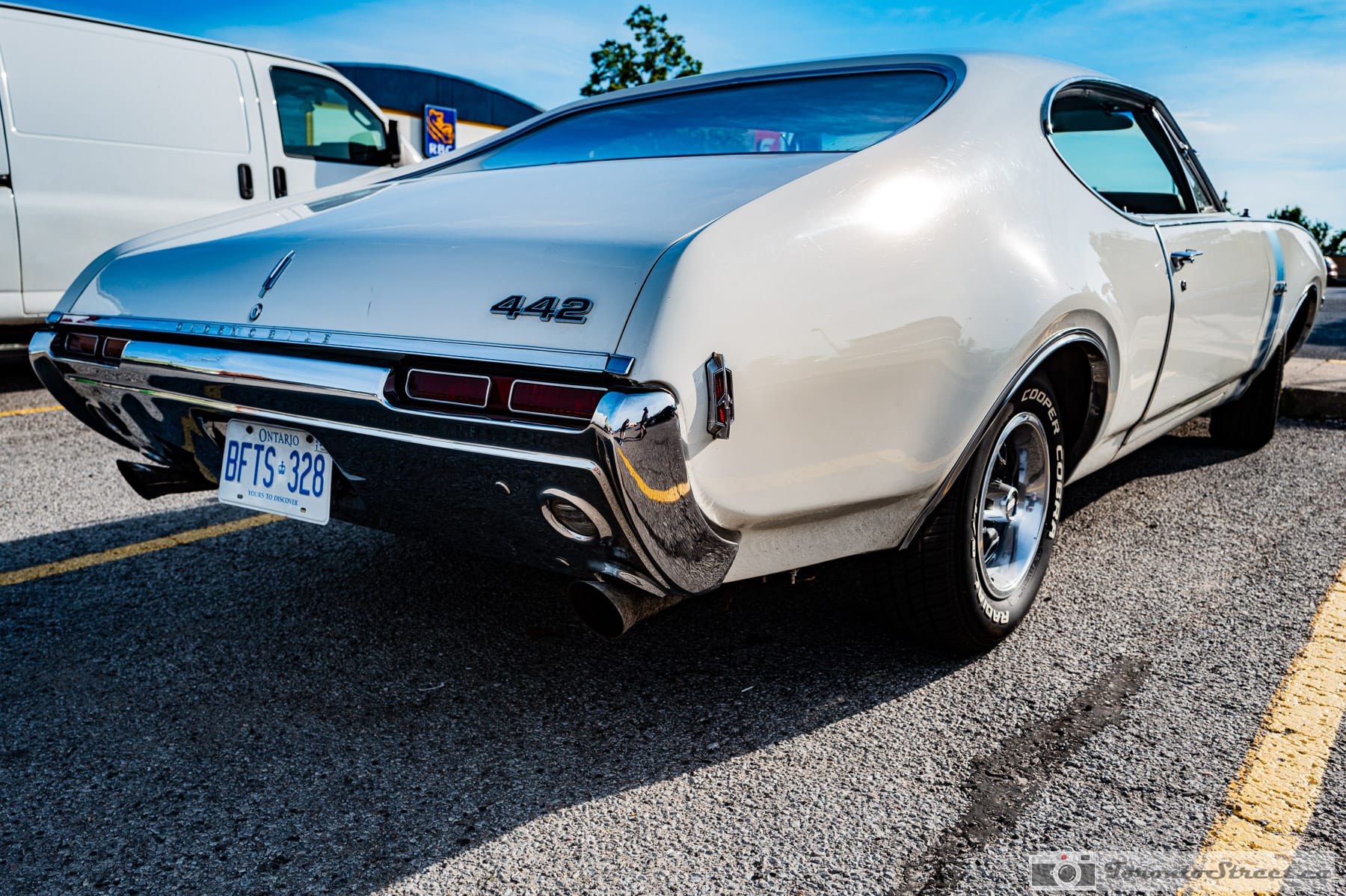
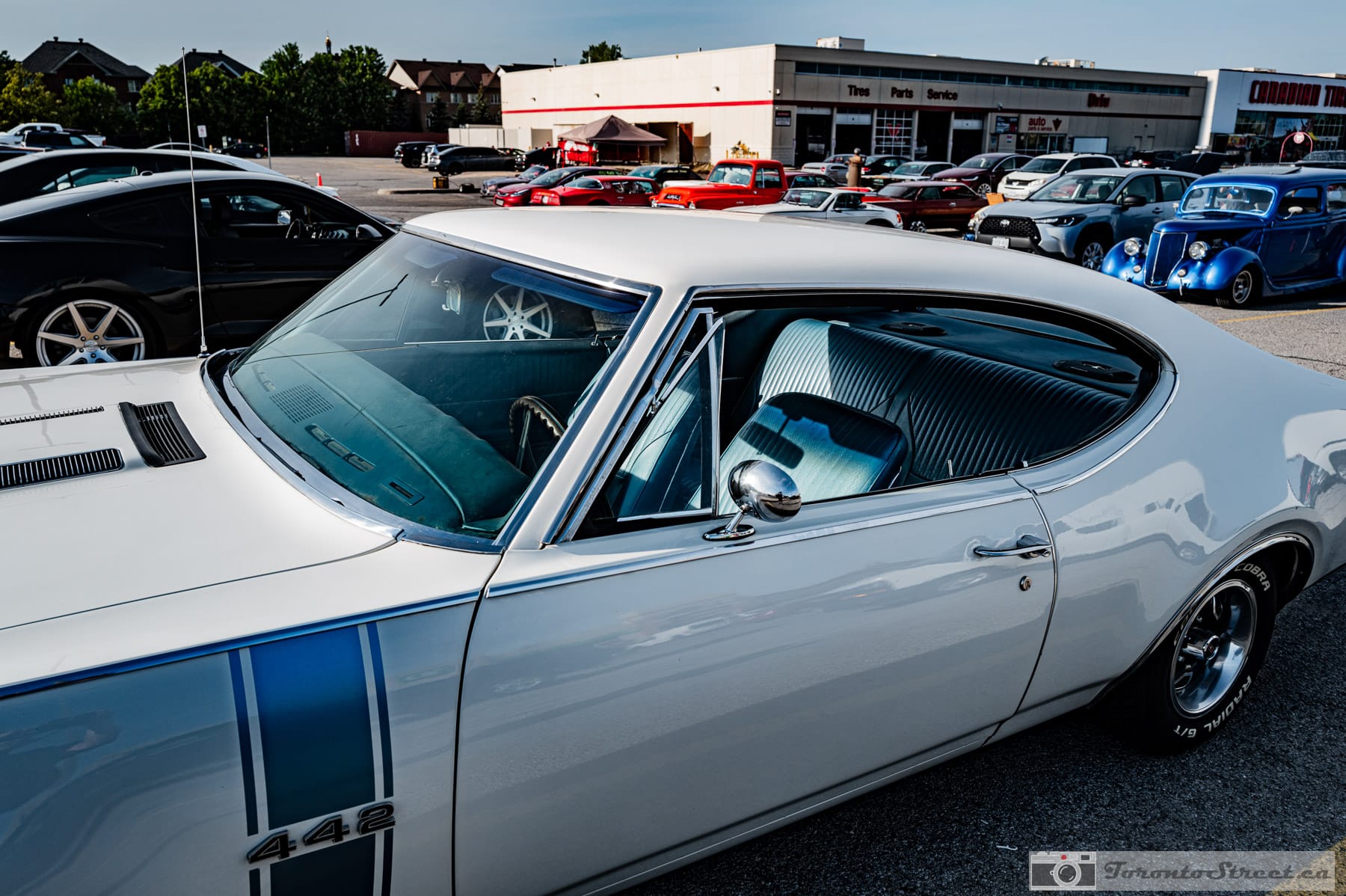
For the first few years it was not really a car at all, it was a box you ticked on a Cutlass order form. 1968 was the year that changed. The 442 became a model in its own right, with its own line in the catalogue, and it arrived on the new coke-bottle body that GM gave the whole A-body range that year. You can see it in the side profile, the way the rear haunch swells out over the wheel and the roof drops away behind the door. Holiday Coupe is just Oldsmobile’s word for a hardtop with no post between the windows, which is why the side of this car reads as one long piece of glass when the windows are down.
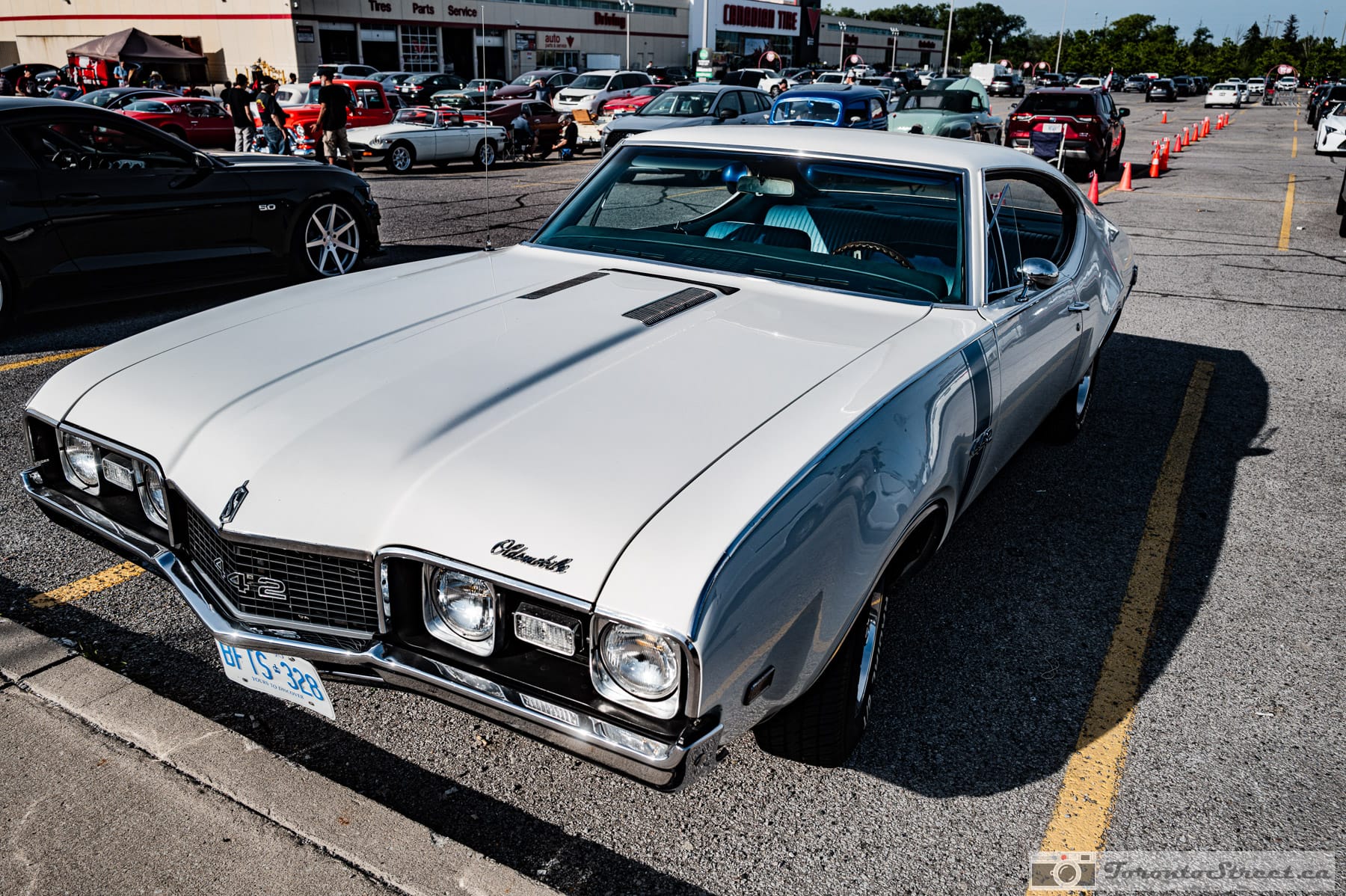
Under the twin-scooped hood there should be a 400 cubic inch Rocket V8. With the four speed it made 350 horsepower, and with the automatic 325. This one has a shifter on the console, so 325 is the number, and I doubt anybody standing in that lot felt short-changed by it. Oldsmobile sold the 442 as the thinking man’s muscle car, which sounds like ad copy until you notice it came from the factory with heavy springs, boxed rear control arms and anti-roll bars at both ends. Most of what it was parked beside that night could go fast in a straight line. This one could also turn.
Blue Vinyl and a Wood Rim Wheel
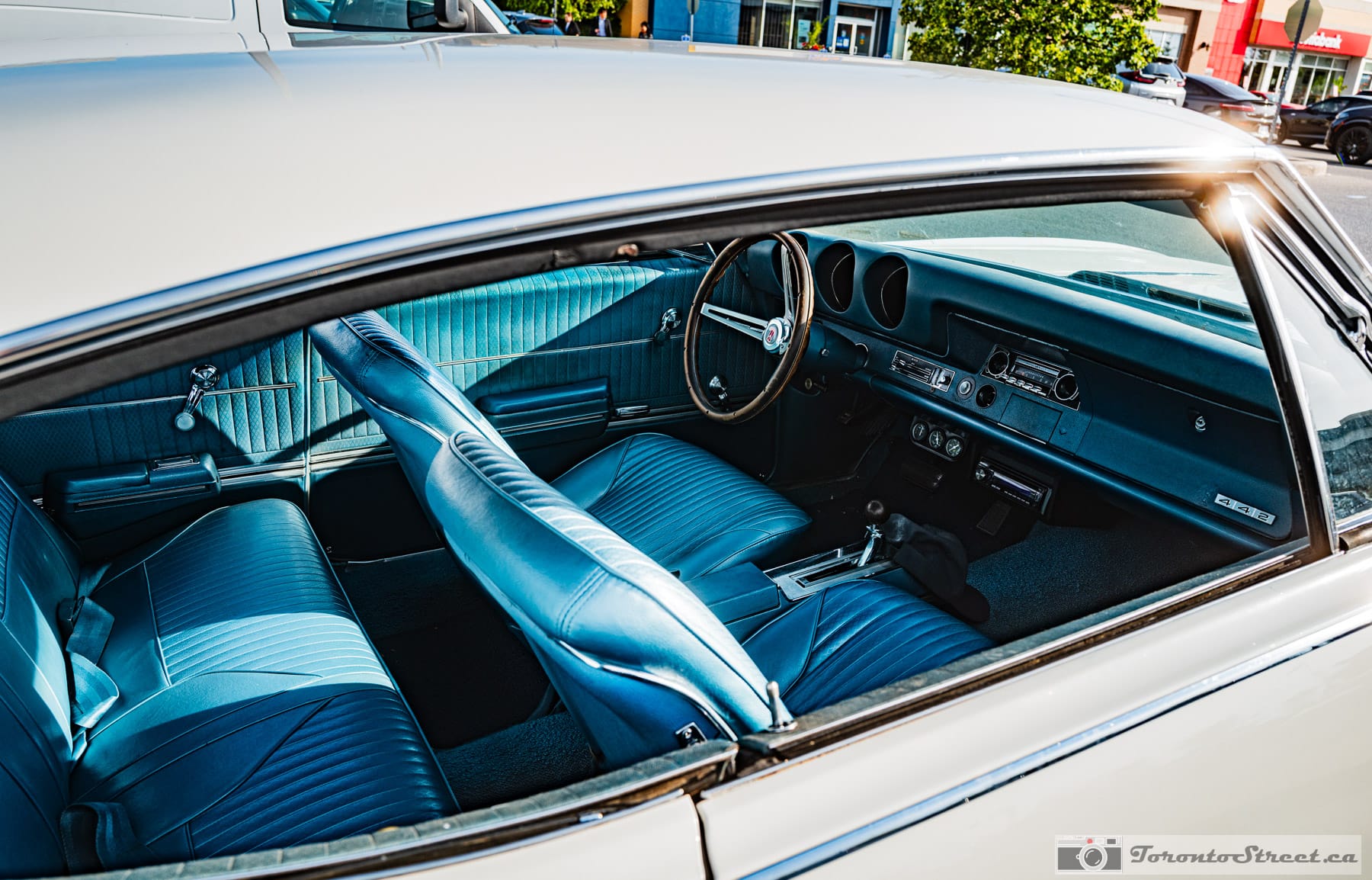
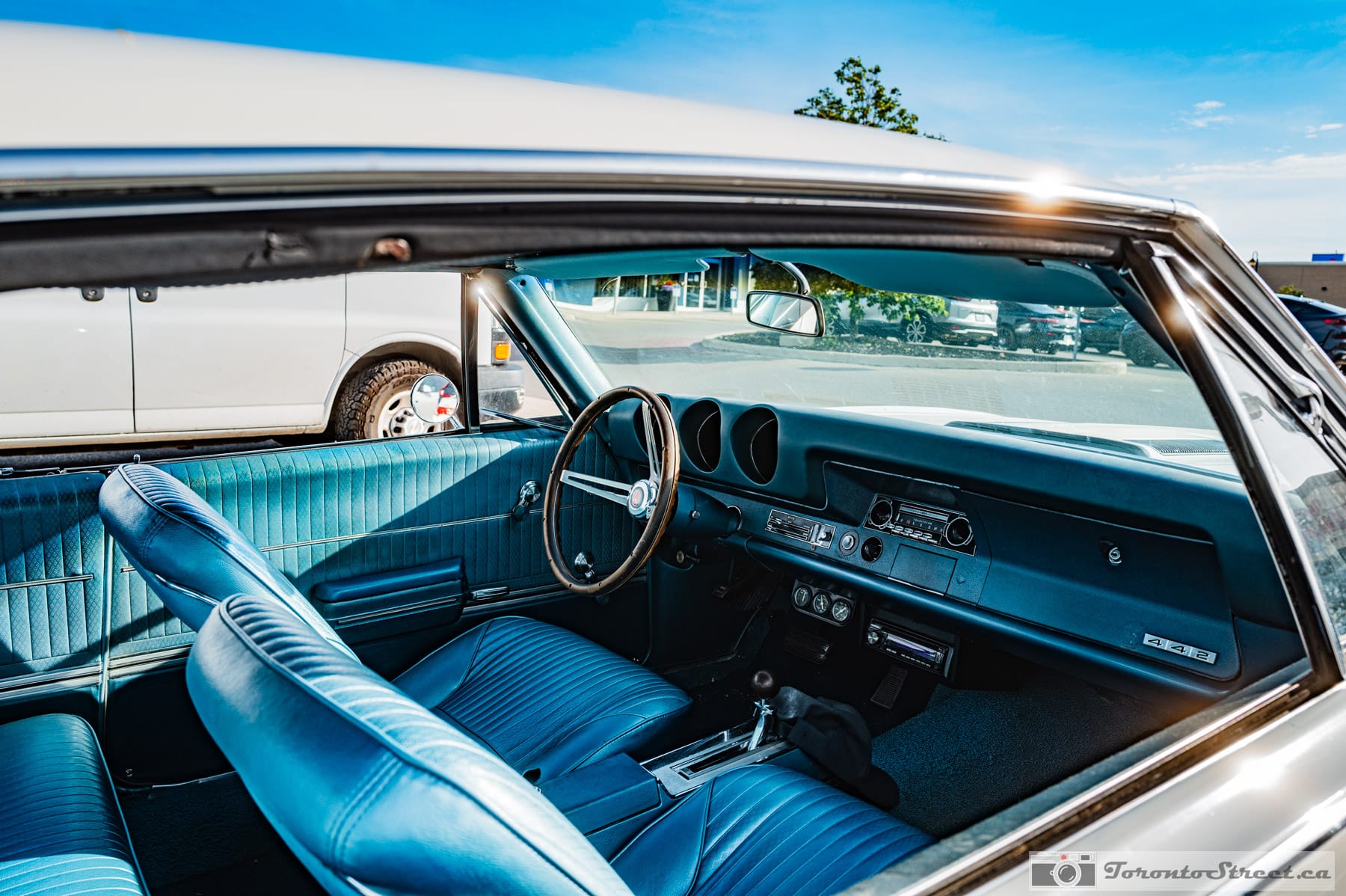
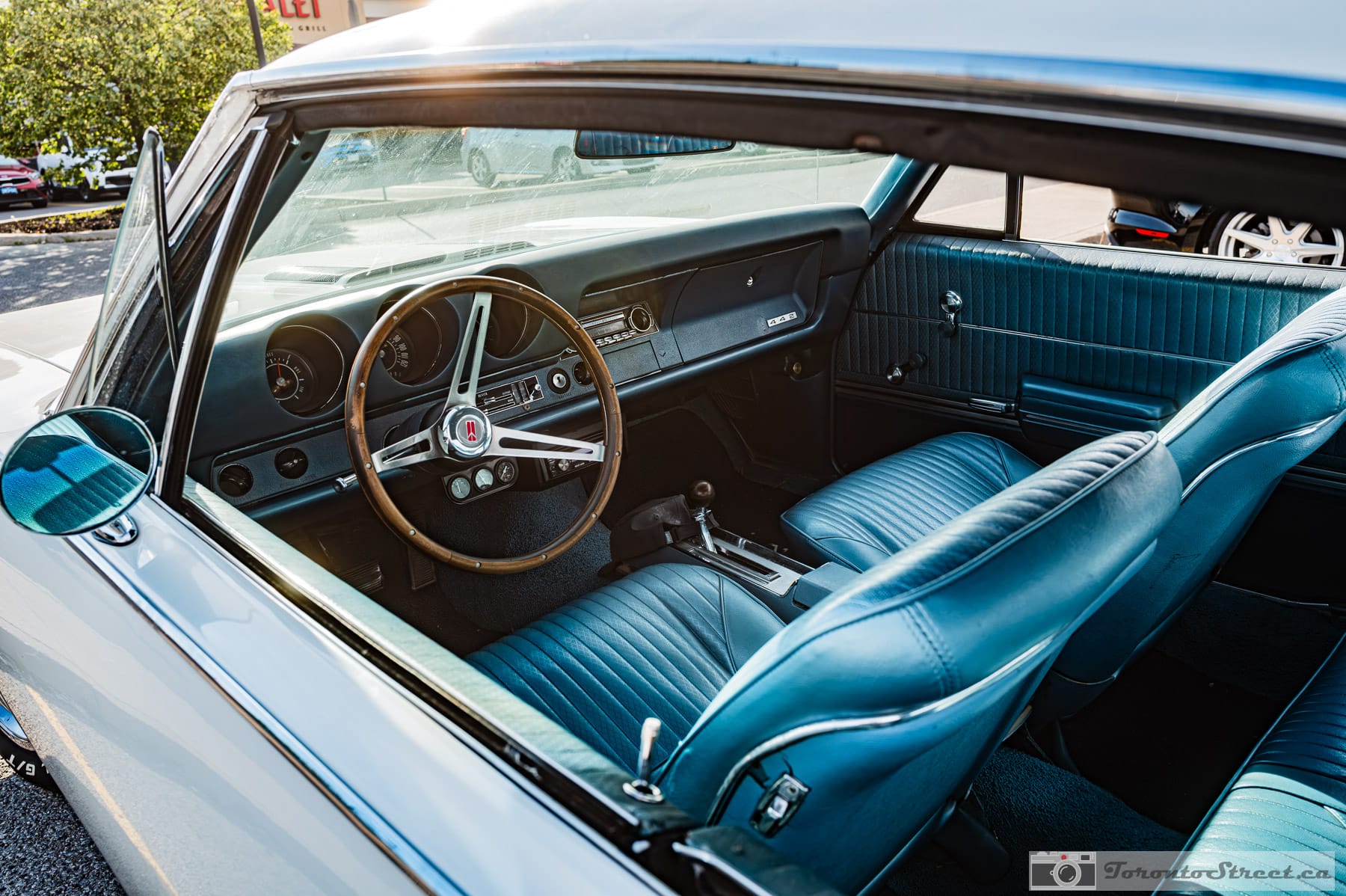
The best of it is inside. Every panel in that cabin is turquoise vinyl, pleated seats, door cards, the works, and against the white paint it is the loudest thing about the car. Somebody along the way fitted a three spoke wood rim steering wheel, which was the period upgrade everybody wanted, and it still looks right sitting in front of those round gauge pods.
I shot the interior from outside, standing back a little and letting the glass do what it wanted. Get too close and you flatten it into a catalogue photograph. From a step or two away the windscreen picks up the sky and the row of cars behind me, the chrome mirror catches the light, and you get some sense that this thing is sitting in a parking lot on a summer evening rather than on a turntable.
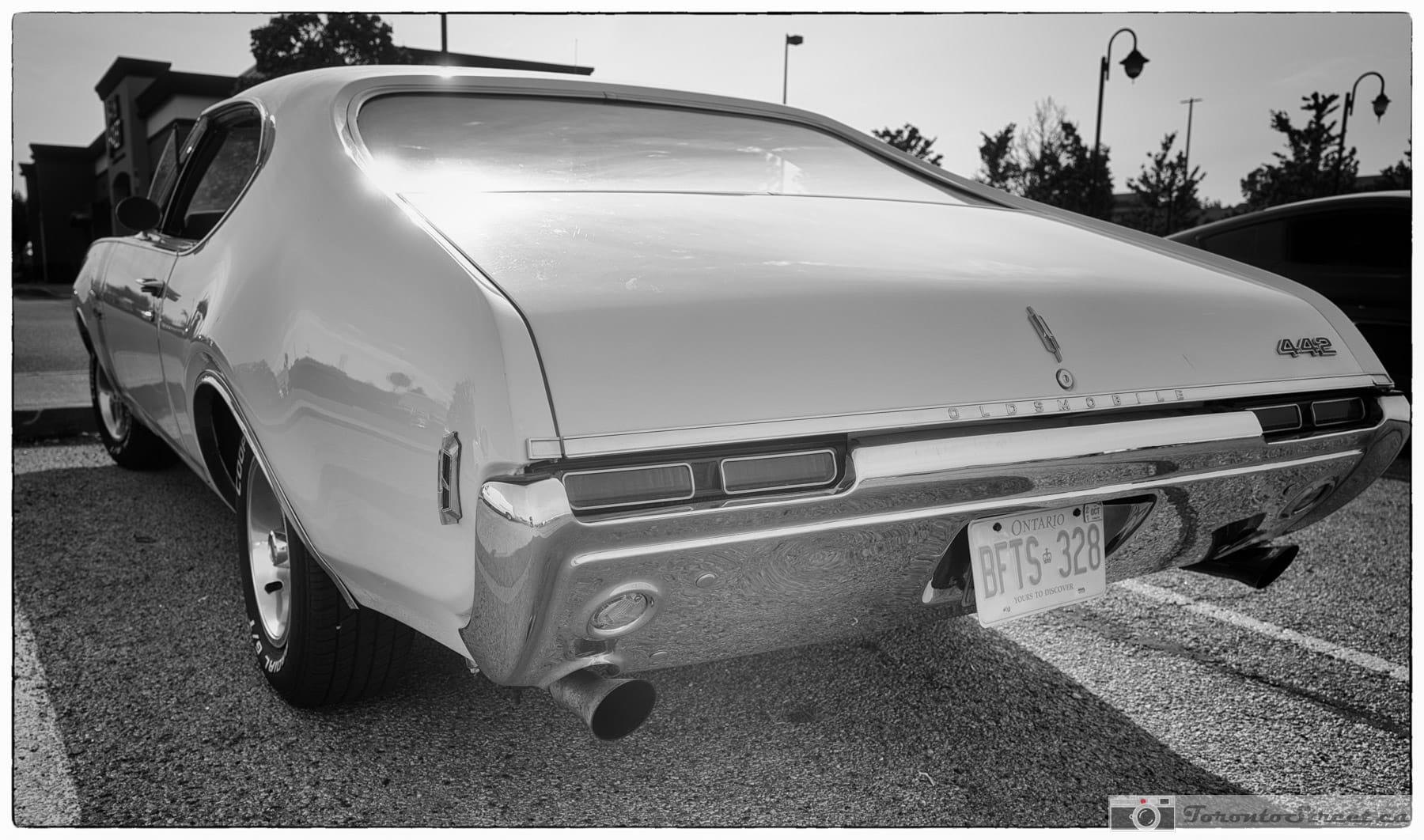
Why the Back of It Went to Black and White
One frame in this set has no colour in it, and that was a decision made on the spot. Standing behind the car the light had gone flat, and the background was a plaza, which means signage, light standards and a hundred parked cars all shouting at once. Colour was doing nothing for it. What was worth having was the shape, that long quarter panel running down to the bumper, so I took the colour away and let the shape carry the frame. It is the same reason I keep coming back to these lots with a 28mm lens. You have to get in close, and when you get in close the background is always somebody else’s problem.
Richmond Hill is a Toronto suburb, up at the north end of the GTA, and on a Monday night in summer its plaza lots fill with cars like this one. A 1968 Oldsmobile 442 in plain white is not the car most people photograph first, which is usually a good sign. I shot it on the Leica Q3 in available light, no flash, nothing moved or arranged. The Ontario plate read BFTS 328. There is another one from these Monday nights here, and the rest of the work is in the projects.
Thanks for looking!