Light is the whole game in black and white street photography. Not the subject, not the composition. The light first, and everything else follows. When the shadows are deep enough and the highlights are hard enough, black and white stops being a choice and starts being the only logical outcome. The corridor.
Toronto Under Construction
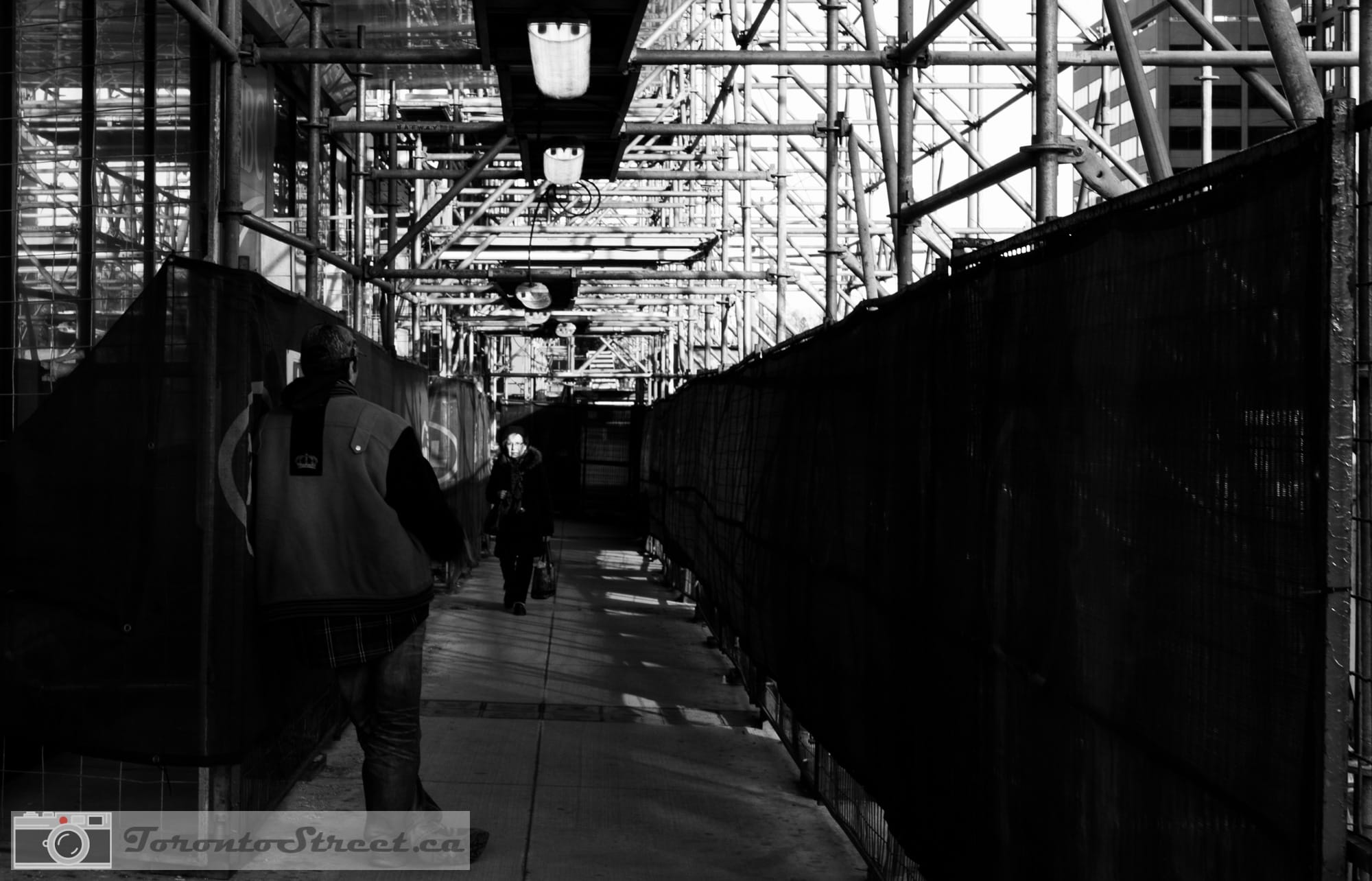
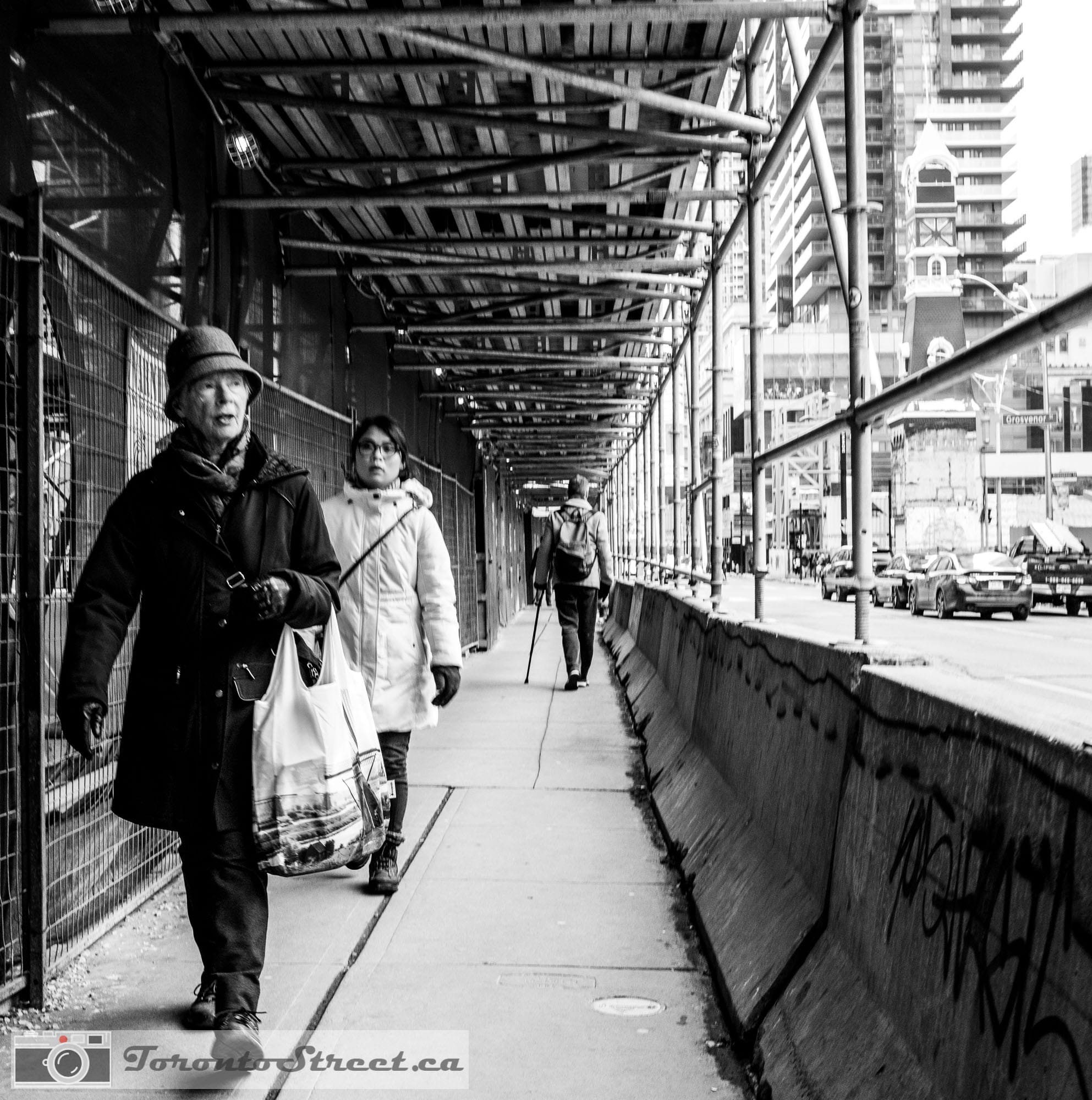
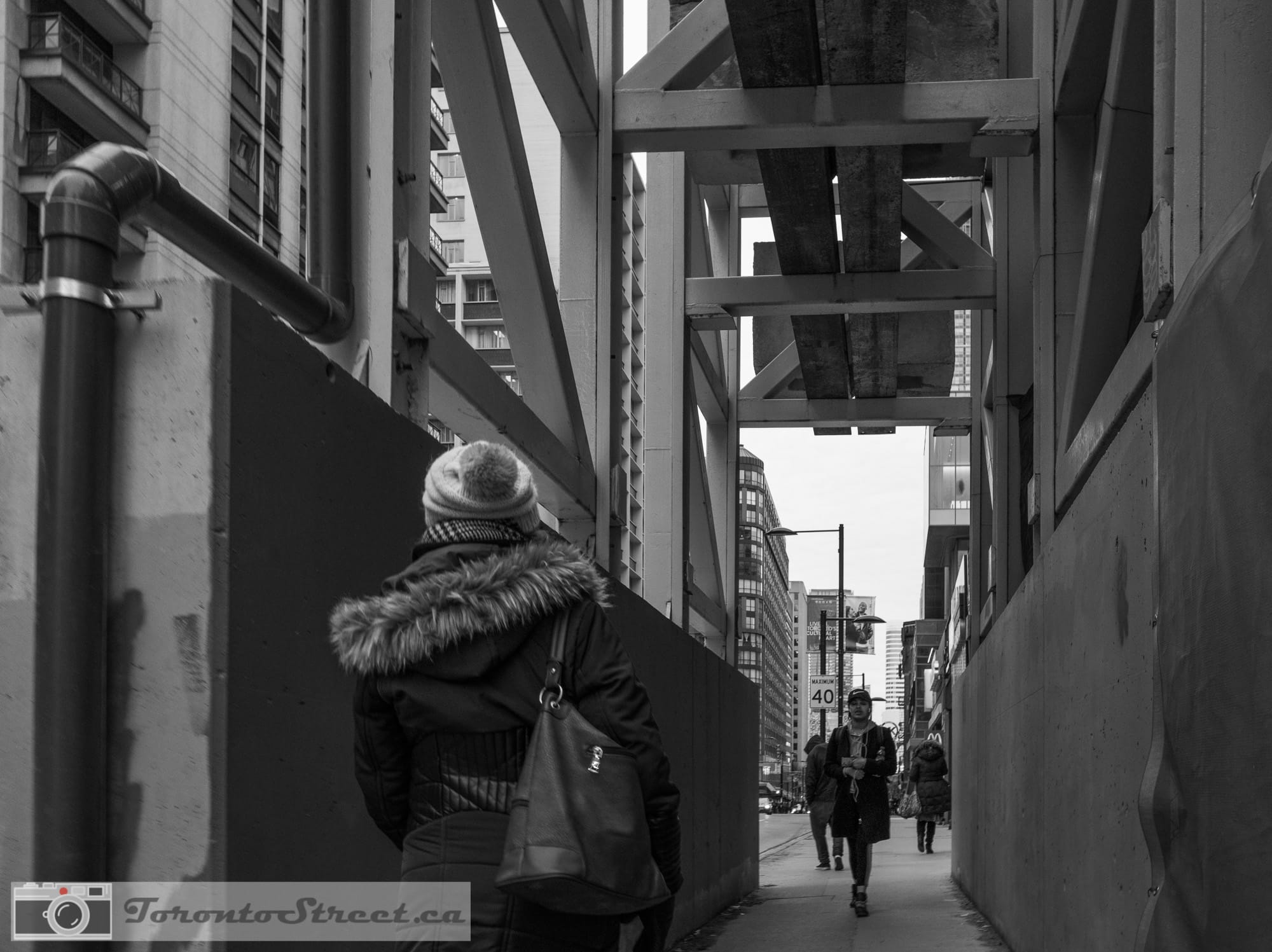
Toronto has been under construction for so long that the hoarding has become part of the streetscape. Most people walk through it with their heads down and don’t give it a second thought. What I see is a corridor. Forced perspective. Geometry that didn’t exist six months ago. Light trapped in a tunnel and falling on one person at a time.
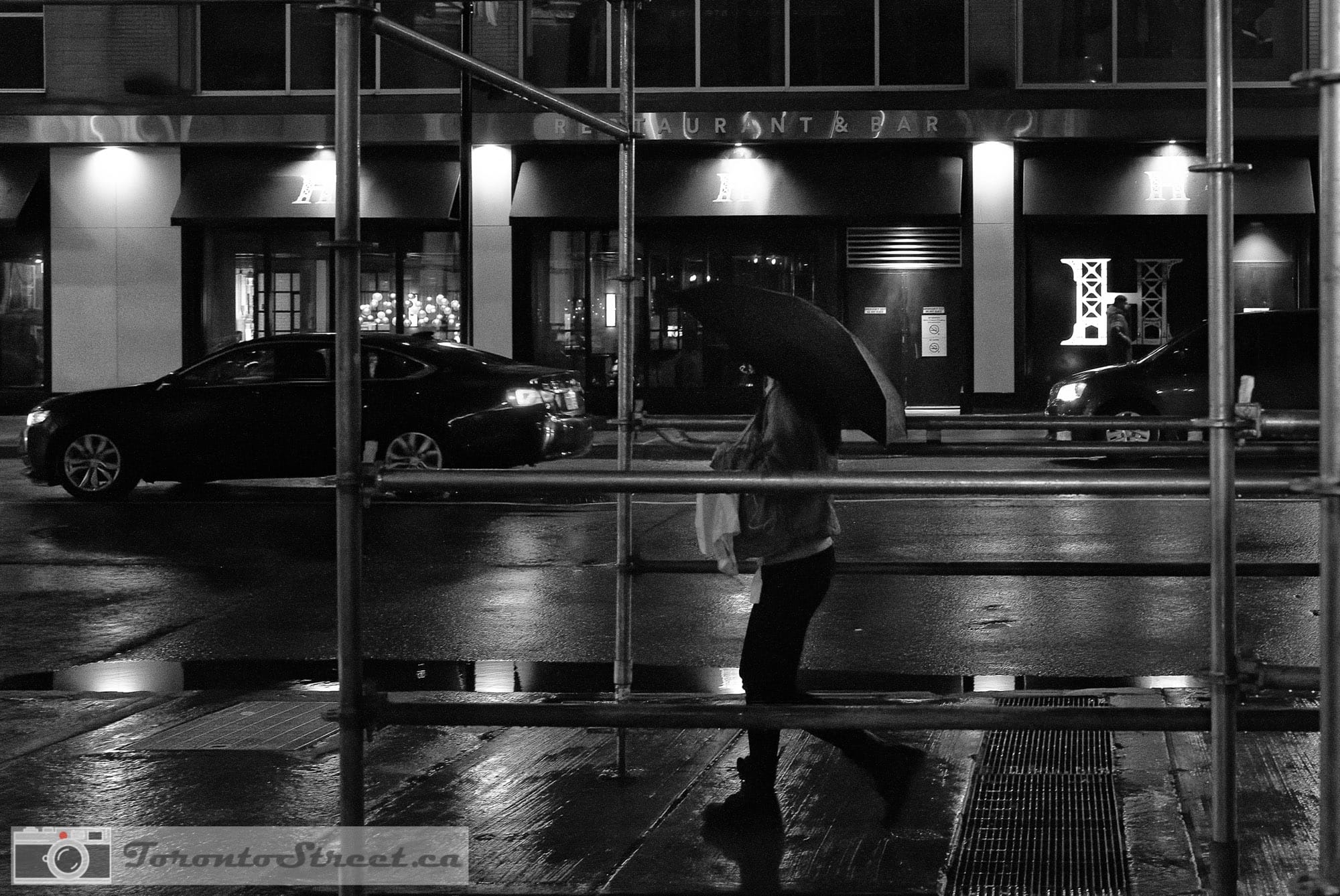
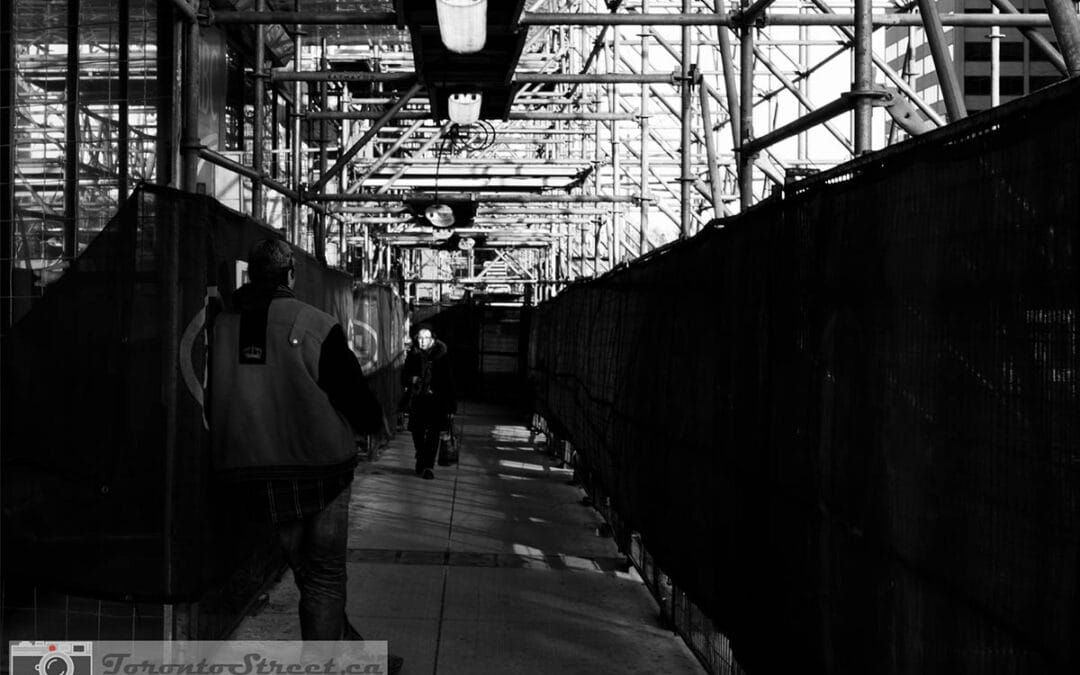
Black and white street photography strips the colour out of those scenes and leaves you with what the light is actually doing. In the anchor image here, there is a figure standing maybe thirty metres away, lit from above by a single work lamp while everything around them sits in near-total darkness. In colour that image is a construction site. In black and white it becomes something else entirely.
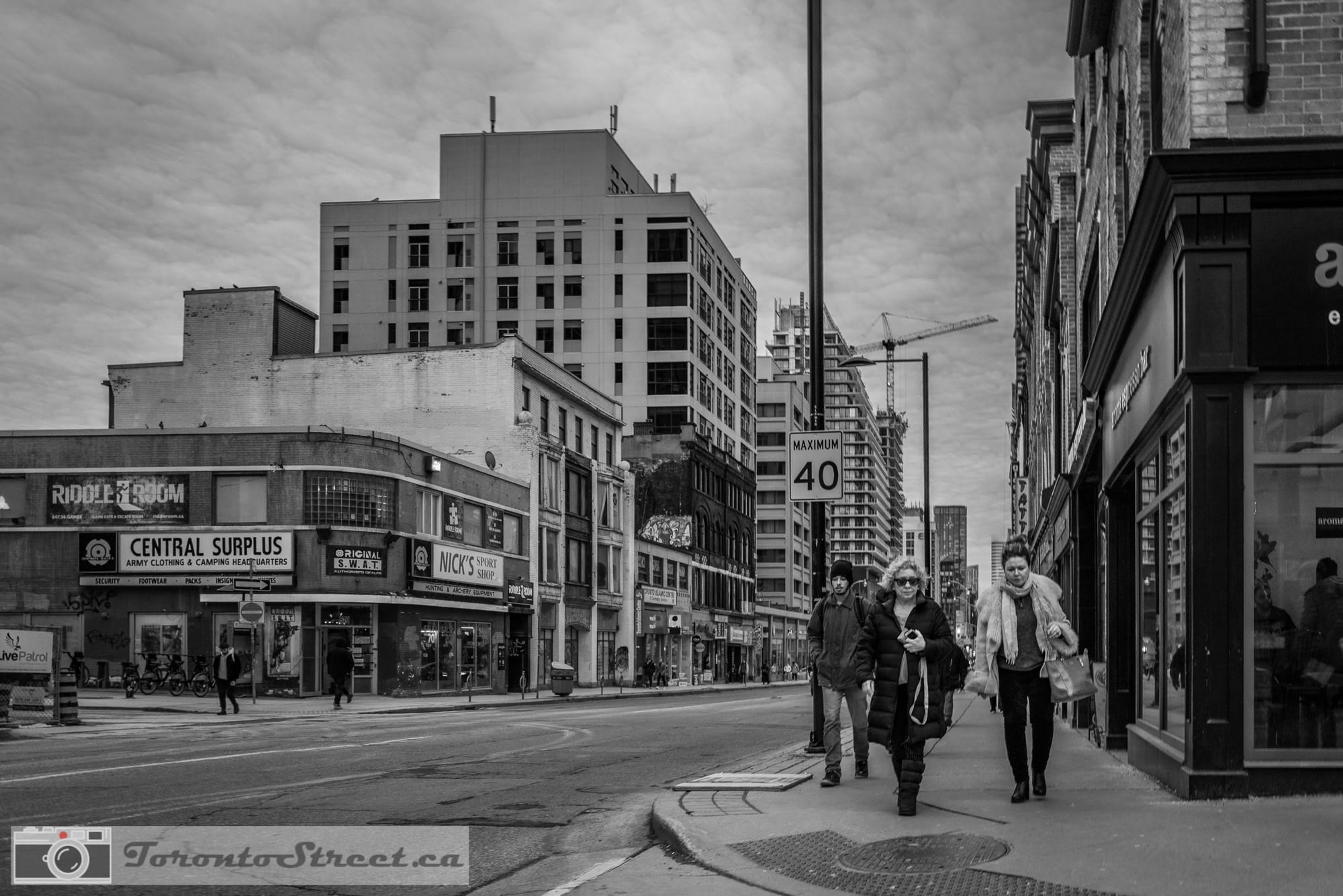
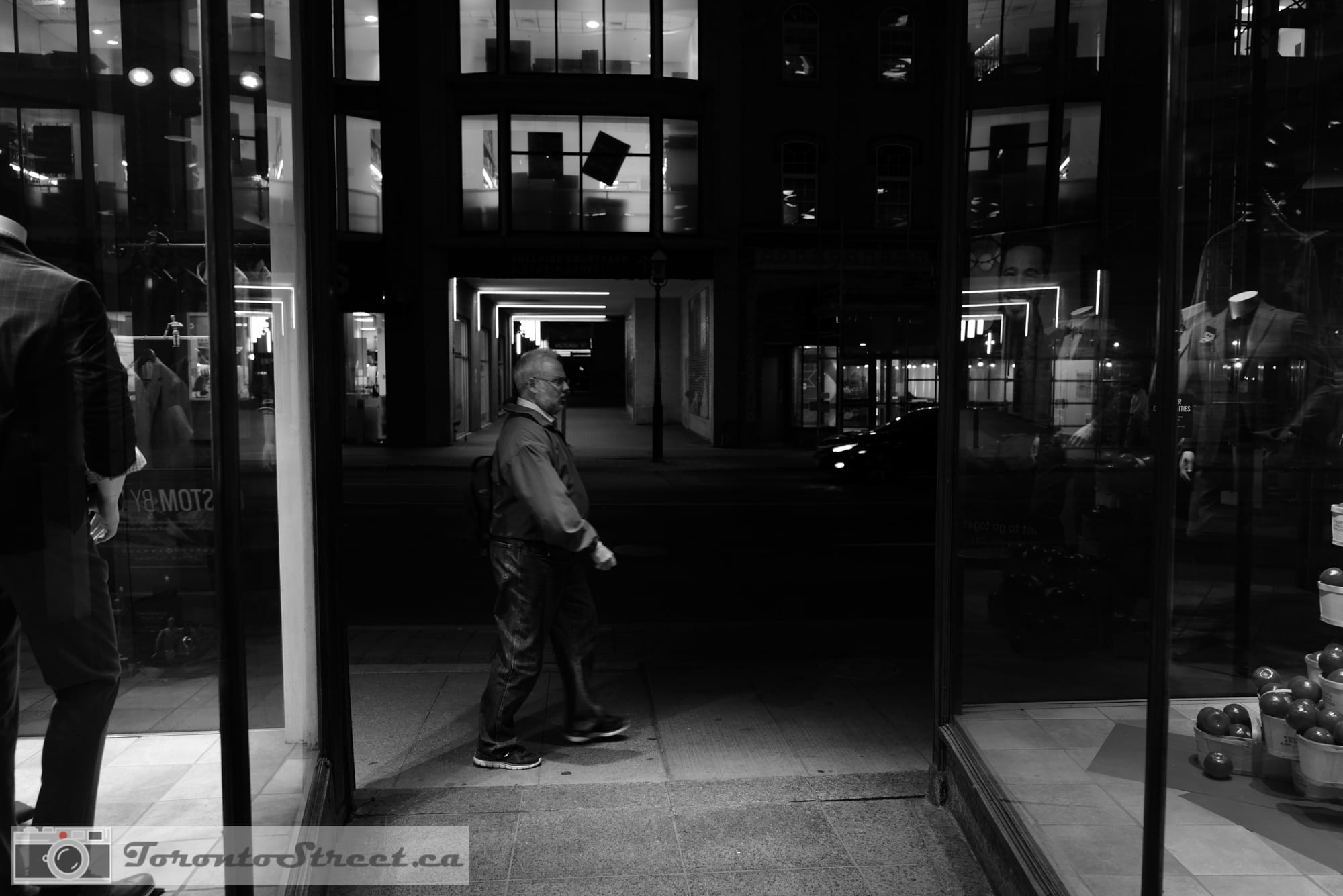
The construction shots are deliberate. Three of the seven images in this set were made in exactly these kinds of passages, because the forced geometry and the extreme contrast between light and shadow keep producing frames that would be impossible in open air. The city keeps building things, and the building keeps making the light behave in ways I can’t manufacture.
Nobody Knows They’re in the Frame
The figures in these corridors are not aware. They are moving through their day, not through a composition. Head down, bags in hand, trying to get from one end to the other. What they give me without knowing it is scale. Without a person in that dark passage, it is just architecture. With a person, there is suddenly a question: how did they end up in this particular tunnel, at this particular moment, in exactly this light?
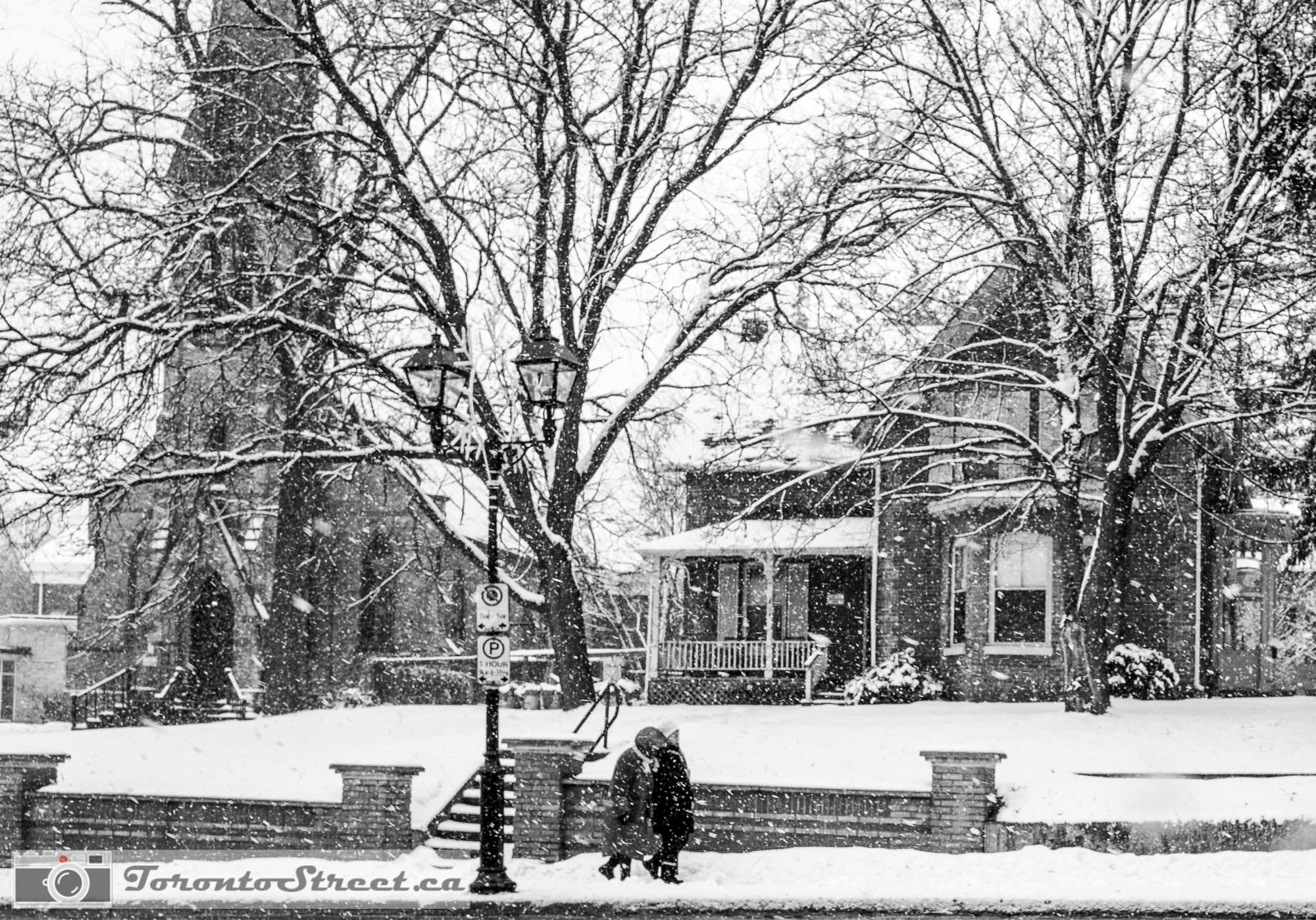
The snow image is the counterpoint to all of it. Two people under an umbrella in front of a church, bare trees, soft diffused winter light. No hard shadows, no industrial geometry. Just two people making their way through a Toronto snowfall. Black and white makes the snow luminous and turns the scene completely quiet in a way colour never does.
That range is what I keep coming back to in this work. The same palette that produces drama in a dark construction corridor produces silence in a snowfall. It is doing opposite things in the same set and doing both of them honestly.
Shooting for Black and White Street Photography
All of these images were made with the Leica Q2. I shoot in colour and convert to black and white in post, rather than using any in-camera black and white mode. That gives me full control over the conversion and lets me make the decision after the fact, once I can see what colour actually does to the image.
For the construction corridor shots, I expose for the brightest element in the frame, usually the lit figure or the light source itself, and let everything else fall into shadow. I don’t try to open up the darkness. The darkness is the picture. If you expose for the shadows you lose the drama and end up with a flat grey image that tells you nothing.
The Leica Q2 handles high-contrast scenes well. There is enough dynamic range that I can recover shadow detail in post when I need to, but for these corridor shots I almost never do. Deep blacks are not a technical failure. They are the point.
You can read more about my gear here.
Black and white street photography keeps finding its way into my editing folder because some images simply don’t want to be in colour. When the contrast is this extreme, when the light is this hard, colour becomes a distraction from what is actually happening in the frame. Removing it is how I stay honest with what I saw.
Thanks for looking!