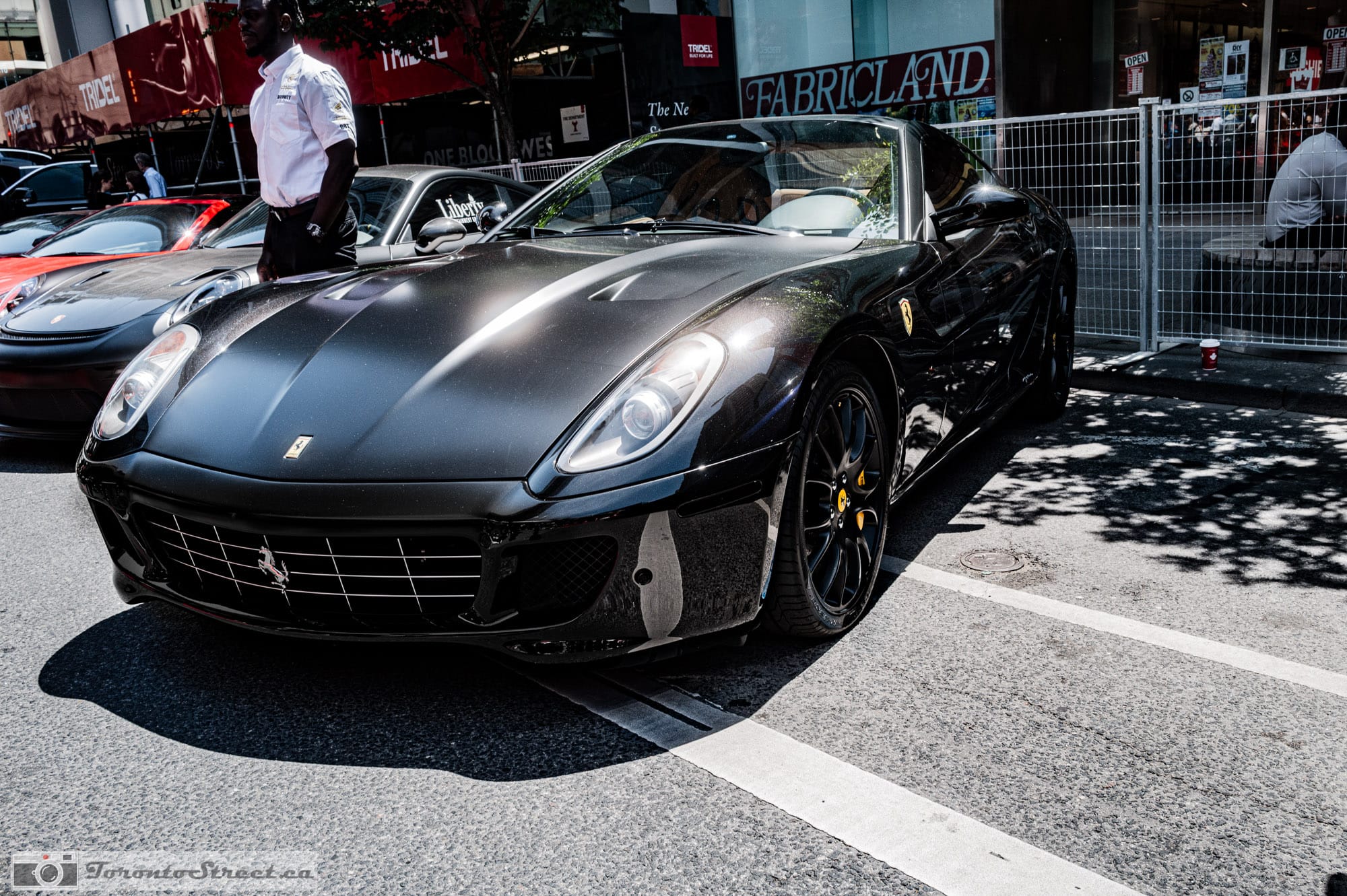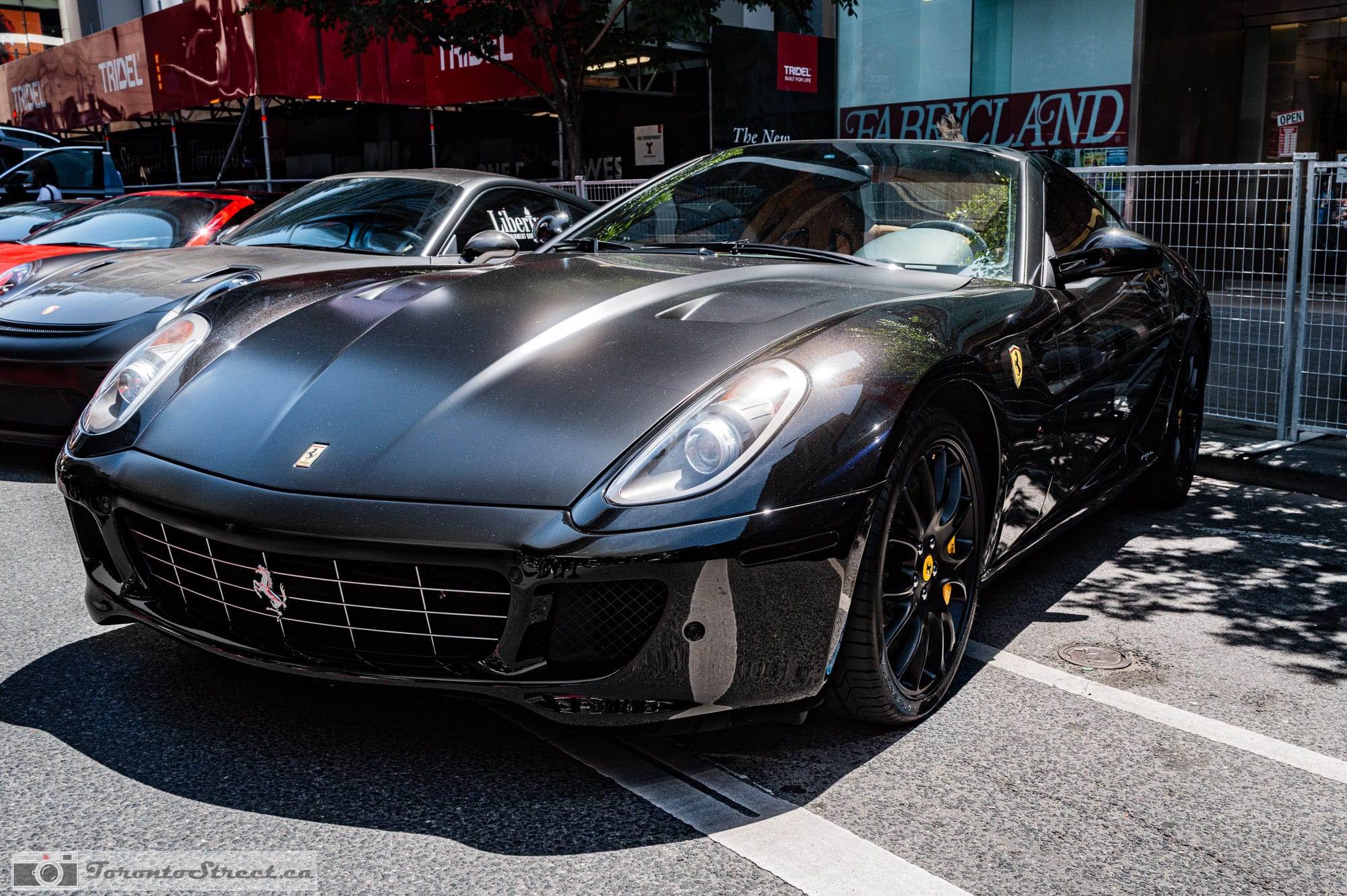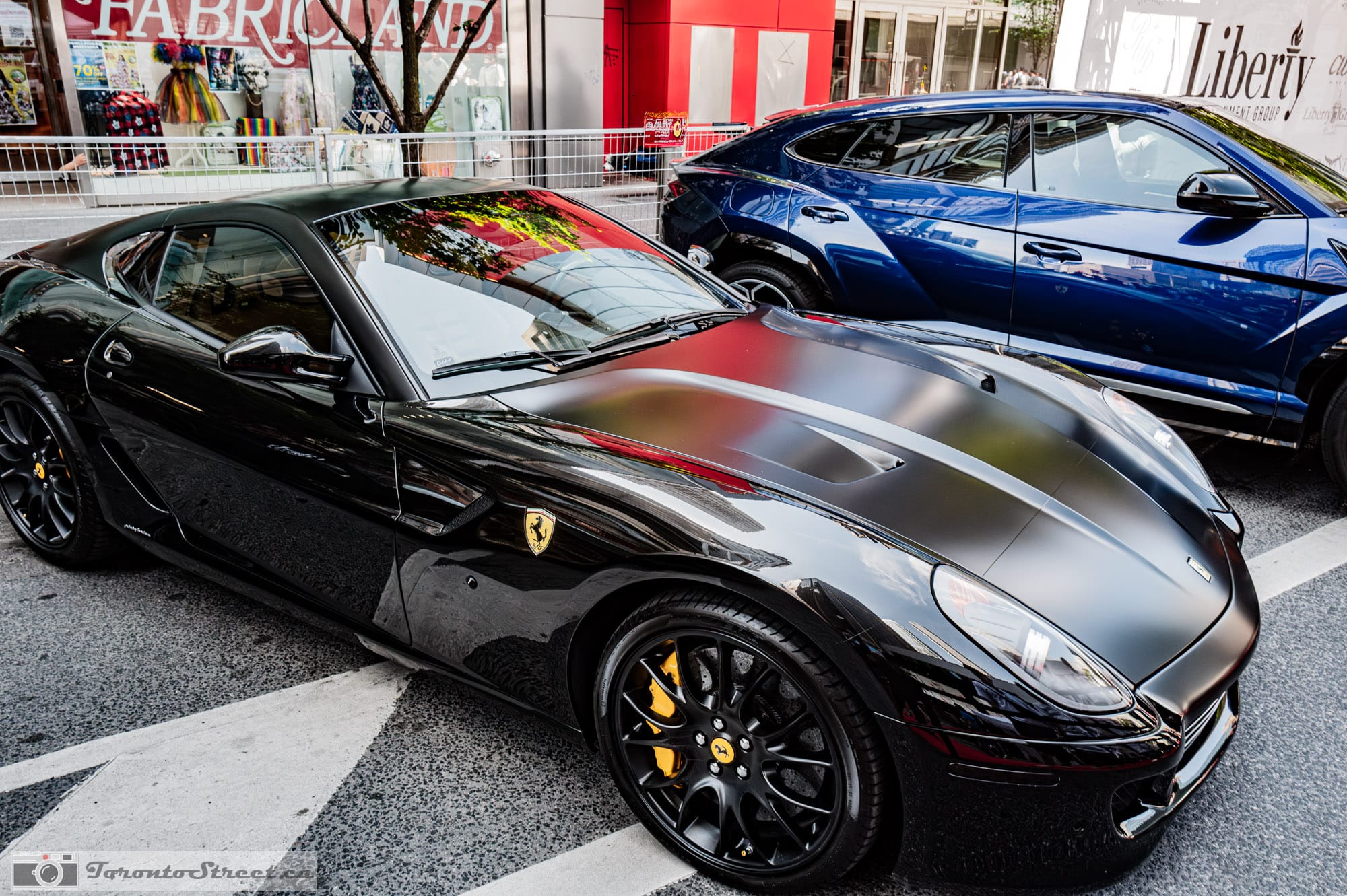
Ferrari built 599 of these and sent only about 125 of them to North America. So a Ferrari 599 GTO is not a car you expect to find at a Toronto curb on a Sunday, with shoppers walking past carrying Fabricland bags. But there it was at the 2025 Yorkville Exotic Car Show, a front-engine V12 in two-tone black, parked on the open street like an ordinary thing. The rarest car on the block. Just sitting there.
A Ferrari 599 GTO on a Yorkville Curb
The reason I wanted the frame is the same one that pulls me toward anything on the street: something rare, dropped into a plain setting where it does not belong. A car like this lives in a private collection or on a track. This one sat at a curb with a Fabricland sign behind it and a man in an event shirt standing quietly beside it, keeping watch. No driver, no engine noise, no show. Just the object, out in the open, where anyone could walk up and look.
That contrast is the whole picture for me. I am not photographing a price tag or a spec sheet. I am photographing a thing the city set down on the sidewalk for an afternoon, the way it caught the light, with the ordinary street running right up to its edges. The crosswalk lines, the storefront glass, the hard summer shadows. A street photograph that happens to have a Ferrari in it.
The Badge Ferrari Has Used Three Times
GTO stands for Gran Turismo Omologato, and Ferrari has put those three letters on only three cars in its entire history. The 250 GTO in 1962, now one of the most valuable cars on earth. The 288 GTO in 1984. And this one, the Ferrari 599 GTO, built for only three model years between 2010 and 2012. Ferrari made 599 of them and brought only about 125 to North America, which is why finding one on a public street, rather than behind glass, is so unlikely.
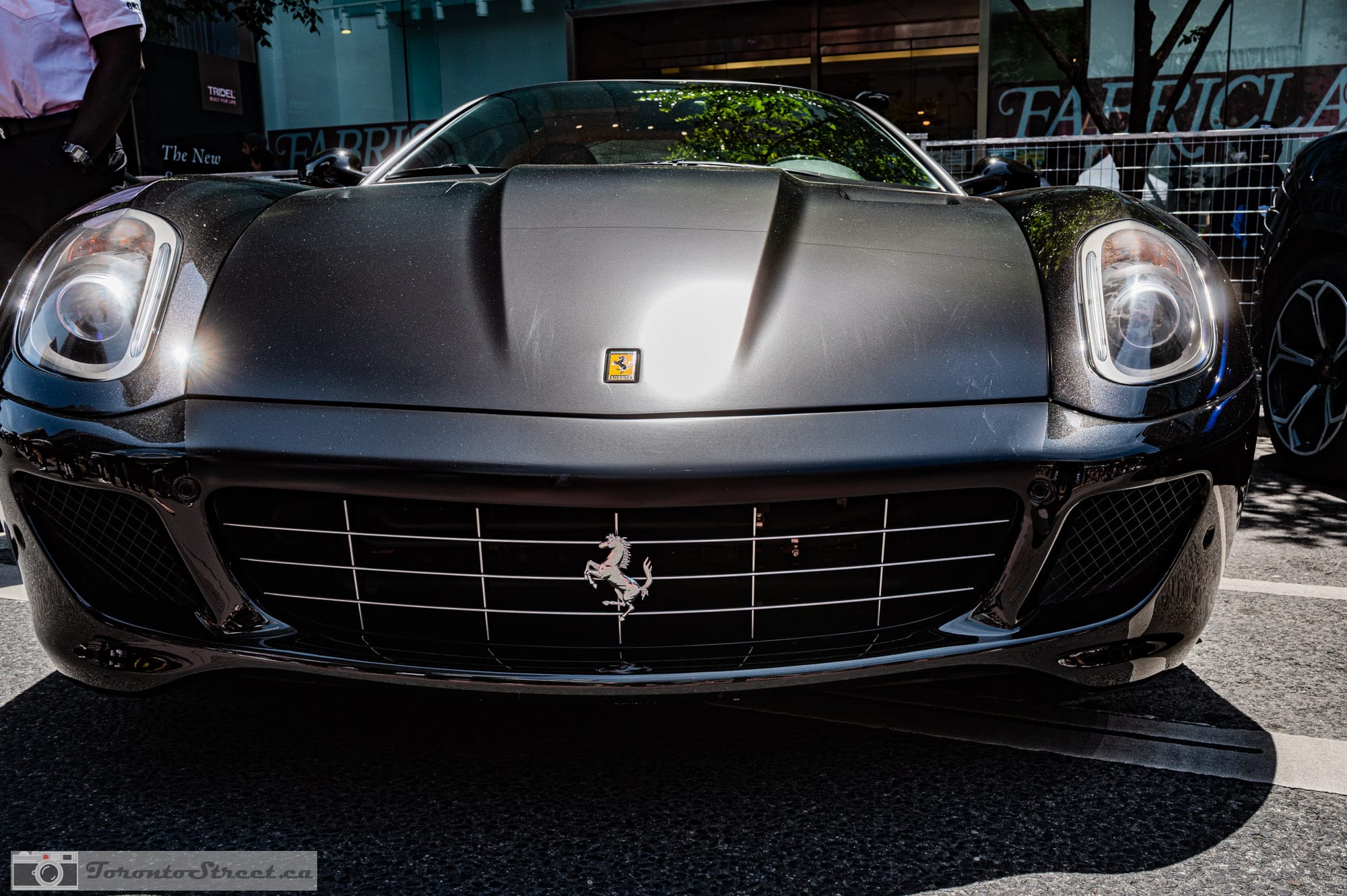
The numbers behind the hood match the badge. A six-litre V12, no turbos, 661 horsepower, climbing to an 8,400 rpm redline. You do not need to know any of that to photograph the car well. But standing there, aware of what the badge means and how few exist, changes how long you look and how carefully you frame.
Matte Hood, Gloss Body, Hard Light
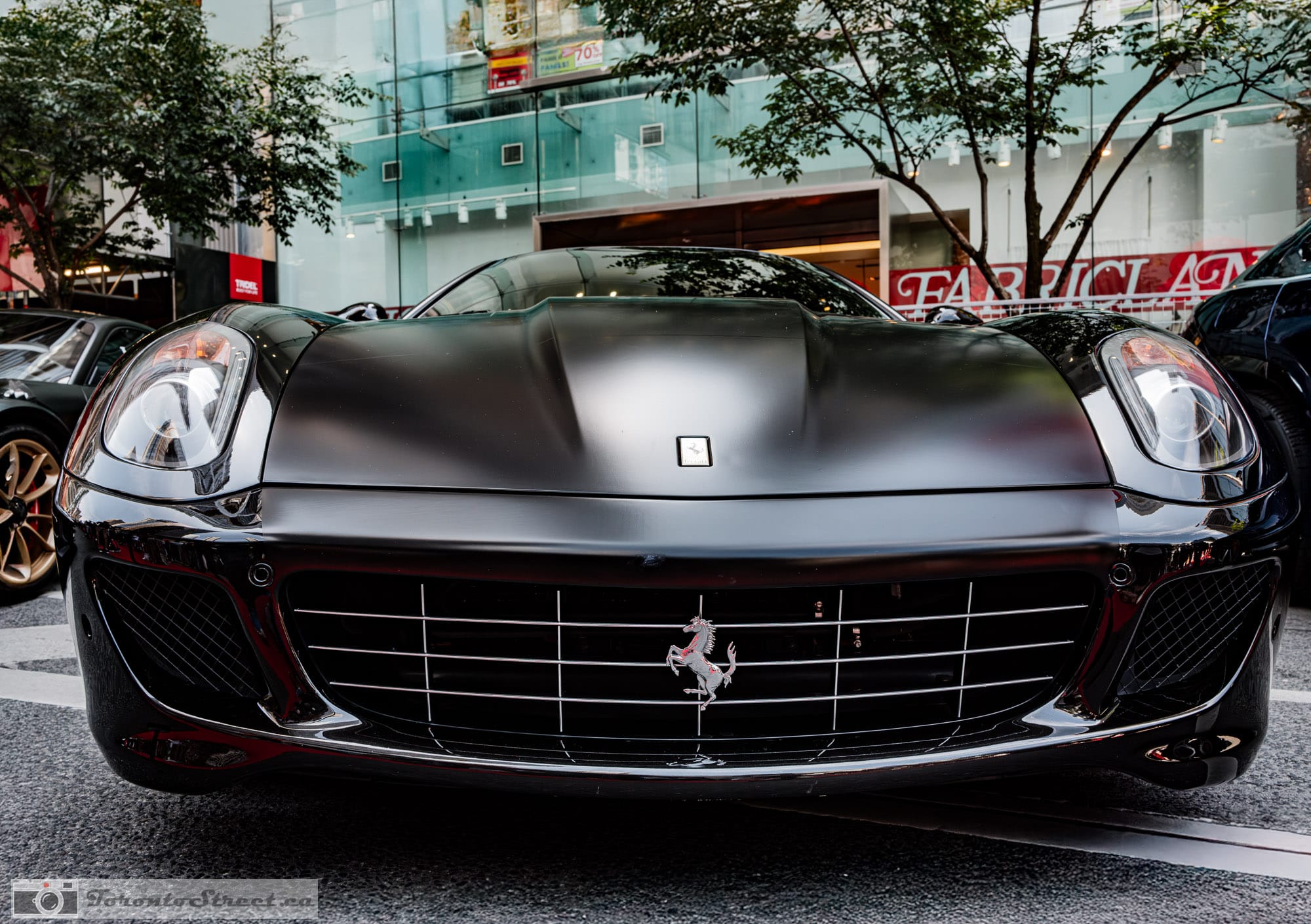
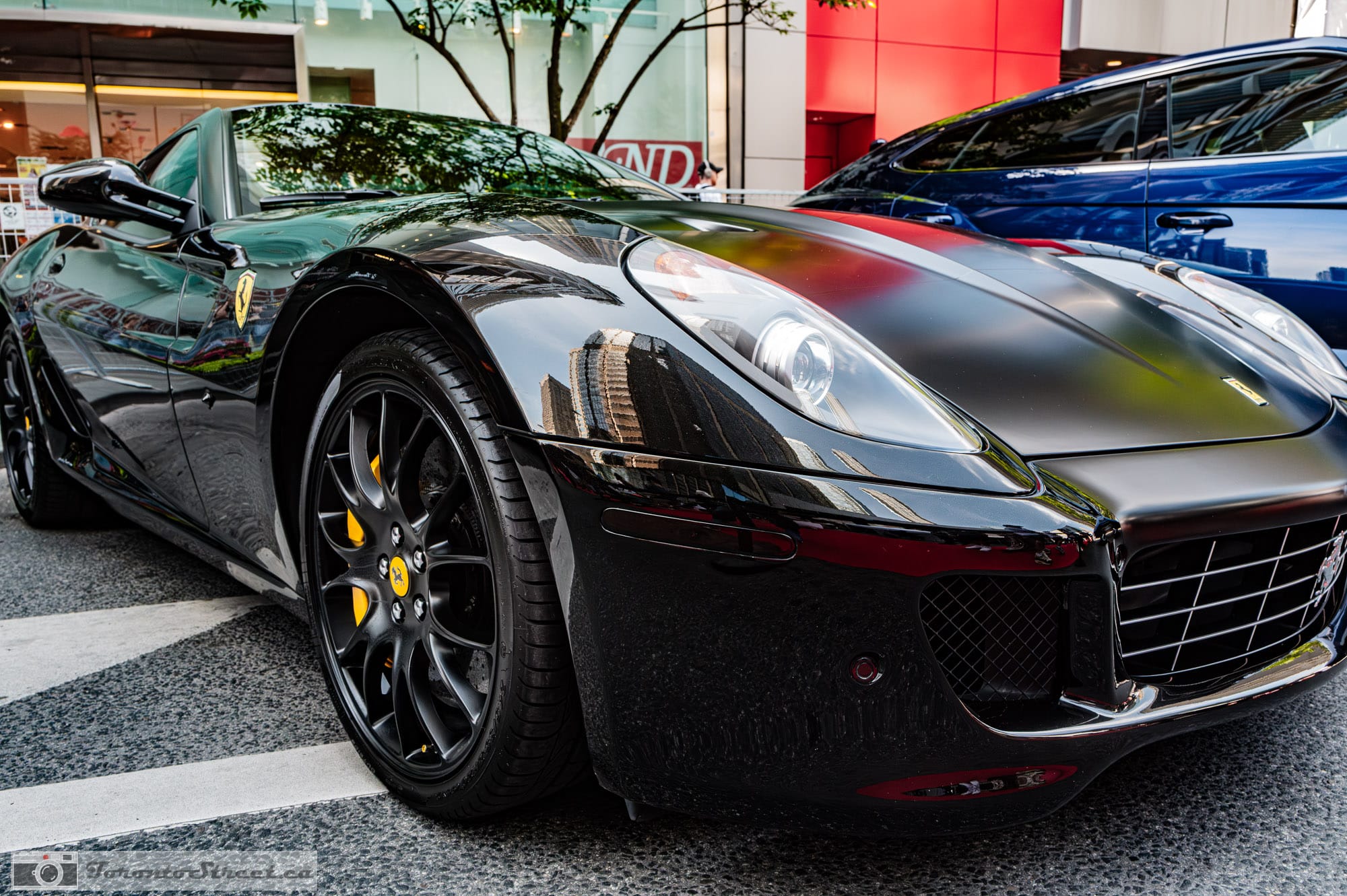
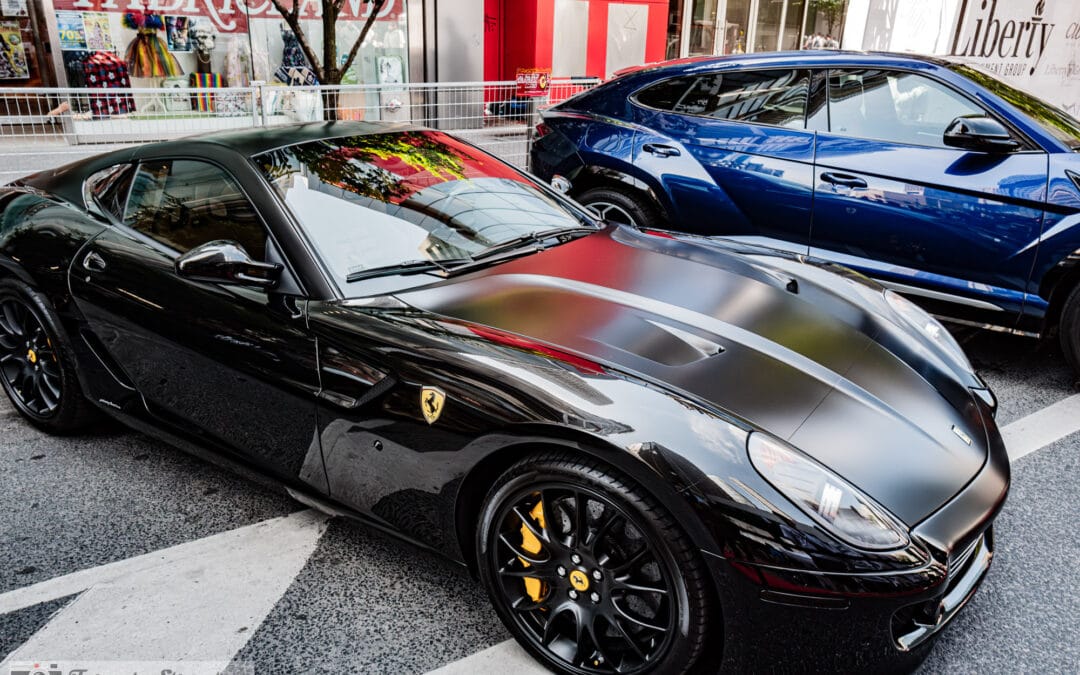
The car wore a factory two-tone finish, a matte black hood and roof over a gloss black body, and the two surfaces photograph like different materials. The gloss flank works as a mirror. Lean in and you read the whole street in it, the storefronts, the trees, a deep blue Lamborghini Urus parked behind. The matte hood does the opposite. It swallows the light and reads as pure shape, so the heat vents and the central bulge come through as form instead of reflection.
Black cars in hard summer sun are not easy. Blow the highlights and the gloss turns to white blanks; protect them too much and the whole car goes to mud. I shot the set on available light with the Leica Q3, no flash, exposing for the bright reflections and letting the deep black hold its detail. For the badges I moved in close, the prancing horse in the grille and the yellow shield on the hood. For the surfaces I stepped back and let the paint do the reflecting. Shooting this Ferrari 599 GTO was a privilege! The same gear and the same thinking I bring to any street photography project.
People ask whether a parked car belongs on a street photography site. It does, for the same reason a person does. The street is whatever the city actually puts in front of you that day, and on this day it set down an ultra-rare Ferrari between a fabric store and a crosswalk. This is the second car from that Yorkville afternoon. The first was the Ferrari 488 Challenge Evo, an actual race car on Bloor Street. There are more coming. Have you ever seen a Ferrari 599 GTO in person?